

Cancel culture can destroy and disrupt lives, as well as bring about much-needed debates. What are some of its signs in Lithuania?
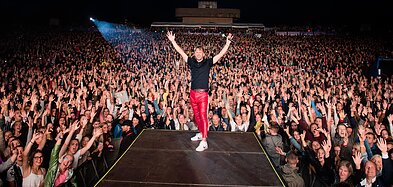
One of the most talked-about examples of cancel culture in Lithuania has been the recent controversy surrounding singer Egidijus Dragūnas.
His Instagram post, in which he refers to Russia’s war against Ukraine as the "natural cleansing of the planet", has caused outrage. Following the scandal, the singer was abandoned by members of his band, SEL, while his concerts were cancelled and some radio stations refused to play his music. A pre-trial investigation has also been opened into the statement and possible incitement to violence.
"I said that some people create weapons, others touch them, others shoot at animals, others shoot at people. I am a pacifist and I do not touch weapons,” the singer told LRT.lt. “If it were up to me, I would disband the army. They could sow grass, change pavements, but not run around with weapons, that is unacceptable to me," he added.
When asked how he reacted to the boycott of his work, the singer stressed that he is one of the most successful musicians in the history of Lithuania. According to him, there was a lot of noise in the media, but it did not disturb his life.
"The problems end when you turn off LNK [TV channel], when you turn off the internet. You don't see them anymore, [...] they don't exist. If I can help [Ukraine] in any way, it is by giving money,” Dragūnas said. “Now there is a law enforcement investigation. When they say – Dragūnas will go to jail – then I will believe it.”
“I feel great, I am in a 5-star hotel and I am going to have a beer,” he added.

Three years ago, Lithuania was rocked by the Curonian Lagoon pollution scandal, when the company Grigeo Klaipėda was found to be dumping untreated wastewater into the protected body of water. However, just a few years later, the Grite brand was back on its feet.
The supermarket chain Maxima, one of the few that did not boycott Grigeo products, said the sale of their products fell by more than a fifth, 22 percent. In the following months, sales fell even further, by 45 percent.
However, the determination to boycott unethical producers has been replaced by a pandemic of panic buying, including toilet paper.
Just before the quarantine was announced, sales at Grigeo toilet paper were up 64 percent, despite the pollution scandal happening just months prior.
Sales during the quarantine period were down only 4 percent compared to the corresponding period in 2019. The figures show that Grigeo Klaipėda's sales revenue has also increased in recent years.
Read more: Lithuanian cardboard manufacturer hit with €48m claim for polluting Curonian Lagoon

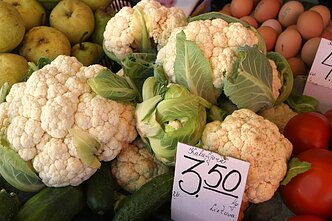
But it wasn’t only Grigeo. Today, few people today remember the so-called cauliflower scandal of 2016, when people were outraged at the price of fresh vegetables – then, one cauliflower cost over 3 euros. The anger turned into protests against food prices and a short-lived boycott of supermarkets.
"Boycotting Maxima for a month or two weeks, Rimi or Iki the next week would have been ineffective, as they would have cut prices and announced a week of discounts,” Justas Korsakovas, an activist and sociologist and one of the organisers of the protests, told LRT.lt. “Part of the lack of activism in Lithuania is not knowing what, when and which institutions to pressure in order to get a response.”
The slogan of the protests, "Life is too expensive", is today the name of an independent left-wing news website, which cooperates with trade unions.
“There have been a number of boycott attempts, but for some reason they have never been seen as a serious form of protest, and they have not provoked the kind of reaction from the corporations that is needed to respond to this," he added.

Only a few topics carry an emotional charge
In Lithuania, controversies surrounding the war in Ukraine as well as historical memory have proven to be more much more prominent than short-lived commercial boycotts.
Recently, due to business links with Russia, the ratings of Kaunas Mayor Visvaldas Matijošaitis dropped by as much as 13 percent when Moscow launched its full-scale invasion of Ukraine.
"He has been embroiled in a number of scandals, such as the attempt to turn the coast of Žemieji Šančiai into one giant road. [... ] But this has not in any way diminished Matijošaitis' ratings" as opposed to his links with Russia, said Korsakovas.
In another example, writer Rūta Vanagaitė had her books pulled from shelves after a controversial statement on Lithuania’s anti-Soviet partisans. She also attracted the attention of the security services.
"This is not a culture war, as it would be in the United States between progressive and reactionary forces. Here, these historical interpretation issues are seen as questions of state security," Korsakovas said.
In cancel culture, only one step separates civic action from a ruthless trial that destroys careers, tramples reputations or even pushes people toward suicide.
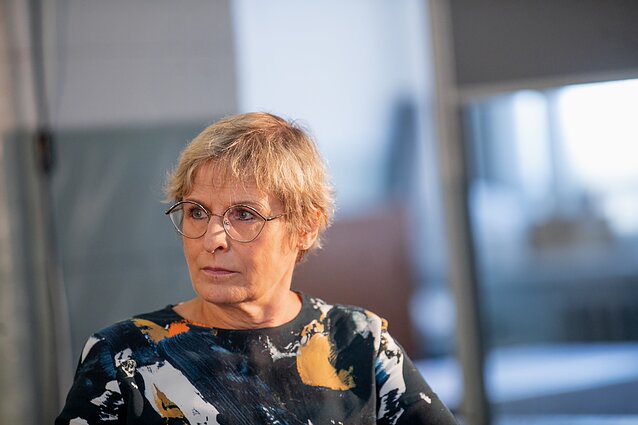
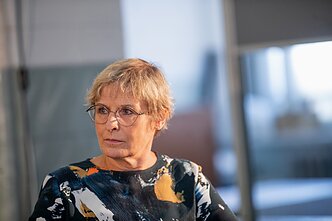
"I'm sure that some progressive people don't express their real positions on Facebook and Twitter because they are afraid,” Giedre Vaičekauskienė, an expert and lecturer in political rhetoric, told LRT.lt.
According to Aidas Petrošius, an expert at the media research company Mediaskopas, the sheer amount of attention paid to cancel culture shows that it is a negative phenomenon with often tragic consequences.
But some say that it has also had positive effects – for example, when the #metoo scandal broke out in 2018, it raised awareness in Lithuania about conditions in higher education institutions.
Meanwhile, the need to interfere in the lives of others, to impose norms so others behave in a predictable way, has always existed, according Petrošius. Essentially, it is a phenomenon of rural culture.
"When you act impulsively, there is no opportunity to think, but there is an opportunity to lead large crowds of people around by the nose. And the crowds are always harsher than an individual – the crowd is covered by anonymity, and the idea is that what I do is not my responsibility alone, that I am invisible and will not be punished," he added.
In Lithuania, a number of figures who were ‘cancelled’ later returned to public life.
"We don't have a strong moral backbone, that's all. We only talk about how important values are [...] and talk a lot. We show that we are just talking nicely in the public space, but when it comes to the words we say, we don't act upon them," Vaičekauskienė, lecturer in political rhetoric, said.
According to Korsakovas, the success or failure of cancel culture is in some cases dictated by the market. For example, the supermarkets saw the value in selling free-range eggs, which was something that animal rights activists in Lithuania had demanded for years.
“It has to do with the extent to which capitalism has appropriated certain categories, certain markets, or whether corporations have discovered that there are people who care about us not being, for example, homophobic," he added.

Newsletter
Every Friday morning.