















Lithuania's three international airports have received nearly 90 million euros in investments over the last five years, with nearly as much more to be spent by 2023. At the same time, the country considers building a brand new airport that would render the existing ones obsolete.
New airport
Despite the global pandemic that affected people’s travel habits, the country's airport management enterprise Lithuanian Airports (LTOU) has not abandoned the idea to build a new airport.
Under the currently discussed plans, it would be built in Kaišiadorys District in central Lithuania, between the country's two biggest cities, Vilnius and Kaunas.

In 2019, Rokas Masiulis, the then transport and communications minister, proposed the airport project in response to the increasing number of passengers at Vilnius and Kaunas airports.
Among the alternative solutions was a proposal to expand Kaunas Airport. The ministry rejected the plan, arguing it would be too far from the capital city. Expanding Vilnius Airport was not feasible either, since it lies too close to the city centre and there was not enough space for significant upgrades.
Constructing an entirely new airport was the only feasible option, the ministry reasoned.
But after the projected upgrades are implemented, the three existing airports could service around 10 million passengers annually.
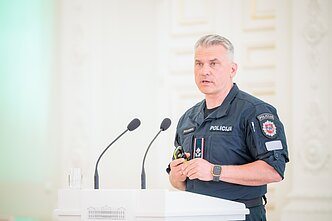
According to Marius Gelžinis, the head LTOU, the country should plan for even bigger growth in passenger flows down the line and the Transport Ministry is currently conducting a feasibility study and will make the final decision in 2022.
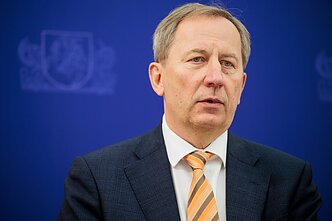
“We keep the territory for the new airport reserved. If we decide against it, the territory will be left for the development of a free economic zone,” Jaroslav Narkevič, the current transport and communications minister, said.

The new airport could cost up to one billion euros. It would also mean closing down the airports in Vilnius and Kaunas.
However, investment into the existing airports was justified because the new one would not start operating before 2030 at the earliest, Narkevič said.
Meanwhile Artūras Stankevičius, head of the Lithuanian Civil Aviation Association, believed it makes no sense to build a new airport while the existing ones can handle the traffic.
“Countries make the decision [to build new airports] only after they reach full capacity of their existing infrastructure. This has not yet happened with the three Lithuanian airports,” Stankevičius explained.
He also noted that aviation investors and businesses were not invited to participate in the project discussions.
“We have not received any information on what would happen to the businesses that invested in Vilnius and Kaunas airports if they had to close,” Stankevičius said. “We asked for a study on the new airport, but have not seen it either.”

Current investments
On July 31, the Future Economy and Investment Committee of the Lithuanian Finance Ministry agreed on additional investment in the three international airports operating in Lithuania.
It allocated almost 48 million euros to the construction of a new terminal and reconstruction of the arrival terminal of Vilnius airport. The expansion of Kaunas airport terminal received over 11 million euros, while the reconstruction of the runway of Palanga airport got almost 25 million euros.
These projects would follow the 89-million-euro investments in the airports over the last five years.
According to Gelžinis from the LTOU, the Nordic Investment Bank issued a loan of 70 million euros for the future projects.
Read more: Vilnius Airport to open new departures terminal
“LTOU planned to finance the large-scale projects out of its own budget. But due to the pandemic that hit the aviation sector the most, we had to look for additional funding sources,” Gelžinis said.
He added that there was a need to invest in the expansion and reconstruction of the Lithuanian airports because they were servicing more passengers than their planned capacity. Vilnius Airport, for example, was designed for 3.5 million annual passengers, but serviced 5 million in 2019.
According to Gelžinis, airports in neighbouring countries have also invested heavily in expansion, so modernisation was necessary to stay competitive.
Although many flights were halted due to the coronavirus pandemic, the head of LTOU believes that people will travel again once restrictions are lifted.
“Therefore, we have to make decisions now and start working towards maintaining competitiveness in the region. The airport activities need to be planned looking 10 years ahead at least. That is what we do,” Gelžinis explained.

Newsletter
Every Friday morning.