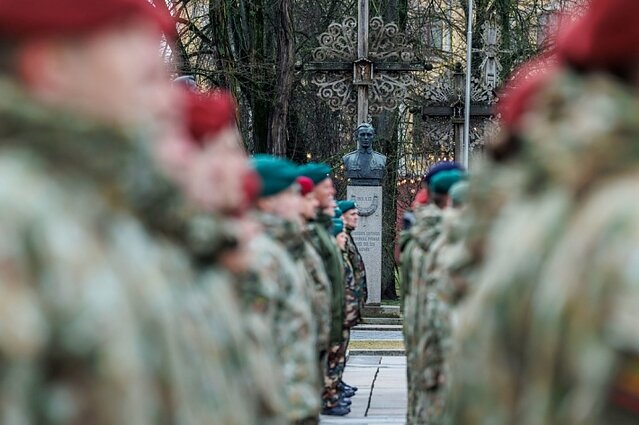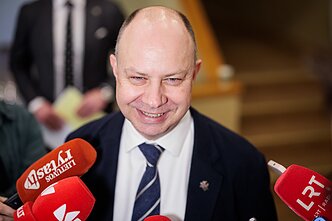






Lithuania plans to introduce universal military conscription in 2032, requiring a larger number of young people to serve in the armed forces amid security concerns, President Gitanas Nausėda said Thursday.
The State Defence Council, which comprises the country’s political and military leadership, agreed on the timeline at a meeting, Nausėda told reporters afterward.
Women would continue to be able to perform military service on a voluntary basis, he said.
Lithuania currently drafts more than 5,000 young people into the armed forces each year. Under universal conscription, the annual number would rise to about 7,500, accounting for demographic trends and the fact that some young people are deemed medically unfit for service, the president said.
Nausėda said the 2032 target would give the country time to invest in adequate accommodation for the larger number of conscripts and train enough instructors.
The authorities also need to balance conscript training with refresher training for reserve personnel to ensure both are carried out effectively, he said.
“I think implementing conscription from 2032 is optimal,” Nausėda said.

According to Prime Minister Mindaugas Sinkevičius, the government wanted a quicker transition to universal conscription, but were convinced by the military to push back the date to 2032.
“You could say there is political will, but at the same time, there is the question of the military’s readiness. The military has clearly stated that they would be ready by 2032,” Sinkevičius told reporters after Thursday’s State Defence Council meeting.
The date for introducing universal conscription was discussed “at length and in detail, with lively debates” at the council, the PM said.
“Everyone agreed that this isn’t a race, nor is it a matter of setting a specific date in stone – that we must move toward universal conscription and that it is inevitable, but needs to be done when you’re prepared,” he said.
The preparations would include training some 300 instructors and building suitable facilities to house the young draftees, he added.
The council also agreed to expand the range of service options available to conscripts. These could include training as drone operators or assisting the State Border Guard Service and firefighting and rescue services, the president said.
After trying to switch to fully professional armed forces, Lithuania restored partial conscription in 2015, citing increased security threats following Russia’s annexation of Crimea in 2014.

Newsletter
Every Friday morning.