








The number of Lithuanian school students learning Russian as a second foreign language has fallen by more than 40 percent since Russia's full-scale invasion of Ukraine, while the number studying German has risen by 50 percent.
During the 2021–2022 academic year, more than 110,000 students studied Russian as a second foreign language, compared with 65,700 this year. Meanwhile, 39,000 students are learning German as a second foreign language this year, up from 25,000 at the start of the war.
The number of French language learners rose from 10,000 to 15,000, while the largest increase was recorded for Spanish, from 766 to about 15,000 students. About 1,000 more students chose English this year, while 279 chose Polish. The ministry emphasised that the data from the beginning of the school year are preliminary.
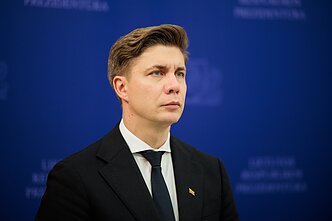
Education, Science and Sport Minister Raminta Popovienė said the ministry is currently focusing heavily on strengthening German language teaching. She said the popularity of Russian will likely continue to decline, but it is not yet possible to abandon it completely due to a shortage of teachers for other foreign languages. The minister predicted that the process should settle over the next five to six years.
Starting this September, schools have allowed Spanish to be chosen as a first foreign language, alongside English, French and German. The ministry has also created more opportunities for native speakers and individuals highly proficient in a foreign language to work as European Union language teachers, provided they obtain pedagogical qualifications within two years.
The ministry said some schools have already stopped teaching Russian, with 51 schools dropping it during the last academic year. However, municipalities still face a shortage of foreign language teachers, especially in smaller district schools.
The ministry has included French and German among priority pedagogical specialisations. Students in these specialisations are eligible for monthly scholarships of 481 euros, while those who sign a contract with a school and commit to working there under set conditions receive 814 euros.
Opportunities are also available for those who already have pedagogical qualifications to acquire competencies in another subject. In the 2023–2024 academic year, 48 Russian language teachers participated in a European Union-funded project for free retraining. Half of them chose European Union foreign languages, mostly German.

Newsletter
Every Friday morning.