















People who have survived drug-facilitated sexual assault in Lithuania say they are being let down by a system with too few specialist services, no reliable way to preserve evidence, and long waits for care. The country's social security ministry says changes are coming, but for now, campaigners say, survivors are often left to navigate the process largely on their own.
"A black screen, then nothing"
Ten years ago, comedian and human rights advocate Vita Žiba was sexually assaulted after being drugged. She says it took her a while afterwards to understand what had happened to her.
"First of all, you barely remember anything, because those drugs are usually designed specifically to suppress memory. I just remember having one drink, then another, and then – a black screen. The next thing I remember is being in some room, I don't even know where, with some man's hands all over me," she said.

When Žiba shared her story on social media, she received an outpouring of support – within a week, roughly 800 women had come forward with their own experiences of sexual violence. But she also faced abuse online.
"A lot of older men wrote things like 'you had it coming', 'it's your own fault', or 'you should be grateful someone wanted you'," she said.

Campaigners note that the substances used in these assaults aren't limited to spiked drinks – they can also be administered by injection.
Cases are likely a fraction of the true total
Lithuanian prosecutors opened 13 pre-trial investigations two years ago into suspected sexual assaults involving psychoactive substances; seven were later dropped.
"That's the tip of the iceberg. It's very hard to say how many cases there really are, because very often people don't recognise what happened to them, don't come forward, are afraid to seek help, or simply don't remember," said Reda Jureliavičiūtė, co-founder of the organisation Ribologija, which works on the issue.

Getting help isn't straightforward, either. Specialist care is currently available at only five hospitals, all in Lithuania's largest cities.
"If you live somewhere more rural, you have to get to a hospital, wait an hour to be seen – because sexual offences aren't treated as a priority – then wait again for transport to be arranged to the nearest of those five hospitals. And once you're there, you're back in a general queue," Jureliavičiūtė said.
Advocates are calling for a clearer referral pathway that would route survivors directly to the right service, rather than leaving them to find it themselves.

"Right now everything is scattered – institutions don't even know where to send you. You go to the police, they say go to a doctor, the doctor sends you somewhere else, and you get lost in the process. Meanwhile, if drugs were used, they clear the body within a limited window," Žiba said.
Evidence not being preserved
Unlike in some other European countries, forensic samples collected from survivors in Lithuania are not currently retained for any length of time, meaning evidence can be lost even when a case is reported.
"We need to be able to collect that evidence first, and hold onto it while the person decides whether to pursue a case. Right now we don't have that, there's no window built in for someone to make that decision," said Dalia Puidokienė, head of the support centre Prabilk (Speak Out).

What the government is proposing
The social security and labour ministry says changes are on the way, including a new helpline and investment in dedicated support centres.
"Our starting position is that healthcare providers should be required to notify the relevant support centre within 24 hours, so that someone is assigned to accompany the person through the entire process, from first contact onward," said Deputy Social Security and Labour Minister Rita Grigalienė.
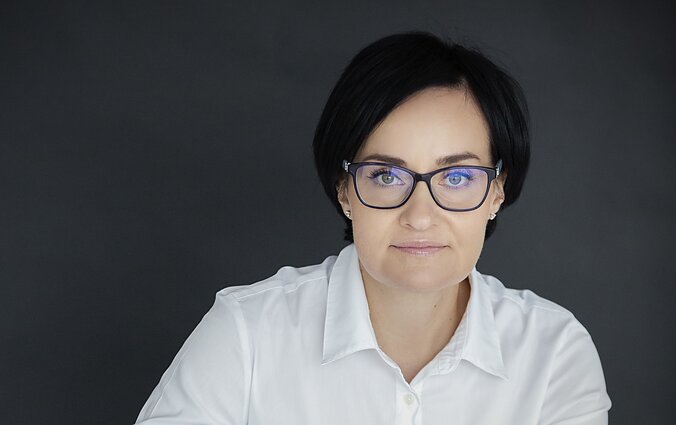
In the autumn, the ministry plans to bring amendments to parliament on Lithuania's law on protection against domestic violence, which would introduce a longer-term protection order for perpetrators alongside the existing 15-day emergency order.
"The survivor would go to court, supported through that process, with all the necessary documentation prepared by specialist centres. We're still discussing whether the longer-term order should run for two, four or six months," Grigalienė said.
If approved by parliament, the changes would take effect from June next year.

Newsletter
Every Friday morning.