







Lithuania could consider temporarily cutting diesel excise taxes if global oil prices rise above $100 per barrel, but it is too early to introduce such measures now, Finance Minister Taurimas Valys said Wednesday.
Brent crude was trading at around $94 per barrel on Wednesday after renewed fighting between the United States and Iran pushed oil prices higher and disrupted shipping through the Strait of Hormuz.
“The current oil price is certainly not catastrophic so far,” Valys told reporters at the government headquarters.
“Of course, it has increased to a concerning level, but it is still too early to talk about introducing temporary excise measures. If there is a need, we will certainly consider them,” he said.
Valys said the government would view $100 per barrel as the threshold for considering additional temporary support measures.
“The main litmus test for when we would truly cross the line and begin considering additional measures, or their temporary introduction, would be oil prices above $100 per barrel,” he said.

The minister said the government was closely monitoring developments but acknowledged Lithuania has little influence over events affecting shipping through the Strait of Hormuz, a key global oil transit route.
“You understand that our ability to change anything there is quite limited,” he said.
Prime Minister Mindaugas Sinkevičius said Tuesday that the government would act to cushion consumers if elevated fuel prices persist for an extended period.
Energy Minister Lukas Savickas said earlier this week that he did not currently see a need to reduce diesel excise taxes but stressed that the government stood ready to respond if market conditions deteriorate.
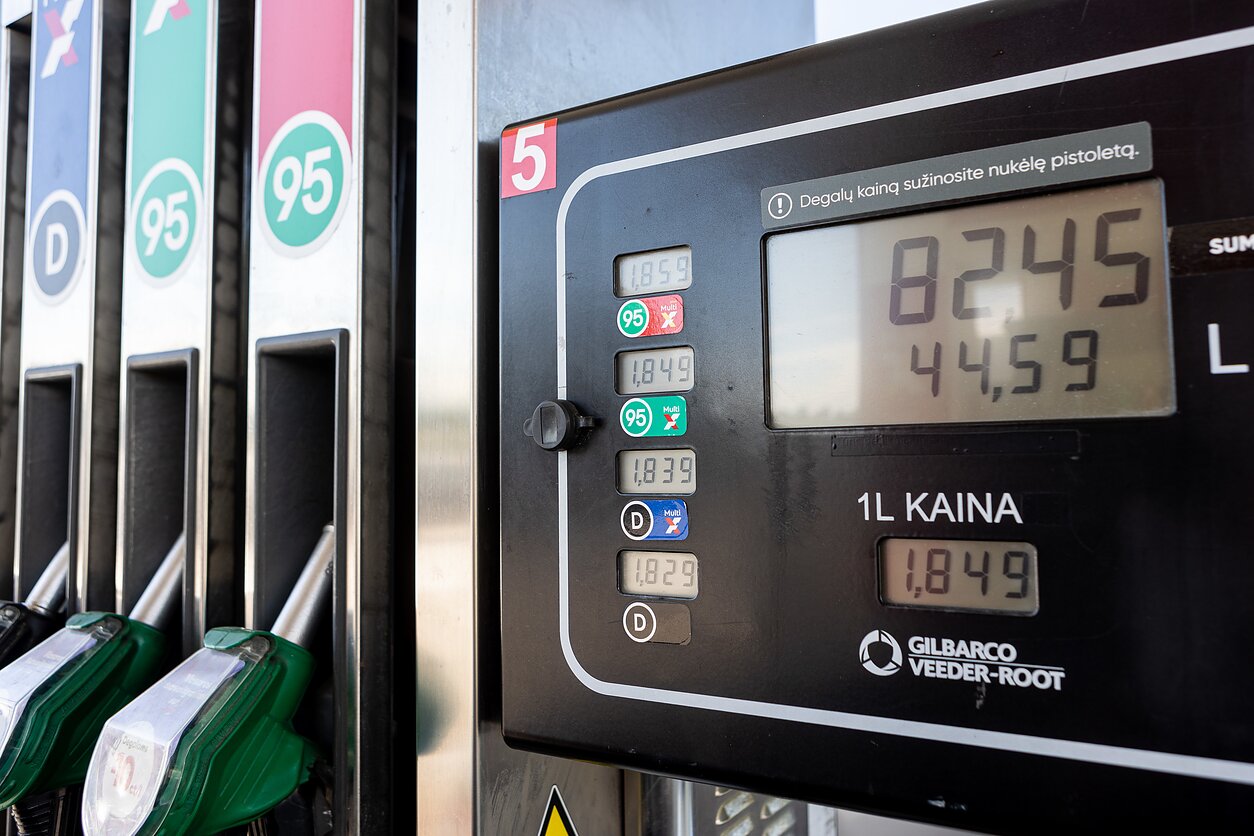
Lithuania last introduced temporary diesel tax relief in mid-April after the outbreak of hostilities in the Middle East sent oil prices higher. The previous government cut the diesel excise tax by 0.06 euro per litre for two months, a move that was followed by an approximately 5-cent drop in pump prices the next day.
Oil markets stabilised temporarily after the United States and Iran announced memorandum of understandings earlier this summer. However, renewed exchanges of fire have once again disrupted shipping through the Strait of Hormuz, fuelling concerns over global energy supplies and driving crude prices higher.

Newsletter
Every Friday morning.