

Russia’s Defence Ministry on Wednesday published lists of companies across Europe, including in Lithuania, that are allegedly involved in producing attack drones for Ukraine, threatening consequences.
“A significant increase in the production of drones for the Kyiv regime [sic] is planned through the expansion of funding for ‘Ukrainian’ and ‘joint’ enterprises located in European countries,” the Russian Defence Ministry said in a statement on Telegram.
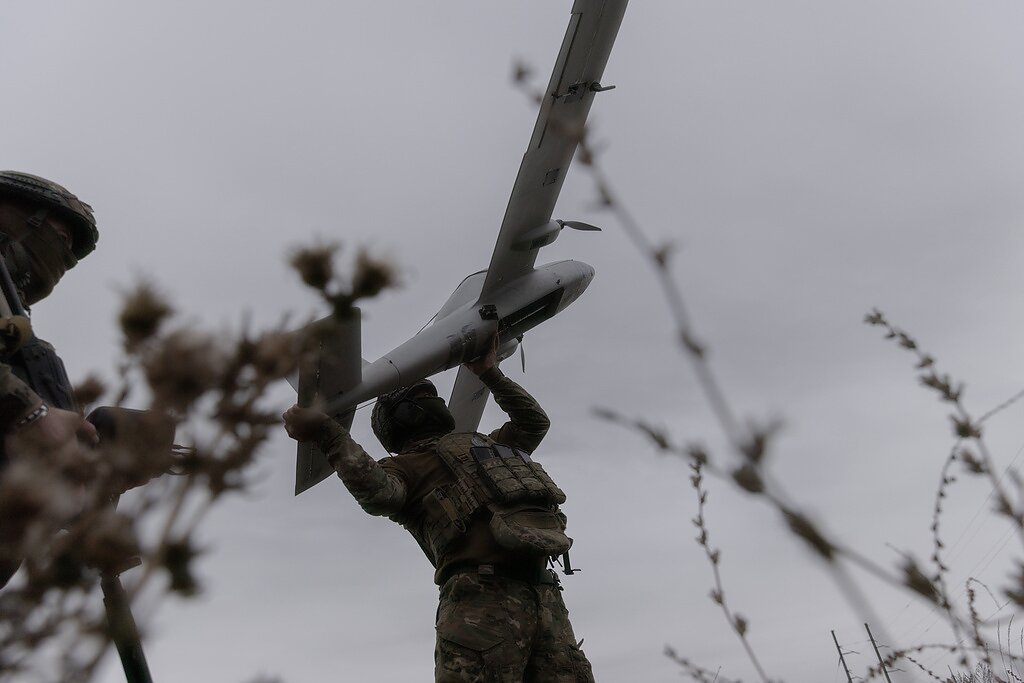
The statement names 11 enterprises in countries including Germany, Denmark, Latvia, Italy, Spain, and Lithuania. In Vilnius, the list includes firm Kort, which is allegedly working on the HaKi AK-1000 drone.
Over 700 firms are registered around the listed address in Vilnius, with none of them overtly associated with HaKi or Kort.
Russia's Defence Ministry said that the decision to produce the drones in European nations was “dragging these countries into war with Russia”, adding that this could lead to “unpredictable consequences”.
Moscow previously used similar threats in an effort to delay the delivery of military equipment from Europe and the United States to Ukraine.
In an interview published previously by Polish-Ukrainian media, HaKi CEO Vadim Kodachigov said AK-1000 “is an autonomous kamikaze drone capable of destroying strategic enemy targets at ranges of up to 1,000 km”.
Lithuania’s Defence Ministry told LRT.lt that Russia’s purpose was to deter further support for Ukraine.
According to the ministry, this comes as part of “intensified hostile rhetoric of the Russian Federation toward Lithuania and other Baltic states, including unfounded claims that the airspace of the Baltic states is being used for Ukraine’s attacks against Russia”.
The National Crisis Management Centre (NKVC) told LRT.lt that it maintains contact with critical infrastructure companies and the private sector.
“NKVC and the responsible institutions continuously exchange information and maintain contact with critical infrastructure companies and the private sector regarding the updating of protection measures in line with identified threat levels.
“Recommendations have been prepared and provided to business sectors, and meetings and discussions are continuously held on how companies in specific sectors can better prepare for possible attacks,” NKVC said in a comment to LRT.lt.

Newsletter
Every Friday morning.