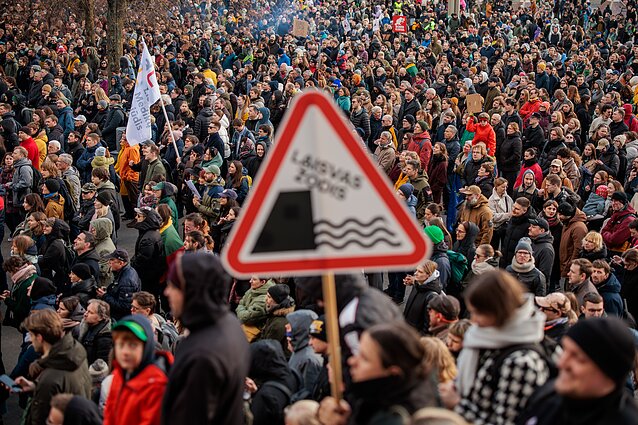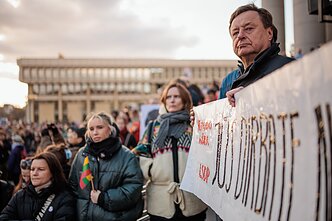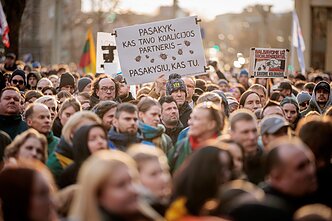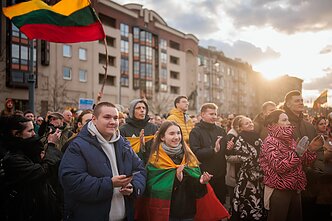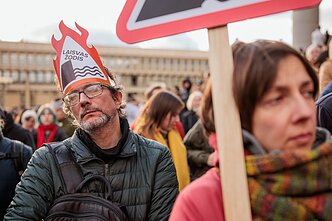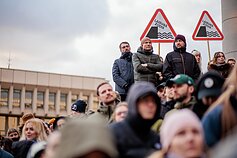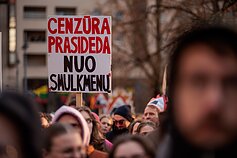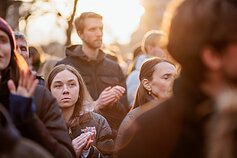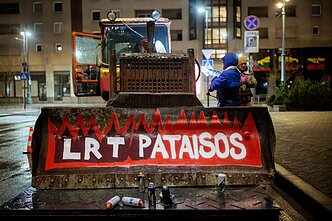

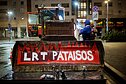






Over 10,000 people gathered in Vilnius on Wednesday to protest against efforts to politicise the public broadcaster, LRT.
“They would control what you see and what you hear. And when you say that out loud, it becomes truly frightening. Experts have already stated clearly that this law could be considered censorship, which is prohibited by the Constitution,” said Birutė Davidonytė, chair of the Association of Professional Journalists (ŽPA), which organised the protest.
Further reading
Attempts by MPs from the Social Democrat-led governing coalition to fast-track amendments last year triggered several rallies outside parliament in December last year.
The largest demonstration was attended by more than 10,000 people, making it one of the largest protests in recent years. The demonstration on Wednesday also gathered a similar number of people, according to police estimates.
After failing to pass the amendments under an expedited procedure, a parliamentary working group was formed to review the broadcaster’s governance.
The draft law prepared by this group has been expanded and has been criticised by journalists and academics for showing signs of censorship.
Laurynas Zinkevičius, a 36-year-old lawyer, said he saw parallels between 1991 and the present situation.
“I see a certain form of potential censorship that could be applied to our national broadcaster under the new amendments,” he told BNS.
Zinkevičius said he lacked clear explanations from members of the Seimas about the purpose of the proposed changes.
“I miss a clear explanation from the legislature as to what is being pursued, what exactly is meant to be corrected, what goals are being set and what measures will achieve them,” he said.
Karolina, a 34-year-old project manager who attended the protest, told BNS she did not believe politicians’ claims that they had taken public opinion into account and revised the amendments.
“It is an obvious lie and, in fact, if you look closely at the draft law, it is clearly not reflected,” she said.
“Essentially, the media should be free from restrictions, and they should be able to participate not only in LRT’s activities but also in other areas where they see they can contribute. This is a form of censorship,” she added.
According to a statement released by ŽPA ahead of the protest, crowds succeeded in halting the fast-track changes in December, and the organisers hoped to do it again.

Newsletter
Every Friday morning.