












Lithuania’s parliamentary opposition has presented an alternative defence strategy, saying the current vision was too bureaucratic and did not address the concept of a society-wide total defence.
"Lithuania's defence capabilities must make it a prickly hedgehog, too uncomfortable and difficult for even a much stronger Russian bear to overcome," said Laurynas Kasčiūnas, head of the conservative Homeland Union–Lithuanian Christian Democrats (TS-LKD) and a former defence minister.
In March, the Seimas began debating an updated version of the official National Security Strategy, which focuses on preparing for state defence in the event of military aggression.
The current National Security Strategy was approved in 2021 and is periodically updated to reflect changes in the geopolitical environment.
Previously, the Lithuanian prime minister said the country had to be ready in case NATO collapsed. In his statement, Kasčiūnas reflected this anxiety.
“We cannot rely on the illusion that our security will be ensured solely by international statements or formal commitments,” he posted on Facebook. “Our goal is not to symbolically ‘demonstrate readiness’, but to practically create conditions in which an attack against Lithuania would become very difficult, very costly, and very slow.”
The strategy presented by the conservatives on Wednesday focuses on five strategic goals: total defence, support from allies, societal resilience, crisis management, and the strengthening of long-term national security foundations.
The main pillar of the plan is society-wide defence.
“This means that the state’s security must be based on a unified defence system that brings together the military, state institutions, the private and non-governmental sectors, as well as all prepared citizens,” said conservative MP Dainius Kreivys,
This would mean closely integrating the paramilitary Riflemen's Union into defence planning and speeding up the transition to universal conscription.
Kreivys also said security depended not only on military capabilities but also on the society’s ability to withstand pressure in the information, cyber, infrastructure, health, economic and energy sectors.
"The essence of this goal is to make Lithuania a state that is difficult to destabilise or break," he said.
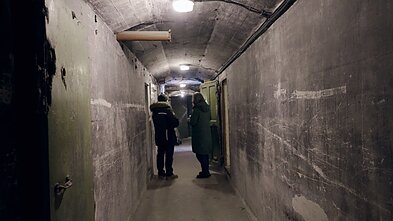
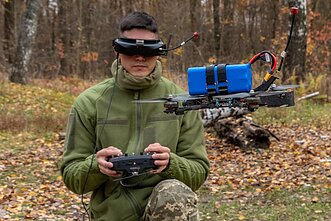
The strategy also calls for learning from Ukrainian instructors and the developing fortifications on the border, as well as a so-called drone wall.
"We clearly see the need to build permanent fortifications as strongpoints, for example, near sensitive areas and arteries through which an adversary could pass," Kasčiūnas said.
The document states that the security of Lithuania and other countries in the region faces an existential threat, which is heightened by the possibility that Russia could be ready by 2030 to develop capabilities enabling it to wage a large-scale conventional war with NATO.

Newsletter
Every Friday morning.