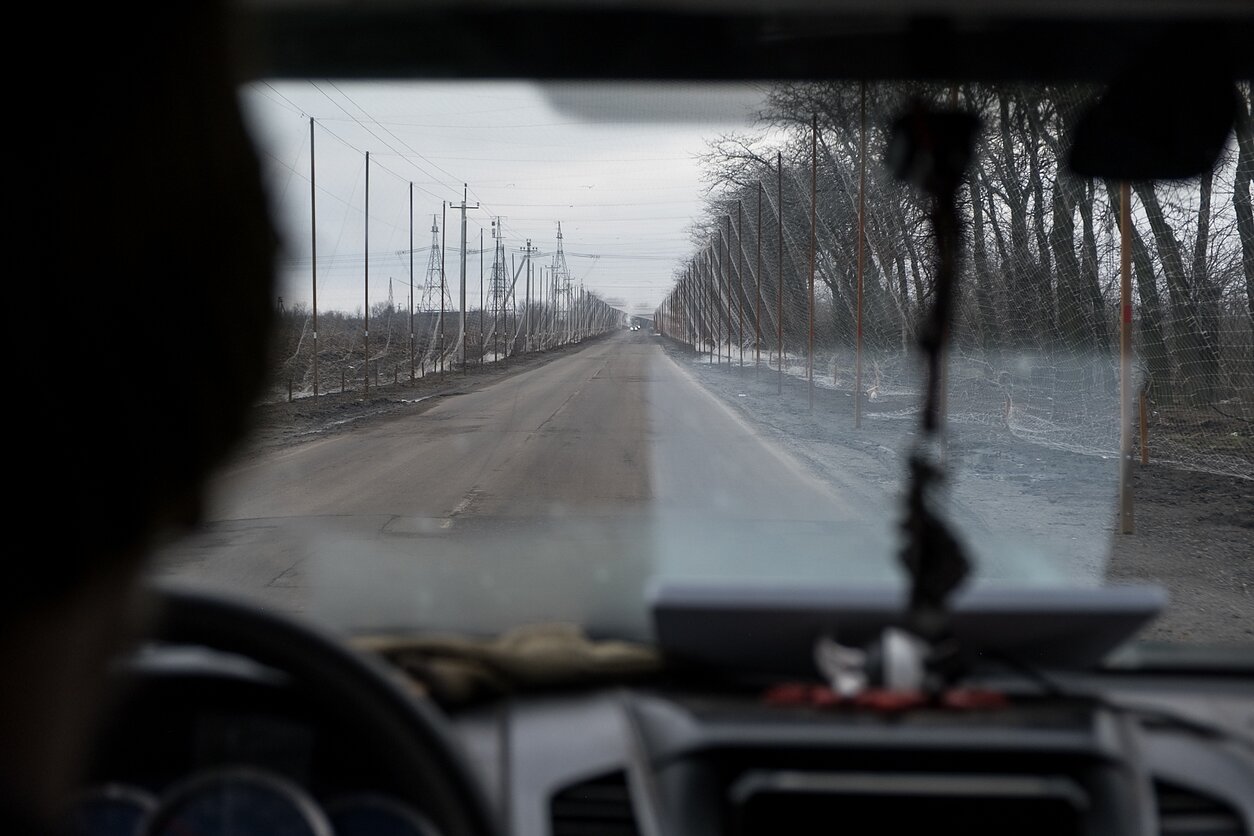
In Ukraine, the front line – at least as we once imagined it – no longer exists. Everything is now shaped by what is known as the kill zone, stretching for dozens of kilometres.
“The kill zone has become a popular term used to explain the situation to people who still do not fully understand that there is no longer a clear front line,” says Horovets, a soldier in the Ukrainian medium-range drone unit Shidni Kotyky.
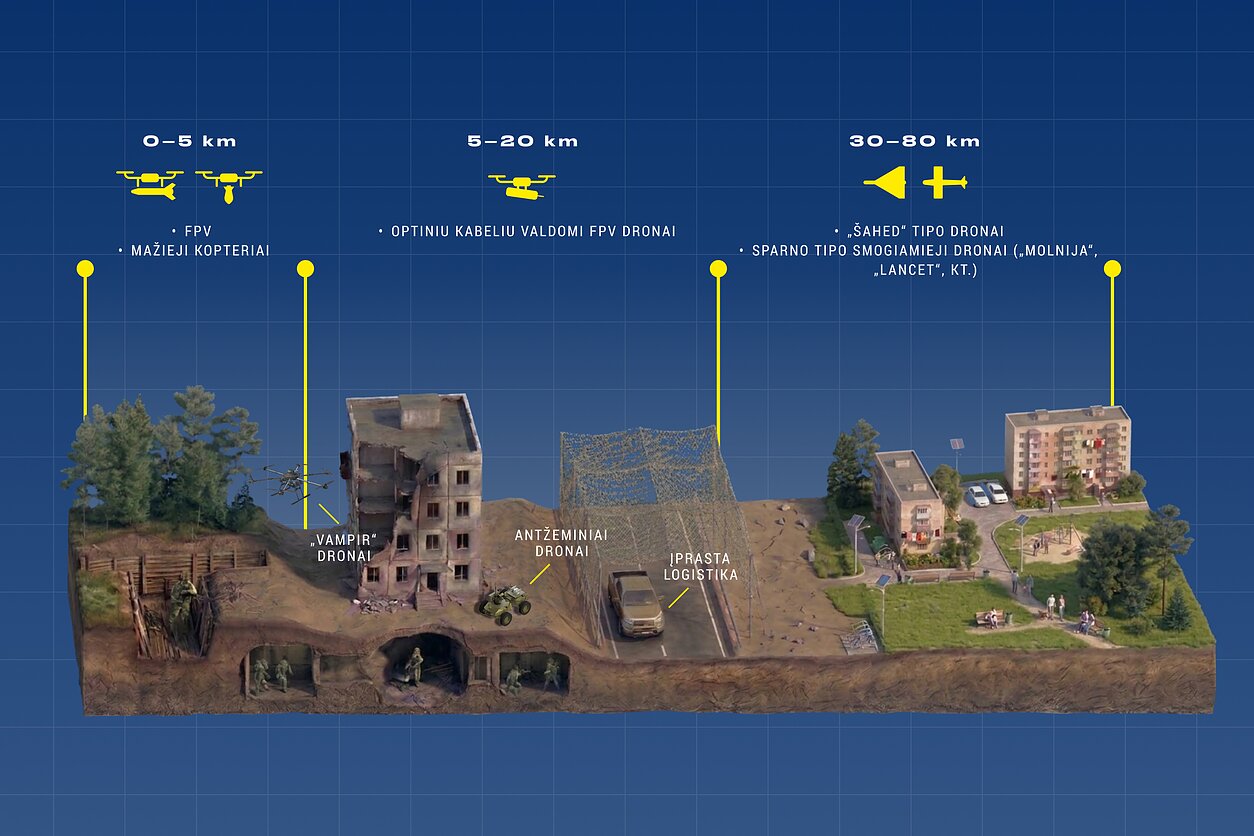
This zone is defined by the range drones can reach. Previously, both sides used only simple FPV drones with a range of 5 to 7km. Now, thanks to new unmanned technologies, this constantly monitored and targeted area has expanded to several dozen kilometres.
“It can be safer in a trench than driving a pick-up some 20km from Russian positions,” Horovets adds.
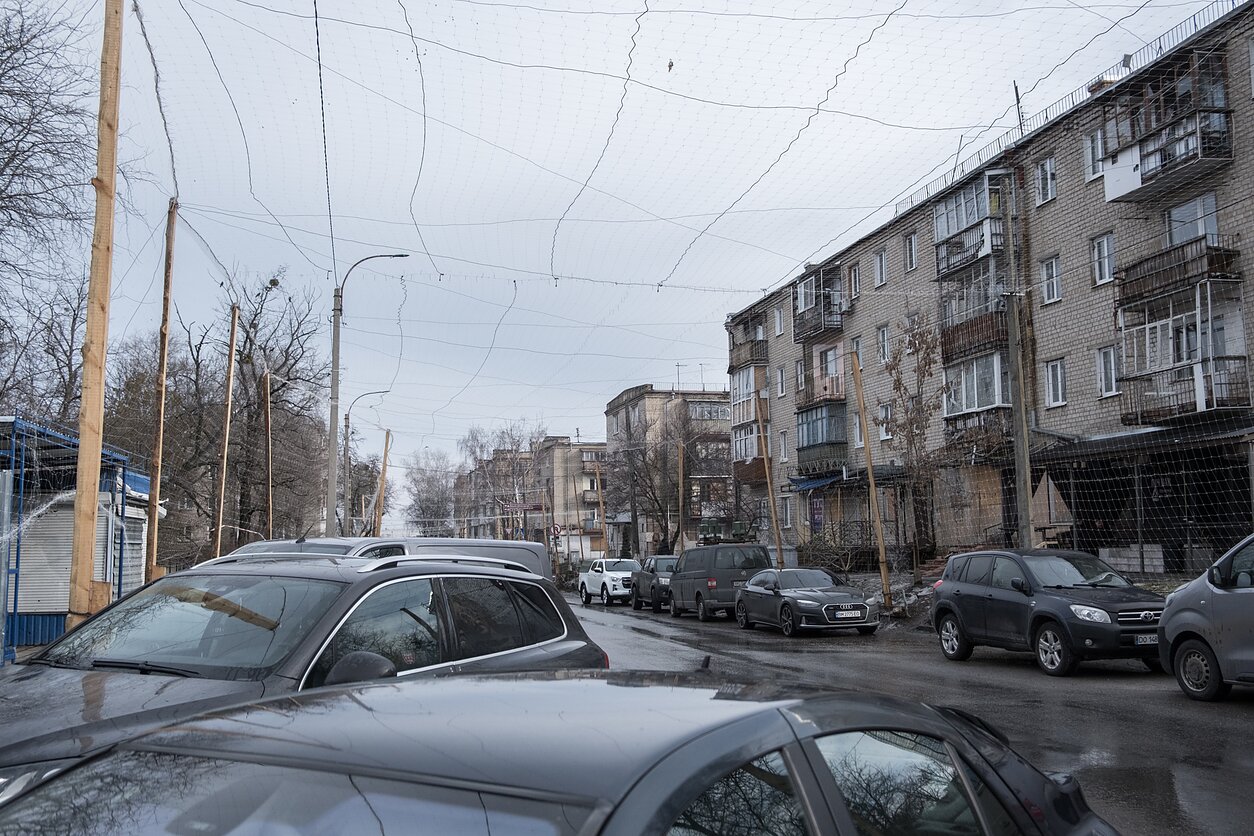
The most dangerous part of warfare now is travelling to and from combat positions. Any movement – armoured vehicles, ordinary cars or even individual soldiers – will be spotted and attacked by drones.
“A year or two ago, you could drive to within 5km of the front, but now even 15km is a zone of extreme danger,” says Matematik, commander of an unmanned ground vehicle (UGV) unit. Lava.
According to him, this is also changing classical military thinking.
“Russia may have heavy and expensive weapons, but tomorrow, some guy will come up with a crazy idea and your military equipment and systems worth millions are finished,” he says. “For example, the Russian Solntsepyok thermobaric artillery – it fires at a distance of 3km, but now 3km is close combat.”
Entering the zone
The drone danger already begins in Ukrainian rear hubs, such as the city of Pavlohrad, located approximately 80km from Russian positions. Closer to the front, around 30 to 40 kilometres from Russian positions, fibre-optic FPVs and other unmanned systems join the array of drones flying overhead.
Closer still, 10–15km from Russian positions, the kill zone becomes almost uninhabitable, with FPV and other drones dominating the air.
In other words, if the Lithuanian-Belarusian border became a frontline, the whole of Vilnius and the surrounding capital region could fall within such a kill zone.
“War used to be louder. Now, you get this false sense of security because it's quiet, but you can be killed very quickly and out of nowhere,” says Vesna, commander of the Shidni Kotyky drone unit.
Just a couple of years ago, even dozens of kilometres from the front, the silence would be broken by the distant thunder of artillery. In many places, that is no longer the case.
For example, artillery crews can only briefly exit their shelters and fire a few shots before scurrying to hide again, as drones can strike them at any moment.
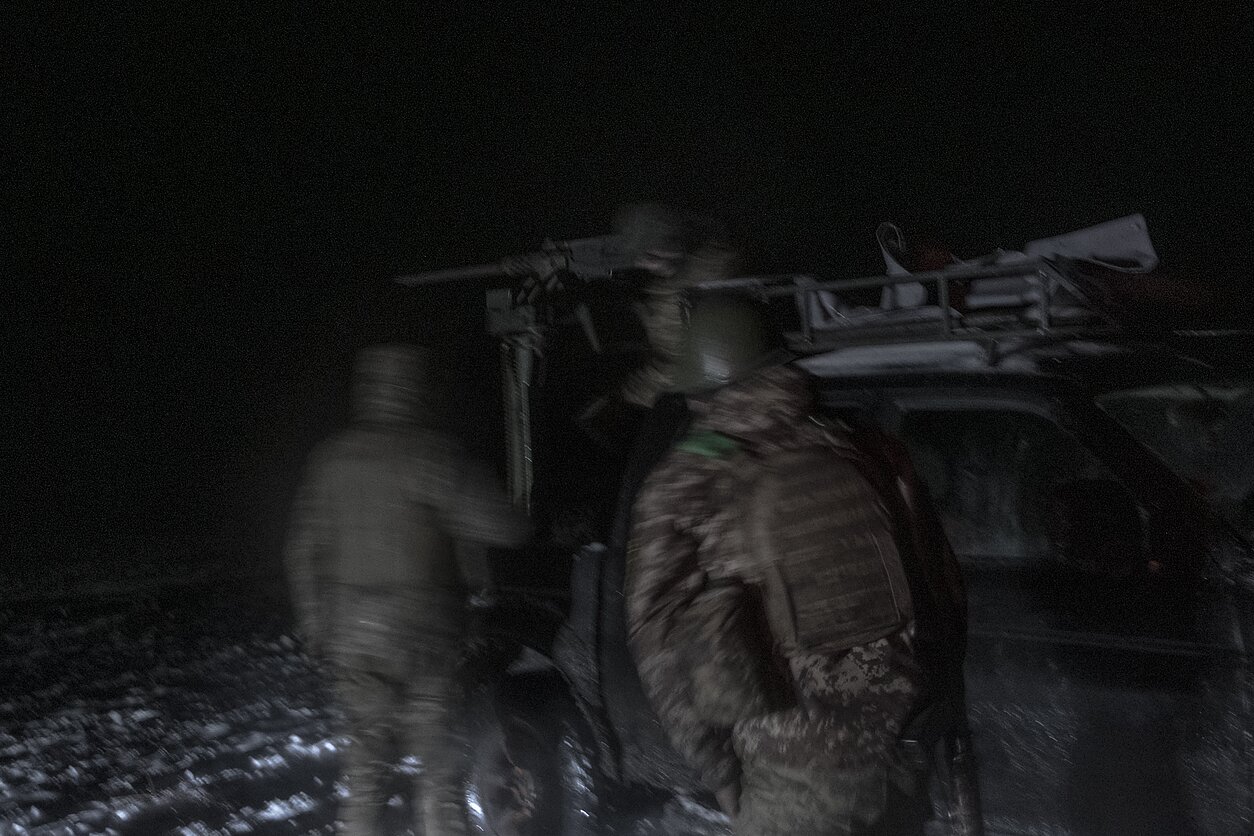
“Before, artillery would shell entire areas in squares,” Vesna says, referring to Russian tactics in which whole square kilometres would be saturated with artillery fire regardless of what Ukrainian target had been detected.
“Now everything has become much quieter, and each strike is precise. If something is flying towards you, you know it is not random – they have found a specific target,” she adds.
“It can be sunny and quiet, birds singing, an idyllic moment with no explosions at all. But I know that just now a pick-up truck was blown up on this same road,” Horovets says.
A few days ago, this is exactly how their colleagues were killed. As they were leaving their positions several dozen kilometres from the Russian lines, a drone struck them.
Continuous lines scarce
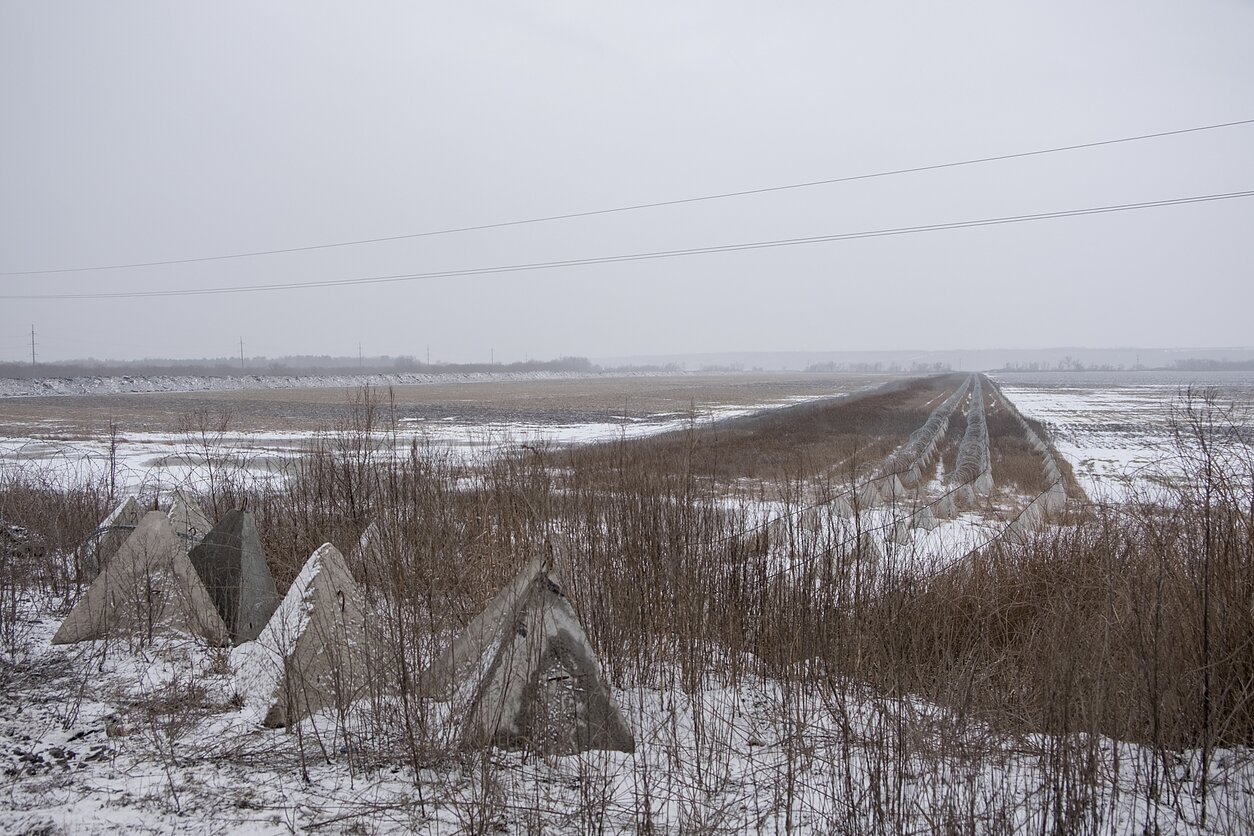
Because of the dominance of unmanned systems, stable and continuous defensive lines, as in the past, have almost disappeared. They are being replaced by scattered positions with just a few soldiers each, sometimes one and a half kilometres or more apart.
This is also happening because of Ukraine’s shortage of troops.
“There are no longer enough people to hold a line,” says Orel, commander of an air-defence unit in the 68th Brigade. “But there are defensive points that cover one another.”
According to the commanders, this change has taken place since at least early 2025.
Pisar has been in an assault brigade since 2014, but his job has now changed radically – he commands a UGV unit. “Before, we thought of a drone as a bonus. Now it is the opposite – it is the foundation,” Pisar says.
However, this does not mean that all other skills are irrelevant. Soldiers now pay particular attention to camouflage – how to hide effectively from the systems that are trying to kill you.
“At any moment, we could return to older methods – there is action and a response to it. Sooner or later, everything may change again,” Pisar adds.
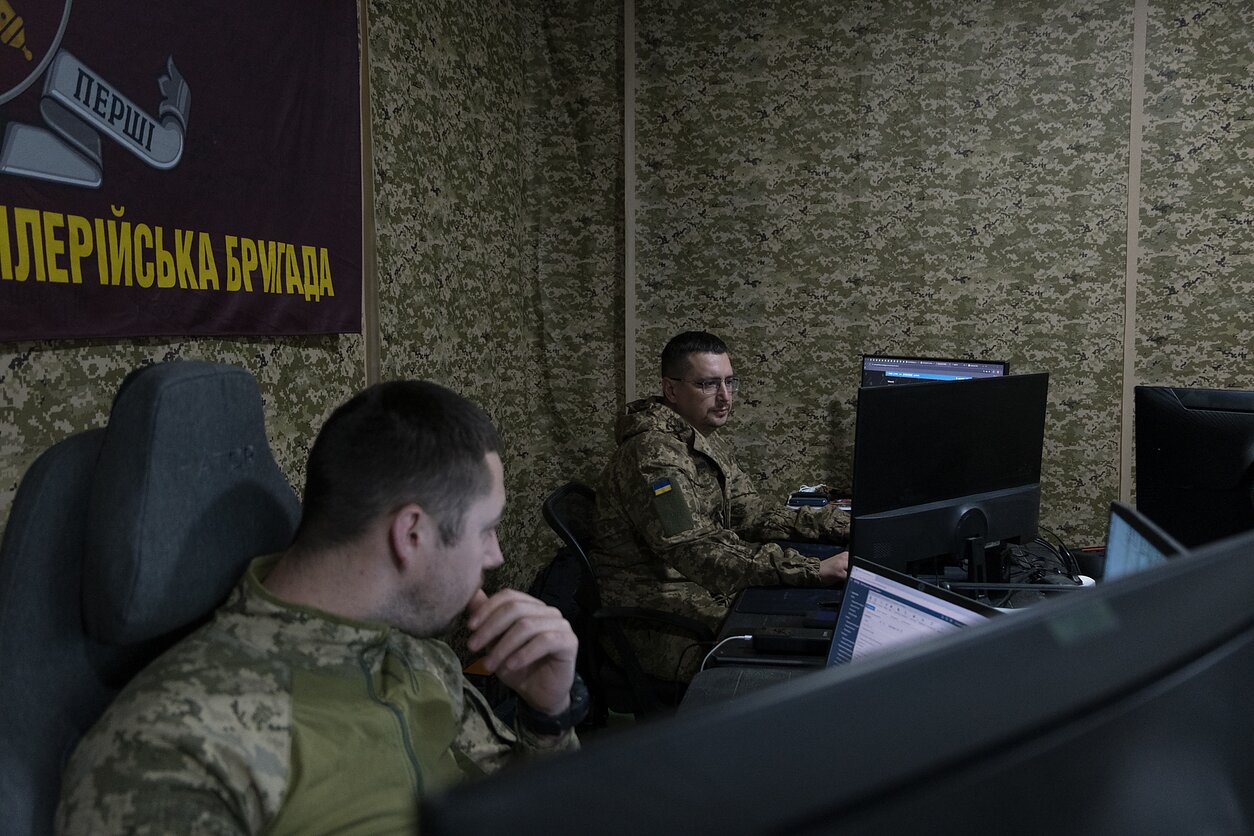
According to standard military doctrine, teams working with drones should be further from the front, protected by infantry or other units.
But more sectors of the front are being held by mixed teams of infantry and FPV drone operators, whose main weapon is the drone itself. In many places, soldiers say, there is little point in defending with conventional firearms.
Pisar points to one position of a Ukrainian drone unit behind the frontline. That morning, Russian troops had assaulted it.
“The enemy was destroyed in close combat,” he says.
There are many cases where small groups of Russians, just a few men at a time, break through ten kilometres or more into Ukrainian-held territory before they are killed.
“Everything has become a wide grey zone,” Pisar adds.
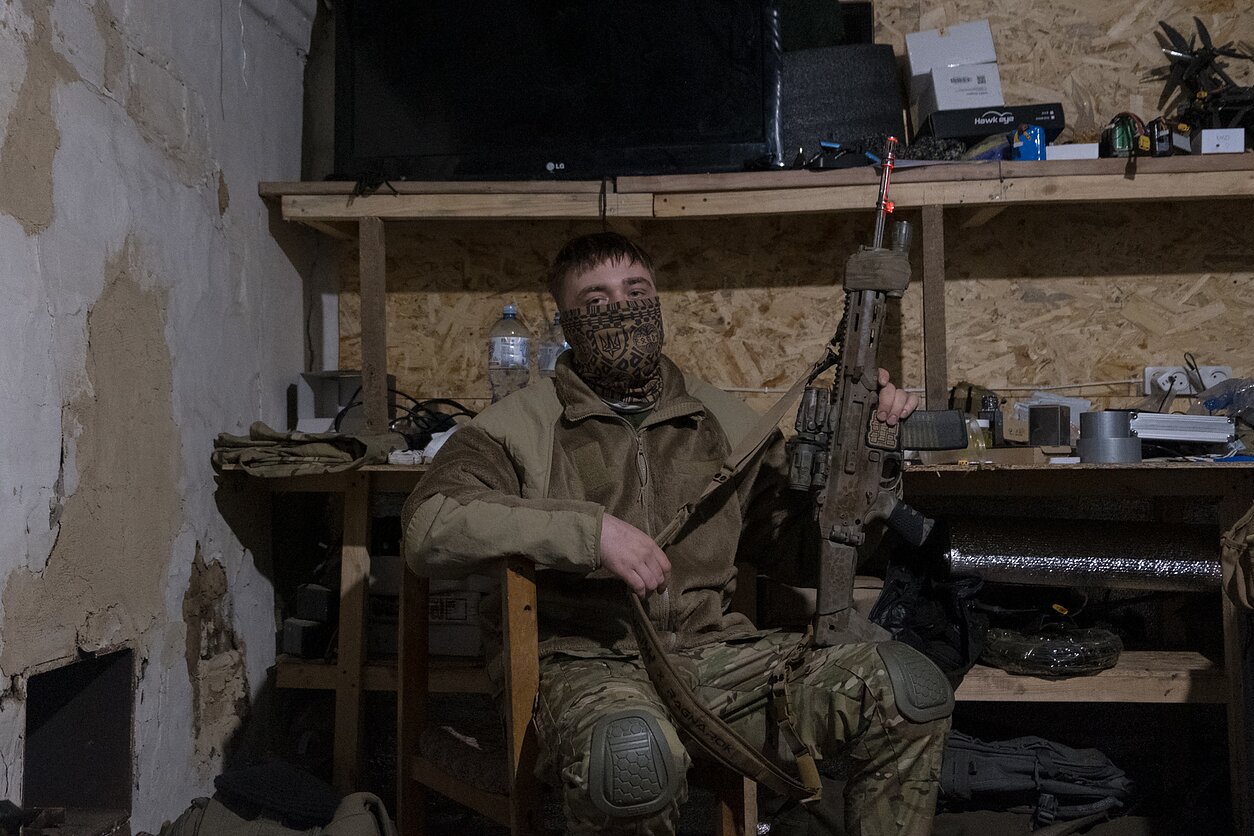
A Lithuanian volunteer soldier, known by the nickname Viking, serves in one such mixed unit of drone operators and infantry.
“I would prefer to shoot and run around, but how much of that is possible anymore when there are drones?” he says. “Now the chance of survival is very small if you are an ordinary soldier running around with a rifle.”
They make open movement dangerous for the Russians as well.
“From the moment we see a Russian to the moment he is killed takes about five minutes. For one Russian, Ukrainians will send five or six FPVs,” Viking says. “It is better to be useful with an FPV than die in a couple of minutes.”
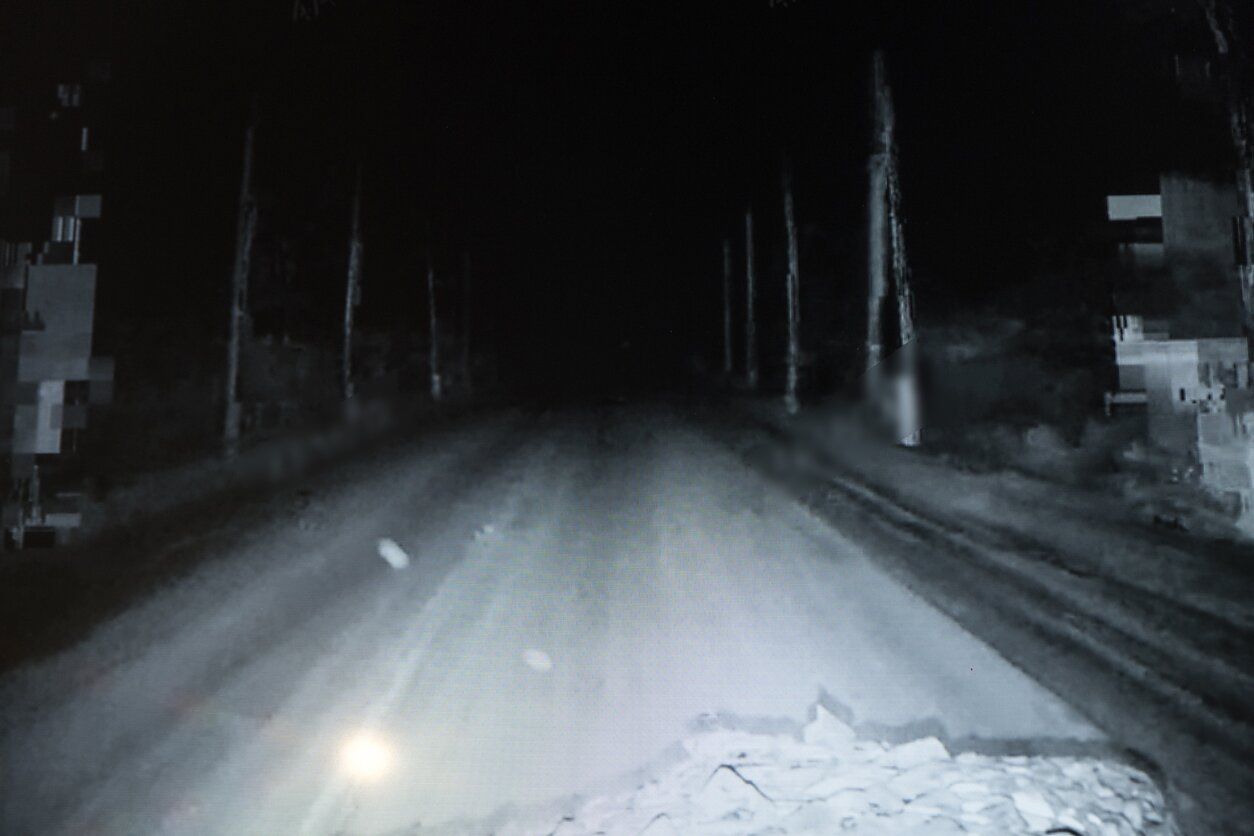
At an artillery headquarters in the Zaporizhzhia region, we watch as FPV drones strike Russian positions in a forest belt. One Russian soldier survives and runs to hide among the trees; nearby, his dugout is burning.
Soon, a Ukrainian FPV drone strikes him, with the Russian soldier’s body disappearing in a cloud of smoke. A few minutes later, a second drone hits what’s left of his body, while two more FPV drones hover overhead.
“This war has really become terrifying,” nods Boxior, the commander watching the screen.
A message for Lithuania
Because everything that moves in the kill zone is destroyed, the pace and the scale of Russian attacks has also decreased.
This gives Ukrainian soldiers some optimism. In 2023–2024, Russian troops captured large swathes of territory in sweeping assaults. However, Russia’s gains last month were the slowest in the past two years, according to the Institute for the Study of War.
Ukrainian commanders describe current Russian assault tactics as infiltration. In groups of two or three, on foot or on quad bikes and motorcycles, Russian troops try to move through this grey zone.
“In Lithuania, you need to have so many drones that Russians can move from the border only on foot, or not at all,” says Kolivan from the Shidni Kotyky drone unit, who has been fighting since 2014.
Now, key Russian offensives are carried out with only a few hundred soldiers.
“In Kupyansk, one of the most important cities in the Kharkiv region, there were only 100–200 Russians left,” says Bahdan, one of the soldiers fighting there. “Before, the Russians used a hundred people to attack just one village.”
Where technology ends
Some of the main battles have shifted to the Dnipropetrovsk and Zaporizhzhia regions in the south-east, only an hour or two from Ukraine’s major cities that were previously deep in the rear. The Donbas region is almost entirely lost – the backbone of Ukrainian defence is the so-called fortress belt of two cities, Sloviansk and Kramatorsk.
Russia has achieved this at the cost of thousands of its soldiers’ lives, and even the capture of a single such fortress, Pokrovsk, has been underway for a year and a half – and is still not over.
Yet Russian forces continue, slowly, to push forward.
The importance of drones and technology in the kill zone does not change the fundamental fact: someone still has to be on the ground, in dugouts or trenches, for months at a time.
Time spent in positions is increasing – both because of the conditions imposed by the kill zone and, in some places, because of incompetent commanders.
“Infantry remains the essence – where they stand, that is where Ukrainian land ends,” Kolivan says. “But 90% of what we knew about warfare will no longer help.”
Soldiers say it is impossible to convey the horror to anyone who has not experienced it themselves: staying in trenches with frostbite, standing knee-deep in water, or lying wounded with no chance of evacuation.
“I would go back to fight in 2024 – I liked it then,” says Bonya, a 21-year-old infantryman who has already been wounded three times. “Now not so much.”