














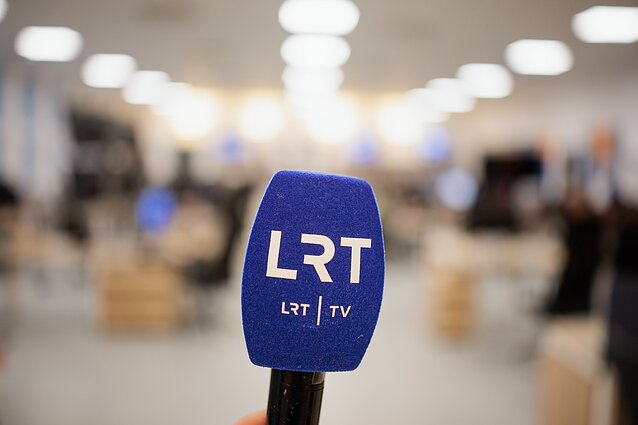
Lithuania’s diplomats in Brussels are facing pressure over proposed reforms to public broadcaster LRT currently being debated in parliament, with media representatives also comparing the situation to the democratic backsliding in countries like Hungary and Slovakia.
In late 2025, the Social Democrat culture minister, Vaida Aleknavičienė, received a call from European Commissioner Michael McGrath, who is responsible for democracy, justice, the rule of law and consumer protection.
The minister in Vilnius did not disclose the conversation, LRT sources said. However,a spokesperson for the commissioner said she had been asked about the legislative process, saying that “any possible changes must comply with the provisions of the European Media Freedom Act”.
Lithuanian Social Democrats have also faced questions from their counterparts in the European Parliament, sources said. Meanwhile, non-social democrat Lithuanian MEPs have twice written to the European Commission about attempts to amend the LRT law.
The Commission itself has sent a technical letter to the Lithuanian authorities requesting information on how the European Media Freedom Act was being implemented.
In the letter, Brussels expressed concern that the LRT amendments, which make it easier to dismiss the director general, may not comply with Article 5 of the Act.
The act states that procedures for appointing and dismissing the leadership of public service media must be designed to guarantee their independence.
Critics of the bill, including staff at LRT, say the amendments would pave the way for political influence on the broadcaster. A working group has now been set up in the Seimas to draft amendments.
In December, several demonstrations were held outside parliament over concerns about threats to freedom of expression, with the largest protests attracting over 10,000 people.
Like Hungary and Slovakia
The head of the European Federation of Journalists (EFJ), which represents over 300,000 European journalists, had also compared the situation in Lithuania with what had happened in countries like Hungary and Slovakia.
“You have probably heard about the latest case in Lithuania, which was actually very good on media freedom, and now they are trying to capture public service media,” said Renate Schroeder, head of the federation.
“We had it in Slovakia; Hungary was no surprise, and Poland showed how difficult it was to get back any trust,” she added.
Schroeder spoke on Tuesday at a high-level conference organised in Brussels by the think tank Europe MédiaLab, titled Democracy infrastructures: Eastern correspondents & European platforms.
“We need a strong public service media, because there are many studies that say the stronger and more trusted public service media is, the better the whole media is,” she said.