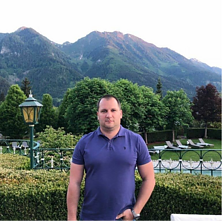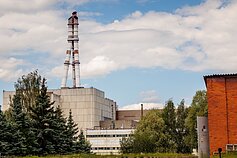















A Lithuanian citizen and former resident of Visaginas is developing a quarrying business in Russia. His business partner is the wife of a general in an ultra-secret division of Russia’s Federal Security Service (FSB). According to The Insider, the business is, in fact, being overseen by the FSB officer himself. Meanwhile, information gathered by the LRT Investigative Team suggests that the Lithuanian citizen in question continues to visit Lithuania – including his relative, who is employed at the Ignalina Nuclear Power Plant (IAE).
Though he presents himself as a former border guard named Albert Markov, he is in fact Albert Stepygin, head of the 2nd Directorate of Internal Security – one of the FSB’s most secretive departments. His appearances within FSB units reportedly cause alarm: “It means – expect swift arrests.” The FSB reports directly to the Russian president. Meanwhile, Stepygin’s directorate is responsible for exposing spies and corrupt officials within the FSB itself, including its central headquarters – the notorious Lubyanka.
General Stepygin has led dozens of operations targeting personnel within the FSB’s central apparatus. Several FSB officers have been dismissed on the basis of his reports, accused of secretly engaging in business activities. However, LRT’s investigative partners at The Insider – an investigative journalism outlet designated by the Kremlin as a “foreign agent” – have uncovered evidence that Stepygin himself is involved in business. Through his wife, he controls the extraction of sand, gravel and kaolin in Russia’s Vladimir region. Among his business partners is the previously mentioned Lithuanian citizen – nuclear engineer Aleksandras Patutinas, who resides in Moscow.
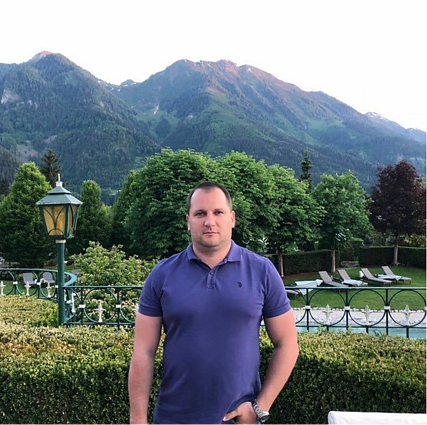
The LRT Investigative Team discovered that Patutinas declared his departure from Lithuania in January 2020. He holds no business interests or property in the country. However, available data suggests he has not obtained Russian citizenship, and his Lithuanian passport still grants him access to the EU and other countries. Records show that he continues to visit Lithuania – specifically the town, where his family resides –Visaginas, a Soviet-era town built to house the workers of the nearby Ignalina Nuclear Power Plant (IAE), where his family still resides.
Invited a Lithuanian, warned to treat with respect
The Vladimir region in Russia hosts dozens of quarries – both legal and illegal – where decorative stone, sand, gravel, and kaolin are mined. The sector is considered highly lucrative, with a reported return of 50 roubles for every rouble invested. Entry into this market requires close ties with powerful officials, including the FSB.
In April 2021, a company called Aleksnerud LLC was registered in the city of Aleksandrov. Its founding members included four local residents, one of whom was well-known Russian impressionist painter Aleksandr Gunin. The local governor issued the company a licence to develop a 177.3-hectare plot of land, later expanded by an additional 124.8 hectares. Machinery was brought in and operations began.
Soon after the company became profitable, changes were made to its leadership. According to The Insider’s sources, all operations were being directed by Sergei Morozov – listed in the Vladimir region’s Interior Ministry database for engaging in illegal timber trade. He is believed to have close ties with the FSB and acts as an informal overseer of quarry activities.
It was Morozov who brought Patutinas into Aleksnerud LLC. “We were warned to treat him with respect,” sources said.
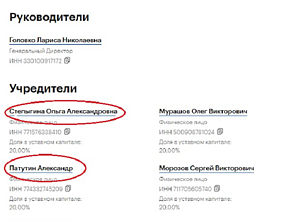
Gunin, a painter by profession, was soon removed as a shareholder – likely a figurehead from the outset. “Morozov replaced him with Olga Stepygina [wife of FSB general A. Stepygin] from Moscow. People started to complain, but he said she was a woman from Lubyanka and it was pointless to argue,” a source told The Insider.
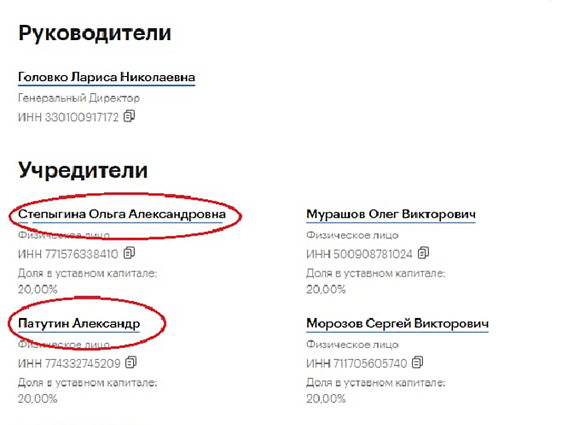
The Insider’s findings suggest the quarrying venture is directly controlled by General Stepygin. His phone contacts reportedly include Morozov, the formal founder of Aleksnerud LLC, as well as a number linked to an individual officially listed as a machine operator but informally described as intelligence personnel.
A challenging start in Russia
Following a capital increase in Aleksnerud LLC, Olga Stepygina and Aleksandras Patutinas each obtained 20% of the company’s shares. The insider sources could not explain how a Lithuanian national gained access to an FSB-controlled business – particularly given that even Russians without powerful connections are typically excluded.
Patutinas was born in Kaliningrad and moved to Lithuania in 1982 with his parents, who worked on the construction of the IAE and settled in Visaginas. Following the collapse of the USSR, he acquired Lithuanian citizenship and later pursued nuclear energy studies in Russia. Upon graduating, he remained in Moscow. At that time, the IAE was closing and demand for nuclear engineers in Lithuania had diminished. He has retained his Lithuanian passport ever since.
According to The Insider, finding work in Russia as a Lithuanian citizen was not easy. He was initially rejected for roles in his field. A breakthrough came in November 2012, when he became a co-founder of Khoroshego sand and gravel quarry and soon after, director of both that company and Nerud-Resurs. Both are located in Russia's Yaroslavl region.
The Insider sent questions to Patutinas via email but has yet to receive a response. This article will be updated should a reply be provided.

Continued links with Lithuania
Though Patutinas officially left Lithuania in January 2020, Russian border databases show he continues to visit the country. He regularly travels to Visaginas using various vehicles passing border crossings between Russia and Latvia. He has also been recorded visiting other EU countries – including during Russia’s full-scale invasion of Ukraine. Records show he crossed via Latvian checkpoints in both 2022 and 2023 [no newer data is available yet – ed.].
According to data collected by the LRT Investigative Team, Patutinas’ relatives still live in Visaginas. One works at the IAE as an engineer [identity known to editors – ed.]. This individual ran in the 2019 Visaginas municipal elections on the “Visaginas – That’s Us!” committee list, headed by current MP Jevgenijus Šuklinas.
The relative confirmed to the LRT Investigative Team that Patutinas visits family in Visaginas, but these visits are not planned in advance.
“He usually doesn’t say beforehand. Might call a day before and say he’s coming tomorrow,” said the relative.
He also confirmed that Patutinas works in the sand quarrying business in Russia but claimed not to know his partners. “I don’t know who he’s in business with. I’ve never looked into it. It’s his affairs,” he said.

The man added that he himself avoids travel to Russia or Belarus in recent years to avoid professional complications. “You know the situation and how state companies react. You can go, but there may be consequences. There could be job-related issues.”
Asked whether working with the wife of a senior FSB general could create problems, he said he had no such information and had disclosed his ties with his Russian relative through the official IAE questionnaire.
“I filled out the form for the background check. So far, I haven’t had any issues – no one’s asked me anything. [...] I provided all the details – information about my relative, where he works, what he does. All of that has to be filled in, otherwise you won’t pass,” he said.
The IAE informed the LRT Investigative Team that every employee must complete a government-approved questionnaire, submitted to the VSD.
“The checks are conducted to determine whether there are any circumstances – such as criminal convictions, ties to hostile intelligence or security services, involvement in terrorist activity, and so on – as outlined in Article 50, Part 3 of the Nuclear Energy Act, which could prevent employment or revoke the right to unescorted access to nuclear energy facilities,” wrote Saulius Jansonas, Communications Project Manager at the IAE.
The questionnaire must be updated every five years. Additionally, those in senior positions are vetted by the Special Investigation Service.
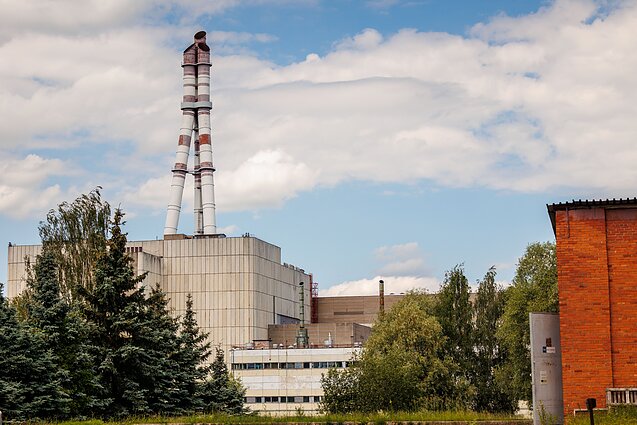
“In addition, in accordance with the same resolution, the company carries out ongoing monitoring – at least once every six months, information is submitted to the relevant authorities regarding individuals who hold permits for unescorted access to nuclear energy facilities, in order to determine whether any new circumstances have arisen that would prevent them from accessing such facilities without escort,” said Jansonas.
According to him, an additional restriction has been in place at the company since the beginning of this year – employees working with classified information are now restricted from travelling to Russia, Belarus, and China.
“It should be noted that the majority of IAE employees are residents of Visaginas. The town has a population of around 19,000 to 20,000 people, of whom, according to Statistics Department data, only about 20 percent are of Lithuanian ethnicity. The majority are ethnic Russians or belong to other nationalities, many of whom have various family or other ties with the aforementioned countries. We would also point out that current legislation does not prohibit employment solely on the basis of kinship or personal connections with foreign nationals,” the response stated.
Political candidacy – helping friends
The IAE engineer and relative of Patutinas ran in the 2019 municipal elections. He said he joined the list at the request of friends. “I was told they needed help getting elected, needed more votes. I’ve never been interested in politics. It’s not for me. Other parties invited me later, but I declined.”
MP Jevgenijus Šuklinas, who led the 2019 list, told the LRT Investigative Team he was unaware of the candidate’s links to Russia. “I truly didn’t know anything about his relative. It’s the first I’ve heard of it,” he said.

He speculated that the man was invited by someone else on the team, as the list was open to all.
“There wasn’t a selection process, and we didn’t check. But it was also a different time, before the war. In Visaginas, many people have relatives in Russia – it raised no concern then. He wasn’t active anyway didn’t participate in the campaign or anything,” said Šuklinas.
Linked to disappearance in Snoras Bank case
Returning to FSB General Stepygin, who is linked to the quarrying business in Russia – he has been mentioned in several controversial cases, including the disappearance of Vladimir Antonov, the owner of the now-bankrupt Lithuania-based commercial bank Snoras.
Antonov, who was convicted in absentia in Lithuania last year and sentenced to 10.5 years for large-scale embezzlement, disappeared from his Moscow estate in 2023. His father suggested he may have been murdered, though there were rumours the former banker had changed his identity and fled to avoid creditors.
Antonov left behind luxury flats and cars in Moscow – including Ferraris, Aston Martins and Cadillacs – which became the subject of fierce disputes. According to The Insider, the struggle involved crime boss Viacheslav Popov (also known as Slava Tagansky), with ties to security services.
Back then, Antonov’s lawyers published correspondence between individuals involved in the asset dispute. The name of Tagansky appears, and he is described as a “partner and close friend” of FSB general Stepygin.

Newsletter
Every Friday morning.