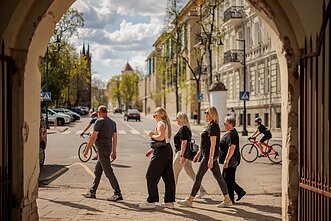


Lithuania has already recorded its 18th high temperature record of the year – and April isn’t over yet, meteorologists said this week, calling the current heatwave an anomaly linked to climate change.
Temperatures have soared to levels rarely seen in mid-April. On April 18, thermometers in Kretinga, Pagėgiai, Šilutė and Tauragė hit 29.1 degrees Celsius, surpassing the previous record by 6 degrees. Across the country, many took advantage of the unseasonal warmth, sunbathing and even swimming at popular spots like the Green Lakes near Vilnius.
“I’m not young anymore, and I honestly don’t remember April ever being this warm,” said one Vilnius resident, who was enjoying a swim.
The heat has surprised not only locals but also visitors. Two tourists from Spain said they weren’t expecting summer-like conditions. “I thought it would be much colder – I brought a jacket and coat,” one said. “Two weeks ago it was snowing, and now it’s hotter here than back in Spain,” added another.
According to meteorologist Gytis Valaika, Lithuania and nearby regions were warmer than parts of Southern Europe, including Italy, Greece and Spain, which were experiencing cooler conditions of around 10 to 15 degrees Celsius.

Valaika said this is already the 18th record high in Lithuania this year – the same number logged over all of 2024. He attributed the unusual warmth to a strong southern airflow from North Africa, which also brought dust and dryness. With high temperatures increasing evaporation and little rainfall in the forecast, there are growing fears of drought.
“If we don’t see more precipitation soon, this could escalate into a severe drought,” he warned.
The head of the Department of Environmental Science and Ecology at Vytautas Magnus University, speaking about long-term adaptation, emphasised the need for agricultural planning. “Crops may dry out, which could impact harvests,” she said. “We need to prepare with irrigation and drainage solutions.”
Environmental specialists are also sounding the alarm about broader ecological impacts. Unseasonal heat is shifting blooming and fruiting patterns in plants and affecting animal life.

“Forty years ago, blueberries typically bloomed in mid-June – now they’re already flowering,” said Eglė Vičiuvienė of the Baltic Environmental Forum. “Anemones, which used to bloom around Mother’s Day, are now fading in April after blooming a month early.”
The extended warm season has also affected tick populations. Ticks remained active from March 2024 to mid-February 2025, with just a two-week dormant period.
“With a longer active period, the risk of tick bites increases significantly,” said Milda Žygutienė, a medical entomologist at the National Public Health Centre. So far this year, 10 cases of tick-borne encephalitis have already been reported.
As the climate continues to warm, experts warn these extreme fluctuations will become more frequent – and societies must prepare accordingly.


Newsletter
Every Friday morning.