












Young women in Lithuania’s rural areas are often forced to skip school due to the unavailability of female hygiene products in their local shops. Now, some schools have started offering so-called hygiene stations, providing the necessary products free of charge.
After Pavenčiai School in the Šiauliai district in northern Lithuania became the first in the country to install hygiene stations in girls’ toilets, the headteacher of Kamajai Gymnasium, Loreta Grochauskienė, carried out a survey. She admitted the results were surprising – the lack of hygiene products was affecting attendance.
“Girls were skipping lessons, and after we conducted local research and spoke with them, it became clear that some families simply can’t afford these products. About half of our students receive free school meals, which gives you an idea of their financial situation,” said Grochauskienė.
Kamajai Gymnasium also followed suit in installing the hygiene stations. The initiative has already shown positive results.

“Teenage girls were missing three or even four days of school at a time. It was a real challenge,” said Zita Šivickienė, a social worker at the school. “I can say with confidence that attendance has already improved because of this issue alone.”
The mayor of Rokiškis district has instructed that similar hygiene stations should be installed in all schools. Educational institutions receive funds for operational expenses, saying the schools could draw from these funds for the initiative.
“Each station costs us roughly 100 euros per month. The girls were told there would always be enough supplies and not to be afraid of taking what they needed. It’s been almost a month now, and everything has gone smoothly,” Grochauskienė, the headteacher, explained.
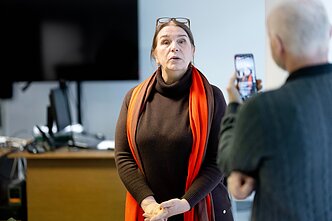
Communications expert and social activist Dovilė Filmanavičiūtė became the ambassador for the hygiene station social project several years ago. However, she said schools have been slow to act.

“The current number of stations is far too small – I only know of two schools that have them,” said Filmanavičiūtė. “If school leaders don’t see this as a priority and fail to understand that adolescence is when young people need strong adult support, these stations won’t just appear on their own. Someone has to take the initiative.”
According to Filmanavičiūtė, even the private sector is ahead in this regard, as many businesses already provide sanitary products for women.
“But in places where we have a very sensitive age group, where girls are still trying to understand what’s happening with their bodies and may not have the financial support at home, no one’s reaching out a helping hand,” she said.
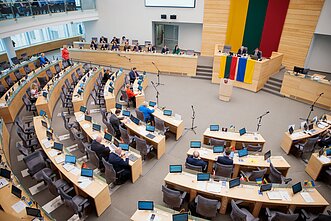
Some countries are increasing access to menstrual products by applying VAT exemptions. Lithuania’s Social Democrats proposed a similar measure a few years ago. Although the idea received backing in parliament, it was never pursued further.

Newsletter
Every Friday morning.