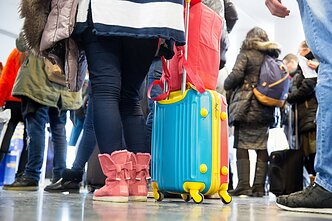













Lithuania’s migration policy favours the Philippines, says the chief of the Migration Department, while a growing number of residence permit holders also come from India and Bangladesh.
As of January 1, there were 774 Filipino citizens with residence permits in Lithuania, compared to 487 a year ago and 244 in 2023.
Evelina Gudzinskaitė, director of the Migration Department, says that the gradual increase in the number of migrants from this country is related to Lithuania’s demographic policy.
“The former parliament adopted a resolution on Lithuania’s demography and immigration policy, where it enshrined the principle that our migration flows should be diversified and that the aim should be to attract more foreigners from countries that are culturally closer to Lithuania,” she told BNS. “The Philippines has been identified as one of these culturally closer countries, as it has a large Christian population.”
Moreover, labour from the Philippines is subject to robust migration processes, according to Gudzinskaitė.
“There are clear, strict regulations on bringing in labour from the Philippines, they ensure that the workers are sufficiently skilled and that employers are not deceived, as has been the case with other countries,” she said.

“I think we will see even more growth [of migration] from this country this year and it is the Philippines that should replace Indian, Pakistani, Bangladeshi nationals,” she added.
At the beginning of January, there were some 2,100 Pakistanis in Lithuania, 7,200 Indians, and around a thousand Bangladeshis.
The majority of them have come to Lithuania to work and study – both groups account for around equal parts among Pakistani and Bangladeshi nationals.
“I think that the number of students will increase in the future, while the number of those who come for work should remain the same or decrease,” Gudzinskaitė believes.
When it comes to people from India, almost 5,000 are in Lithuania for employment, around 1,600 are students, and around 350 for skilled employment. Several hundred more are family members.
Overall, 5,800 foreigners have residence permits in Lithuania as highly skilled workers.
According to the data of the Migration Department, people from Ukraine, Belarus, and Russia are still the most numerous foreign residents, although their numbers have decreased over the last year.
“They remain the top countries, but the number of their citizens has decreased over the year. And of course, Belarusian citizens decreased the most,” Gudzinskaitė said.
In January last year, there lived over 86,000 Ukrainians in Lithuania, while this year there are over 77,000.
The number of Belarusian citizens dropped from 62,000 to 57,000, and the number of Russians from 15,000 to 14,000.
“Bearing in mind that more than half of the Russian citizens are permanent residents who have been living here since the beginning of independence, the number of temporary migrants is just over 6,000. This means that due to the restrictive measures, Russian citizens are practically unable to come to Lithuania to settle,” said the head of the Migration Department.

Newsletter
Every Friday morning.