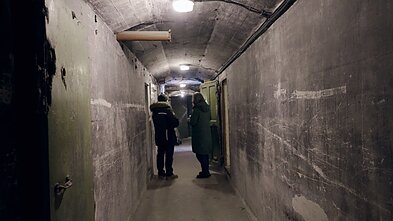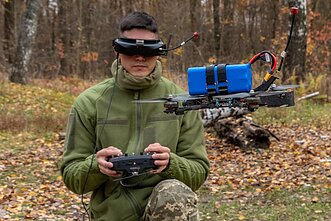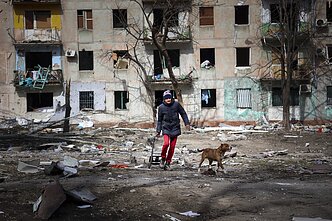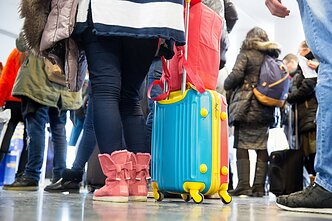






After the abortive 2020 revolution in Belarus, hundreds of thousands have been forced out of the country. Man first went to Ukraine before they had to flee again when the Russian tanks rolled in. One of them was Maria Yeryoma, a reporter for Kyiv Independent living in Vilnius.
At the time of the 2020 uprising, Yeryoma worked for TUT.by, the main independent media source in Belarus. At the height of the repressions in 2021, their office was raided by regime officers. Some journalists escaped through the forests to Lithuania, others were persecuted – editor-in-chief Maryna Zolatava and general director Lyudmila Chekina were each given 12 years in prison.
In the wake of Sunday's so-called elections in Belarus, LRT sat down with Yerymova in Vilnius to talk about the last five years and the relationship Belarusians have with Lithuania and Ukraine.

Were you in the office at the time when it was raided?
No, I was working from home that day. I remember having a daily kick-off meeting with my team. In the middle of the meeting, as we were joking and discussing the agenda, someone said in the chat, “Hey guys, I think they’re coming for us.”
I started losing contact with everyone. I could see people online, but no one was responding; it was eerie. Everyone was forced to keep their accounts live and devices open but couldn’t communicate. Most of the staff were released that day, but 15 colleagues were arrested.
They spent much of 2021 in prison awaiting trial. Some were released under conditions like cooperating with the investigation. A few used the opportunity to flee the country.
Those who [were briefly released] either left legally or crossed the border through forests. Three are currently under investigation and facing trial in absentia.
I hid for a few days in various places, notifying trusted people when I went offline. Eventually, my supervisor contacted me, saying, “We’re relocating the team, and you’re the best person for the job.” That’s how I ended up in Ukraine.
How were Belarusians perceived in Ukraine before and after the war?
Before the war, Ukrainians were welcoming. We share history and culture, so Belarusians blended in easily. If people noticed I was Belarusian, they’d usually say how do you put up with Alexander Lukashenko.
Since the war, sentiments have shifted, especially online. In-person interactions are still mostly positive, but there’s tension when dealing with official services. So when I'm crossing the border, I just present my credentials and say, here, I'm this Pokemon for you to have fun with for the next couple of hours.
In the beginning, you are very tense, you’re the citizen of a hostile country. But then you start talking to them, they see that you're on their side and then it works out fine.

Have you encountered the sentiment that if Belarusians had succeeded in their revolution, there wouldn’t be a war in Ukraine?
That's a very common sentiment, but I usually argue that we were not in the same situation. One revolution is not transferable to another background. If we had won, I think we would have been occupied by Russia – not virtually, but actually. In 2020, it seems that Vladimir Putin was already planning [the invasion], so he needed Belarus as a springboard. If that springboard would have deviated, I guess we would have been shown our place.
What’s it like being a Belarusian in Lithuania now?
Since I started conversations in English, as I stopped starting conversations in Russian, I'm usually not perceived as a Belarusian.
In Lithuania, it’s less hostile on social media than in Ukraine, because you have a very small part of the nation that is involved in this debate about history with the Belarusians, and they are pretty hostile. So on a personal level is fine, but on the official level it’s different – we hear daily that someone has lost a residence permit just like that.
Last year, it was the first time that the number of Belarusians went down in Lithuania. Most people who came here as part of the tech sector are now considering relocating to Poland.
So it’s mostly because of the speeches of politicians and some of the laws that you think you’re not welcome anymore, but it’s not happening on the streets – you will not be yelled at because you’re Belarusian.
The flow of opposition exiles has decreased, because we’re running out of opposition in Belarus, people are jailed daily.
Are you actively involved in the Belarusian community in Lithuania?
Not directly. My bubble mainly consists of professionals and people from the opposition. Within this group, there’s a lot of uncertainty. Friends in Poland are asking, well, when are you moving there? There’s a general feeling that those who came to Lithuania are now moving to Poland. I’m not entertaining that thought and hoping for the best, but everybody is a little bit anxious as to what's gonna happen next to us here.
I can see how 60,000 foreigners is a problem for a city of 600,000 people, I don’t think we’re that much of a threat, but who am I to decide?
There’s also a lack of perspective. We now have [the problem of] expiring passports, so when you are not on track to becoming a citizen of the nation you’re staying, you’re on track to becoming a stateless person.
I think a lot of those who can’t go back to Belarus and cannot renew the passports [which you can only do in Belarus], are considering moving to countries where you will eventually become a citizen. But I can't complain, Lithuania has been indeed a helping hand for every political refugee here.

Is there a divide among Belarusians in Lithuania?
Not as much. For some, life here is harder – mainly in terms of work. They might feel nostalgic for the life they had in Belarus. That’s common in any migration situation.
But sometimes conflicts do pop up, especially when people choose to travel to Belarus. Some people can afford it, and honestly, I envy them. I haven’t been to Belarus in four years, and there’s no prospect of that changing.
But travelling back doesn’t always end well. Arrests at the border are real, even for people who think they’re just regular citizens. One day, they’re moving freely; the next, they’re a political prisoner. Then, our organisations have to step in to evacuate them. It’s frustrating.
Do you think the elections in Belarus feel different now compared to five years ago, or to the protests in 2010?
In 2010, the opposition was much smaller, and fewer people were involved. By 2020, almost everyone knew someone affected by repressions – whether it was someone who fled, spent time in jail, or is still in jail.
That said, the repression has crushed people’s hopes. Now, to survive in Belarus, you distance yourself from politics. Organisers have to label events as purely cultural, for example, just to avoid trouble.
Right now this propaganda of the elections is everywhere – delivery packaging, at checkout counters. I talked with people who said they’re afraid not to vote. This is some sort of schizophrenia – everybody is trying to simultaneously ignore the elections and kind of have to participate in it at the same time. For example, university students are being forced to vote, because they risk losing their place in the dormitory.
Those who depend on government are forced to vote, others are scared of not showing up. They say [the regime] will have the lists and will see that they didn’t vote and will come after them.
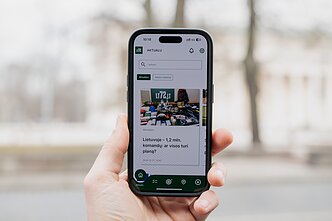
People are now even reading the news only at home, because they don't want somebody on the subway peeking over their shoulder.

Newsletter
Every Friday morning.