







A handful of non-profit organisations, claiming lineage from the interwar period, are working to recover property expropriated or nationalised during the Soviet and Nazi occupations. A bill is ready, but the government has yet to estimate how much it would cost.
An interwar building on Exhibition Hill in Kaunas bears a plaque that says: “This house was built in 1928 by the Lithuanian student nationalist corporation Neo-Lithuania.”
However, the building was expropriated in 1940, during the Second World War, and now belongs to Kaunas Municipality. Neo-Lithuania, which was revived after the country regained independence in the 1990s, was only a tenant in the building – until they had to move when the city began a renovation recently.
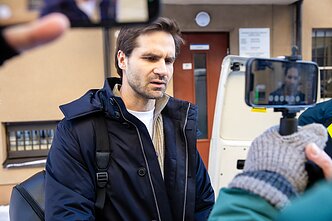
“We are an organisation without a permanent seat, we are currently sheltering at the university,” says Bronislovas Balvočius, the chairman of student corporation.

Another organisation, the Lithuanian Catholic Federation Ateitis, is in a similar situation. A plaque with their logo braces one building in Kaunas’ central Laisvės Avenue, also built before the Second World War, but it now belongs to the government and is used by Kaunas University of Technology.
“We are guests with access to the premises. But the property belongs to Turto Bankas,” says Gediminas Plečkaitis, chairman of the Federation Ateitis, referring to the manager of public real estate.
Many of these properties built and owned by Lithuanian non-governmental organisations before World War Two, especially religious or nationalist, were nationalised by the Soviet authorities and remain in public ownership.
Now, these organisations would like the properties back, saying it would be the way to restore justice.

“We have returned [agricultural] land to its rightful owners and properties to religious communities, but those organisations that make for a strong civil society have been left behind,” argues Plečkaitis.
“This is straightforward justice and it is a matter of the rule of law to restore justice,” agrees Balvočius.
Lithuanian MPs have already drafted a bill on returning expropriated assets to non-profit organisations. To protect against possible abuses, the restitution would be open to organisations that were active before 1940 and reestablished their activities after 1990, but no later than 2019.
“Unless we give restitution to public organisations that purchased real estate with their own money, then we recognise that Soviet nationalisation was a legitimate act,” argues Valdas Rakutis, a conservative MP.
At the moment, the bill is making its way through the government which has to estimate how much it will cost to the state to give the expropriated properties to eligible organisations.

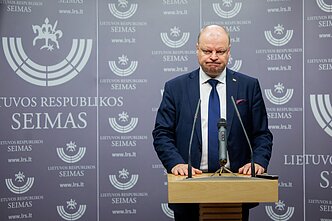
“This is a debatable issue and it is not just about Kaunas – there are other cities, especially Vilnius, where there were many public organisations and the issue of restitution has always been complicated,” said Social Democratic MP Algirdas Sysas, chairman of the Committee on Budget and Finance.
Not least because Vilnius was part of Poland before World War Two and only became part of Lithuania in 1940.
Organisations seeking to recover the property say they have carried out historical research and estimate that there may be around 11 active NGOs with a claim to assets expropriated during the Soviet era. The total value could be around 30 million euros.
In Lithuania, only religious communities and the Riflemen’s Union have had their properties, expropriated during the Nazi and Soviet occupations, returned to them.
To compensate the Jewish community, the Lithuanian government set up a special fund in 2011.

Newsletter
Every Friday morning.