














A Lithuanian woman is constantly confused with her namesake from Belarus who is on an international sanctions list. As a result, she has been having trouble making bank transfers. A consumer rights advocate says the situation is not normal.
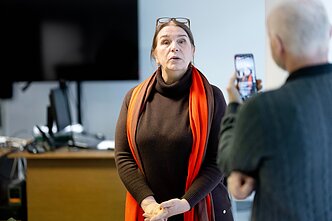
Elena Titova, from Vilnius, was surprised to learn that there was another person with the same first and last name as hers – and that she was on a sanctions list. Over the last two years, Titova has been forced constantly to prove to banks that she is another person.
“I was told by a person to whom I made a bank transfer that he received an email from his bank saying that he would not get the money because my name is possibly on a sanctions list,” says Titova.
The email instructed that if the person wanted to receive the transfer from Elena, he had to send a copy Elena’s ID or any other document stating her date of birth and nationality.
“I am most angry that someone else has to send my ID. Because I do not always transfer money to a friend, a family member, or an acquaintance. Sometimes it’s a stranger,” says the woman.

Meanwhile, it’s nearly impossible for her to receive money from other banks without additional trouble. She was once unable to receive even her salary.
“One time my salary payment was stopped, I had to call my company’s accounts and they had to sort out the situation,” says Titova.
According to the Bank of Lithuania, each bank is free to decide how to prevent the activities of sanctioned persons.
“There is no other way to ascertain whether a person is sanctioned or not. If the name is not enough to prove that the person is not sanctioned, the institutions will naturally ask for additional information,” explains Vaidas Cibas of the Bank of Lithuania.

Stasys Drazdauskas, a lecturer at the Faculty of Law of Vilnius University, does not see a personal data protection breach.
“The purposes for which the sanctions are imposed are public interest, security, public policy in the European Union. [...] This certainly outweighs any private interests. Even the inconveniences that individuals may obviously have to face,” he believes.
One’s date of birth and nationality are not the most sensitive data, according to the lawyer.
“With them, identity theft is not so easy to do. Moreover, they are not unique identifiers. Like the personal identification number, the telephone number or the e-mail address,” says Drazdauskas.
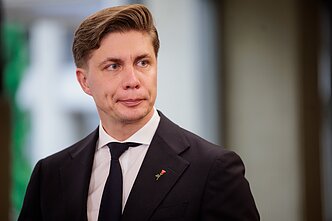
Rytis Jokubauskas, vice president of the Consumer Alliance, disagrees. He says that such data can cause trouble if it falls into the hands of a stranger.
“Any such additional data leak helps to complete the portrait of the person and increases the likelihood that the data of that person will be used for malicious purposes,” he stresses.
The situation is not normal, he adds.
“It is clear that the procedures used by banks are not worked out, they’re not what they should be. It wouldn’t be surprising if it happened once, a person would have to clarify the situation the first time, but having to prove that you’re not another person every single time is not normal,” Jokubauskas believes.
Banks need to look for solutions, insists the vice president of the Consumer Alliance. Meanwhile, Titova from Vilnius should file a complaint with the Bank of Lithuania and the State Data Protection Inspectorate, he adds.
Titova says she intends to do so.

Newsletter
Every Friday morning.