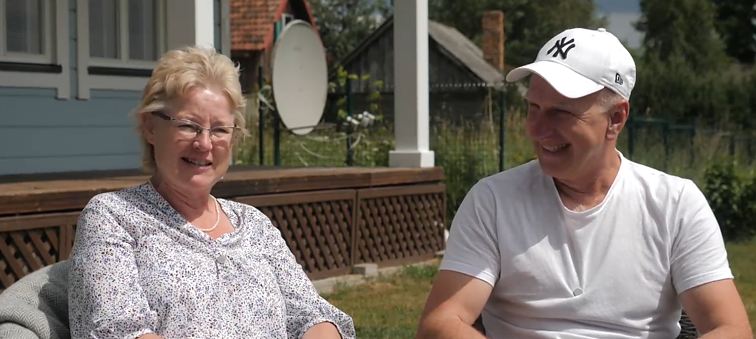














“It was fate that I met Vaidas,” says Rauni Helena Šuopys, Vaidas’ wife from Finland who now lives in Lithuania. The couple moved from Finland more than a decade ago, built their own house and are now baking Italian pizzas in a Spanish oven.
Vaidas and Rauni have lived in Lithuania for 14 years. The woman learned Lithuanian by listening to the radio every day on her way to work in Kaunas. She speaks Lithuanian well but says she would like to speak even better.
“I want to integrate and communicate with people, my neighbours. I learned the language by listening to LRT RADIO on my commute to work in Kaunas. When we lived in Finland, Vaidas and I spoke English. We still speak English here at home, because he doesn’t want to speak Lithuanian with me,” she smiles.
Vaidas says he speaks English with his wife out of habit. For a long time, he was working as a navigator with no compatriots around, so the common language was English. The couple met in Turku, Finland, where the Lithuanian man was transporting cargo from Iceland.
“It was fate that I met Vaidas. We joke that he has explored the whole world, and in Finland the ship has reached the end of the earth, because when you translate the word Finland, it means land at the end,” Rauni jokes.
She disagrees with the stereotype that Lithuanians are a cold people, highlighting instead their hospitality.
Many visitors from Finland also come to visit the family, as Rauni grew up in a family of 18 children.
“Lithuanians are very hospitable. I feel safe in Lithuania and don’t want to live anywhere else. Sometimes it’s scary when people ask me if I would like to live in Finland again. I don’t. I just miss my family and friends,” she says.
Finnish house in Lithuania
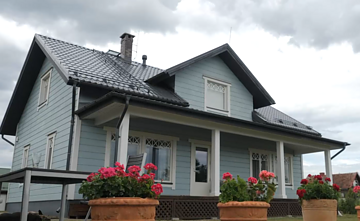
Before coming to Lithuania, Vaidas and Rauni had lived in Finland for eight years. They moved to Kaniūki, Jurbarkas district, and built a house there.
“A childhood friend recommended the place where we live now. On Sunday, we had a phone call with the friend, and on Wednesday we bought it,” Vaidas recalls.
However, they did not keep the house on the plot of land they had purchased. Instead, the couple built a Finnish house made by a company.
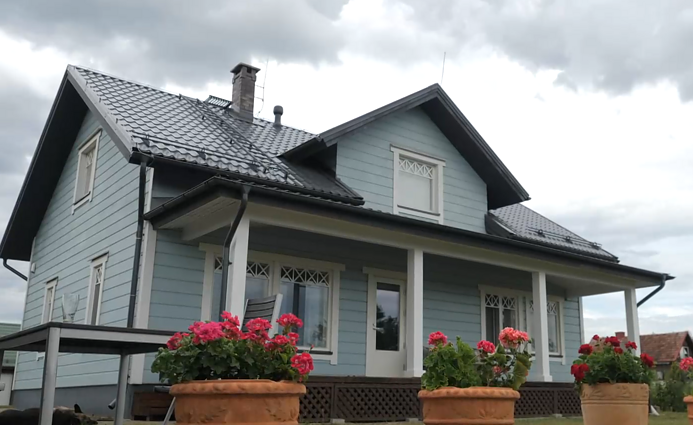
“We chose what kind of house we wanted and the company brought all the logs. The house was assembled in one day. The house is now 11 years old,” he says.
The couple also have a hand-built stove in their backyard, which they call the Ugly Duckling. Rauni’s friends from Finland have promised to fly to Lithuania in their private plane to taste the pizzas that Vaidas bakes.
Vaidas learnt the art of pizza-making while working in Spain in a camping restaurant. While on a business trip to Italy, he learned the tricks of the trade from a famous Italian master.
“This oven is the very first one and is not as nice as the others. We cook everything here – pizzas, kugels, shish kebabs. It’s been a lifelong dream of mine to have an oven. Once we had a home, we decided to build one,” says Vaidas.
A priest’s blessing to defect
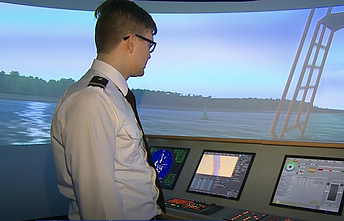
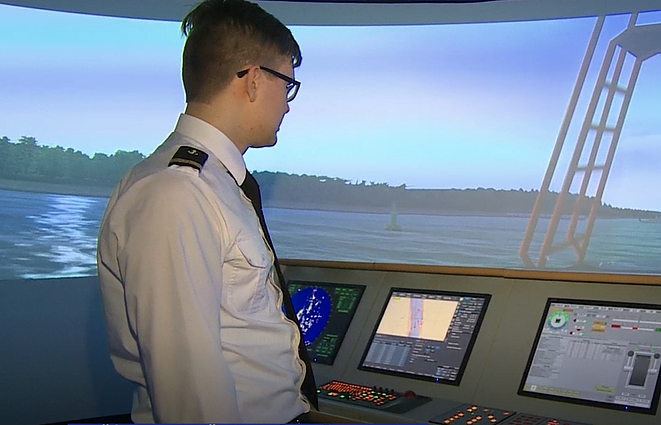
Vaidas graduated from a nautical school and worked as a navigator for 15 years. He became interested in this profession during the school’s open days.
However, he did not limit himself to seafaring – he lived in Spain for four years when Lithuania was still part of the Soviet Union. He defected and applied for political asylum there.
It was not an easy decision, Vaidas admits. Before going to Spain, he had received the blessing of a priest.
“The army unit where I had served belonged to the KGB. That was on my file. When I was applying for a job on ships in Soviet times, they saw this entry and they tried to recruit me as a snitch. That was a time when nobody asked you if you want to do it.
“I was still young and had a Catholic upbringing. I went to a priest and told him everything. He said I was young and gave me a blessing to defect to the West,” Vaidas recalls.
He had to take the risk, he is convinced.
“There was a newspaper article about Simas Kudirka who jumped from a Soviet ship onto an American ship and ended up in the West,” he recalls.
Kudirka’s was a notorious and unfortunate case in 1970. The American coast guards did not let him stay, he was returned to the Soviet ship. The incident caused outrage in the US and led to new guidelines for handling defections.
“When I spoke to him in 2012, Simas told me that I was lucky,” Vaidas says. “He had to spend two years in prison somewhere in Siberia, while I didn’t have to because I came back to Lithuania only in 1992.”

Newsletter
Every Friday morning.