








Lithuanian President Gitanas Nausėda has rejected the conclusions of the parliamentary commission that investigated the State Security Department (VSD) whistleblower’s case.
“I absolutely reject them as they are untrue,” he told reporters on Wednesday in Širvintos on Wednesday.
The Seimas commission concluded earlier this week that VSD director Darius Jauniškis had assisted Nausėda in doing background checks on his team members and supporters in 2019 when he was running for president.
The commission also concluded that the list of individuals to be checked was given to the intelligence service by Nausėda himself, either directly or through an intermediary.
Further reading
The president, however, insists that he did not ask the VSD to gather information on his inner circle.
“Why are you asking this question? This question was answered long ago. The commission has not established anything new on this issue, only the same truth that was told before: I could not give any tasks to anyone as I was an ordinary citizen, an unemployed Gitanas Nausėda who decided to run for president,” the president said, adding that he has “very serious doubts” about the commission’s findings.
‘Political farce’
The commission’s report – which has yet to be voted on by the parliament – also states that Nausėda’s refusal to testify before the commission is a violation of his oath of office. The president rejects this point too, arguing that when he received the questions, commission chairman Vytautas Bakas said the conclusions were already being written.

“This implies that the commission had already drawn its own conclusions and that these conclusions were probably known from the very start,” the president said, adding that the parliamentary commission was set up “with the aim of discrediting” him.
Nausėda also lamented that the Special Investigation Service (STT), the VSD, and the Prosecutor General’s Office were all made “hostages of this political farce”.
He compared the latest commission to the commission set up about five years ago to investigate the causes of the 2007–2008 financial crisis and its management in Lithuania.
“It was also set up a few months before the election. And [Prime Minister] Ingrida Šimonytė seemed to be one of its targets. [...] It seems that this political force, the ruling coalition, came in trying to say that they would do things differently, but they are doing exactly the same thing as the previous government was doing five years ago. It is a pity. Our political culture is stamping its feet,” the president said.
Further reading
Attempts to square accounts
The commission also stated that STT chief Linas Pernavas refused to disclose information for the investigation and thus abused his office. It also concluded that VSD chief Jauniškis provided misleading information to the commission. Both officials reject the accusations.
The commission unanimously approved the findings. However, critics note that it did not include any opposition MPs, except Bakas who sits with the Democrats For Lithuania group. This has led the president to claim that the commission and its investigation were politically motivated and that “Bakas was used to give it at least some legitimacy”.

“Who was Mr Bakas? Five years ago, Mr Bakas was the chief of election HQ of my rival Saulius Skvernelis,” Nausėda pointed out, suggesting that the MP is trying to “square accounts”.
“This commission has nothing to do with the desire to find the objective truth,” Nausėda said and called the commission’s proposal to “assess the appropriateness of the institute of criminal intelligence” dangerous.
Links to Belarusian fertiliser business
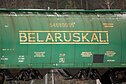
The commission also claims to have received evidence of contacts between Nausėda’s team and individuals linked to the Belarusian fertiliser business. The Lithuanian government banned transit of Belarusian fertiliser exports via its territory following the suppression of protests by Minsk in 2020. The president reportedly opposed the sanctions.
The Whistleblower and the President, an investigative report published last year as a book, alleged that brothers Andrius and Vilius Nikitinas, who were part of Nauseda's inner circle, had links to the Belarusian fertiliser business.
The commission also claims that some high-ranking officials from the president’s office met with representatives of the Belarusian fertiliser business, but they withheld this information when testifying before the commission. The commission vows to refer such testimonies to the Prosecutor General’s Office.

The Seimas investigators also concluded that in June 2021, when Lithuania was developing campaigning for sanctions on Belarusian fertilisers in the European Council, Nausėda actively trying through his advisors to stop them. Eventually, the sanctions on Belarusian fertilisers were imposed by both the EU and the United States, and their transit through Lithuania was stopped.
“I have not communicated with the Nikitinas brothers. If I understand correctly, there was some confirmed or unconfirmed fact about one of my team members, but that team member was no longer working at the presidential office when we were discussing the sanction issue,” Nausėda stated.
He insisted he was working hard to have the EU introduce sanctions on Russian and Belarus.
“Both regarding the fertilisers and other goods. It is unfair to hear such reproaches from members of the Seimas who, at best, wrote resolutions, to a man who himself was directly involved in the meetings where decisions were made and who tried to introduce the most stringent sanction regime,” he said.
The commission’s conclusions have yet to be approved by the full parliament. The ruling block is pooling support for such a decision, and part of the coalition is counting on opposition votes to have the report approved.
‘No impeachment’
Lithuanian MPs who conducted the parliamentary inquiry into the VSD whistleblower case said on Wednesday that their conclusion about Gitanas Nauseda's vulnerability is supported by collected evidence, but they do not plan to initiate impeachment proceedings against the president.
“There is no speculation here; the conclusion is based on evidence,” the commission’s chairman Vytautas Bakas told a news conference on Wednesday.
His statement was echoed by other members of the panel.
Conservative MP Bronislovas Matelis said the commission’s conclusion that Nausėda is exposed and that he may have broken his oath does not mean that he should be impeached.
Andrius Vyšniauskas, another MP of the ruling conservative Homeland Union-Lithuanian Christian Democrats, also said that “this is not a document that implies the start of impeachment”.
With only three months left until the end of Nausėda’s current term of office, there would not be enough time for an impeachment procedure, he noted.

Newsletter
Every Friday morning.