


A military hospital somewhere in northern Ukraine. LRT is not allowed to disclose its location due to wartime restrictions placed on the media. Inside, the lights are dim.
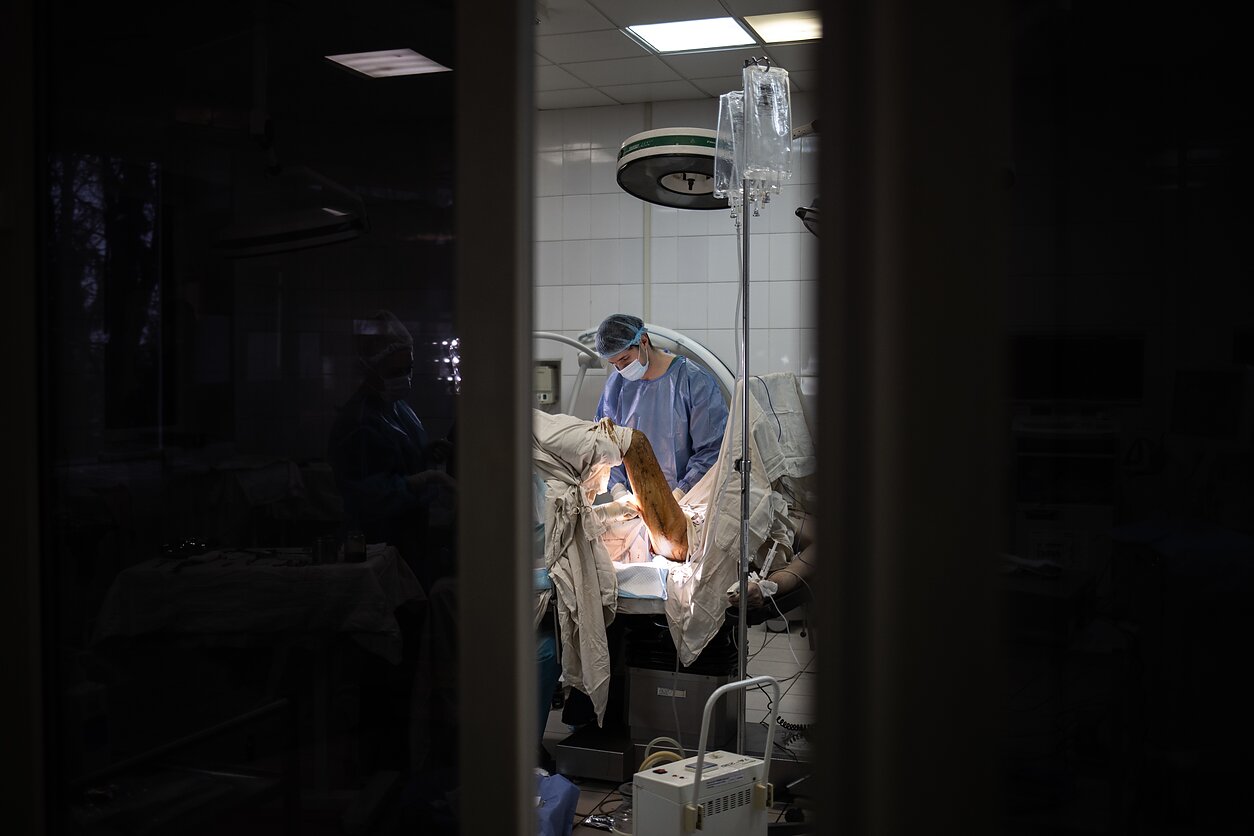
We are guided to an operating room, one of many, where a team of doctors huddle around a body laying atop the table. One x-ray after another is fired at the lifeless limbs.
Here, Ukrainian doctors are using the black-and-white imaging to peer inside without having to cut up the already shattered leg. The screen perched on the side shows two ends of the fractured leg bone being nailed together, with an external construction keeping it all together.

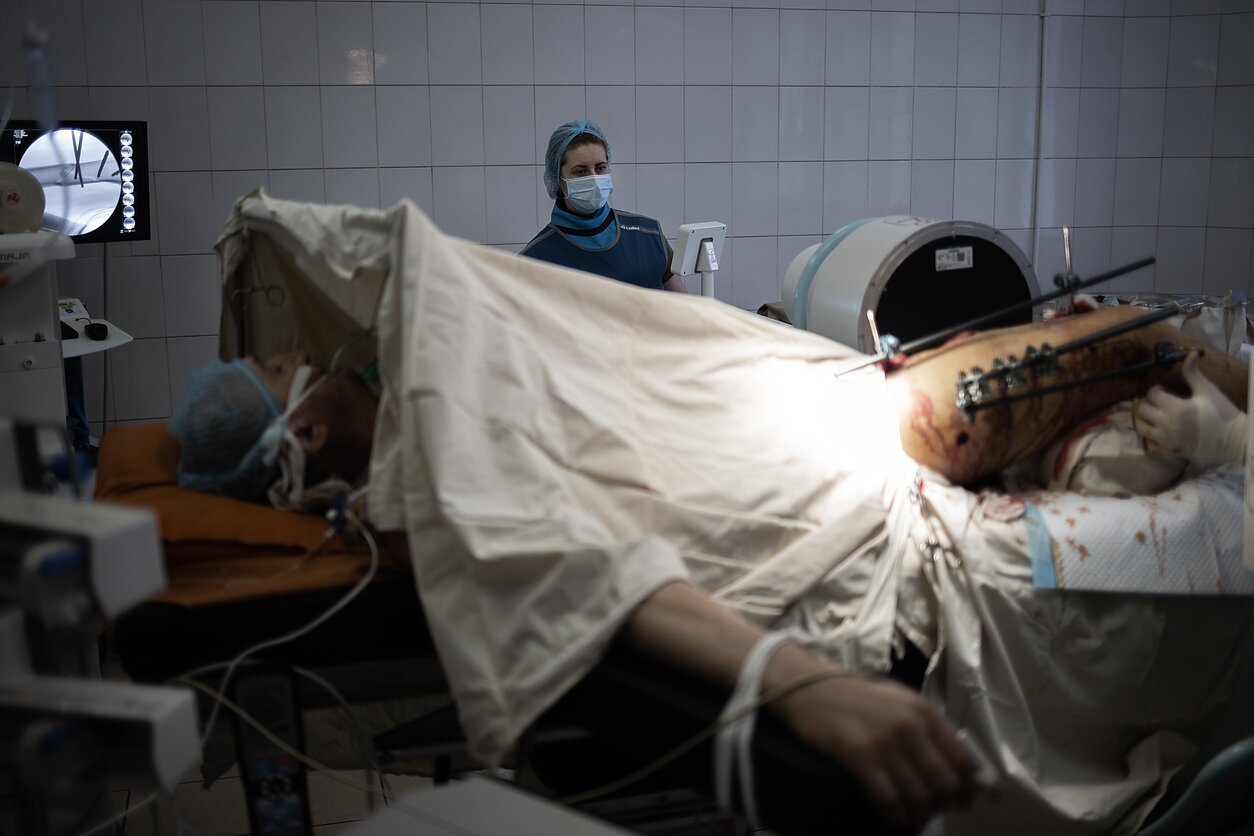
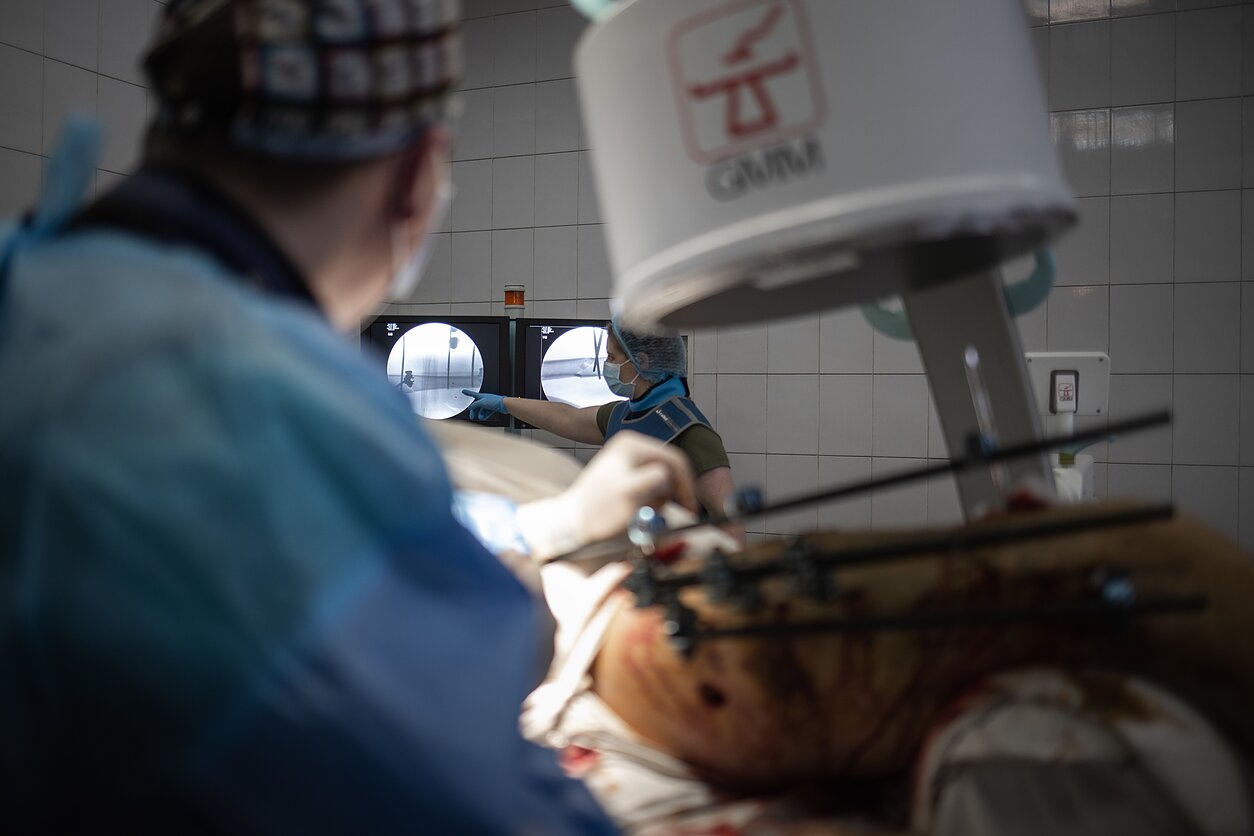
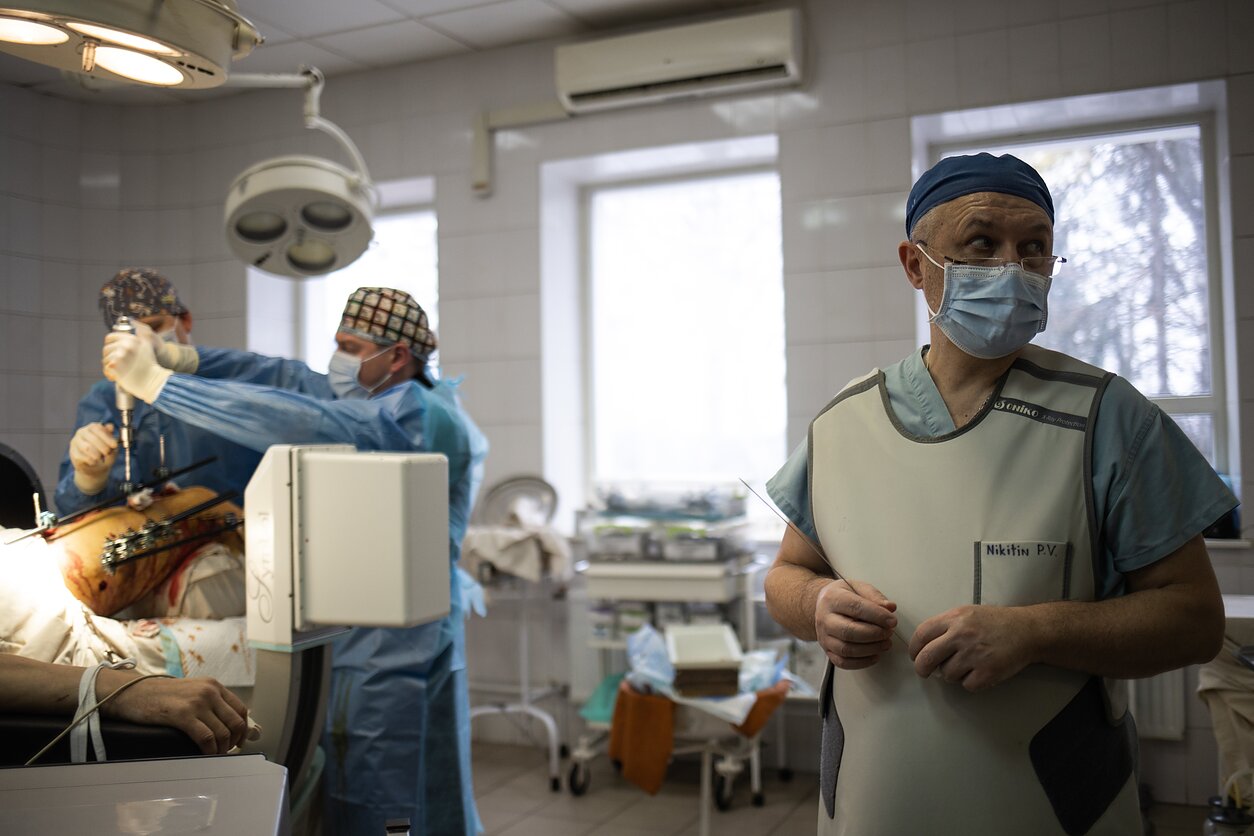
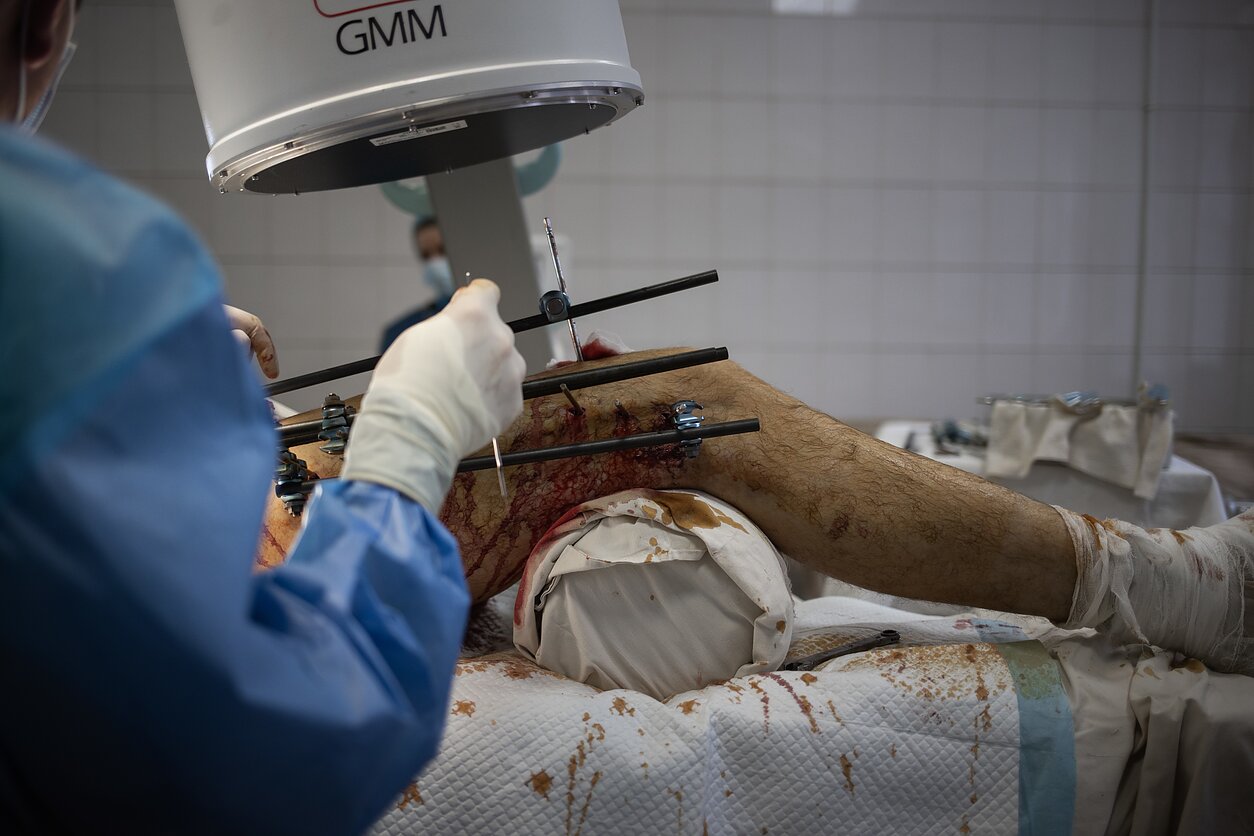
“He has bullet wounds in the stomach, chest, and upper thigh,” says the head surgeon, Petro Nikitin. “He already had an operation in the stomach area, now he is being operated on his hip.”
Such complicated operations are now routine. “It’s a real shame we now have such experience,” says Nikitin. “A real shame.”
Since the beginning of Russia’s full-scale invasion, Ukraine has lost thousands, perhaps even over 100,000 people, according to estimates released in February by the Norwegian intelligence service. The same number was also said out loud by the president of the European Commission, Ursula von der Leyen, in November last year.
Kyiv itself, however, keeps the exact figures under wraps. What’s clear from visiting several hospitals, however, is that the scale of Ukraine’s losses is immense.
One civilian hospital is filled with recovering soldiers. Some are limping, others on crutches. Some nurse bullet and shrapnel wounds, and others lay in bed after suffering from their first or consecutive contusions, the traumatic brain injuries that plague troops following close-call explosions.
The specialist military hospitals, meanwhile, are where the toll of the fighting comes apparent, according to the soldiers.
Nurses buzz around the rooms, doling out meds and words of affection to the hospitalised troops. After weeks in the trenches, the men are eager for a friendly chat.
In one room, two out of the four beds are taken up by middle-aged soldiers. One of them, Grigory, is laying with amputated toes. Fluids are seeping out of his shrapnel-peppered leg due to infections".
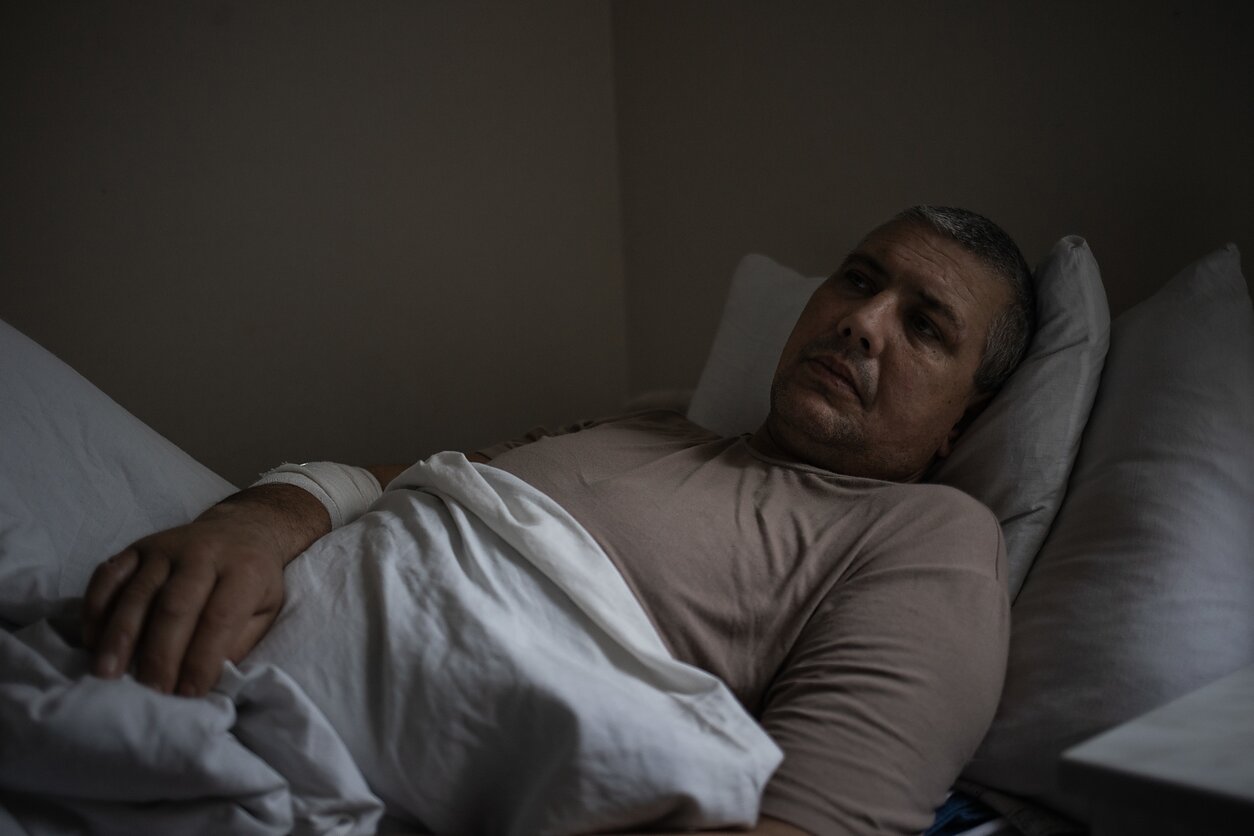
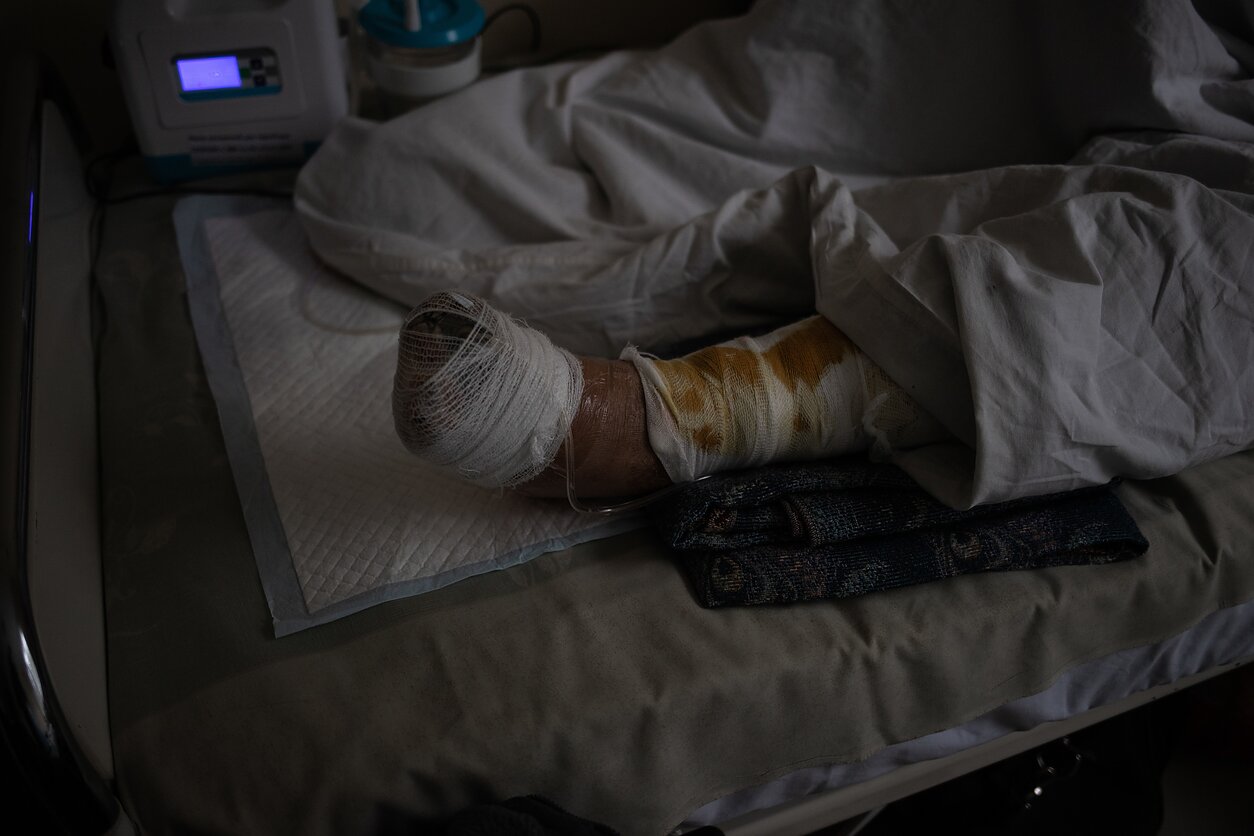
He is optimistic.
“We already had close-quarters fighting. I got hit by a shot from an under-barrel grenade launcher, up close. They were trying to push us out of our positions.” says Grigory. “So, this is how I got injured, but It could have ended up being much worse.”
“Other than that, all good, we held the frontline, we beat the Russians back,” he adds.
The whole time his roommate, Artiom, keeps silent. As the conversation turns to him, a nurse utters silently before leaving the room – he will tell you a story. Grigory sighs and shuffles uneasily in his bed.
Artiom, the second man, finally speaks out.
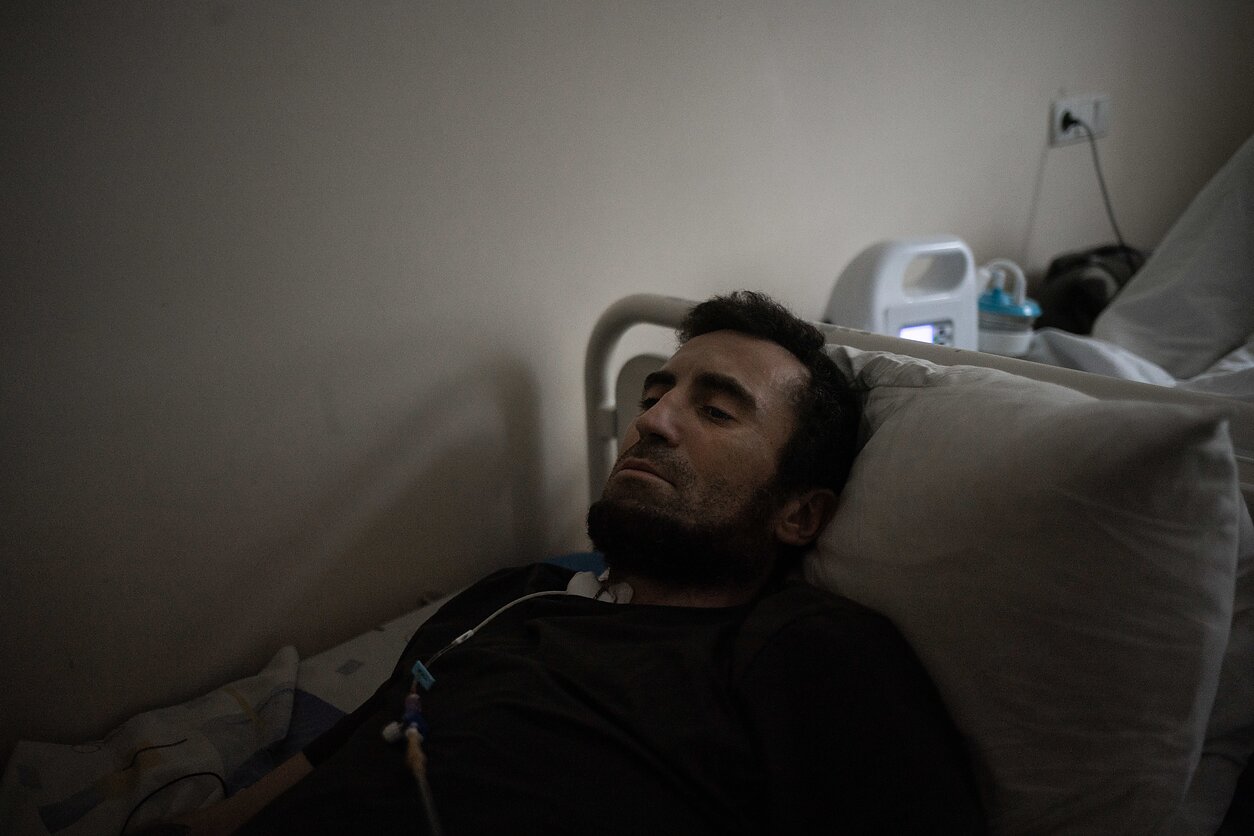
“It was hell,” he says.
He was injured and pulled out of Soledaro on January 8, just days before Russia announced it had taken the key mining town north of the besieged Bakhmut in the Donetsk region.
“There were many killed and injured. Very many. Many are still missing,” he says.
The troops would base themselves and hold the line in one or two-storey buildings, making up the bulk of the structures across towns and villages in Donbas. Once an artillery barrage or tank fire would level the house, those inside or down in the basement below would be buried underneath.
Dead or alive, it would not matter – it would be too chaotic and dangerous for Ukrainians to dig them out. So even though they are considered missing, they are all dead, Artiom adds.
The battle for Soledar, a prelude to the coming assault on Bakhmut nearby, lasted months. In January, the infamous Russian private military company Wagner made headway. It threw thousands of allegedly poorly equipped and trained recruits, including groups of convicts, at the Ukrainian lines.
Testimonies of Ukrainian troops allege the initial waves of to-be-massacred Wagner forces would be followed up with professional and well-equipped Russian ground troops.
Other Ukrainian troops say the sheer mass of the “meatgrinder” assaults would eventually allow Russia to take a few, costly steps forward in the Ukrainian steppe. Then, the assaults would restart for a position a few hundred metres away.
Men like Artiom bore the brunt of the brutality that brought back memories of World War Two-era fighting, which saw Soviets throw men at fatal frontal attacks. Millions littered fields across Eastern Europe, including along the same Ukraine steppe.
Thousands of Russian Wagner recruits died in the battle, with estimates putting their total death toll at over 30,000 since the start of the invasion.
According to Artiom, Ukrainians withdrew from the town on January 14. Wagner, meanwhile, first claimed it had taken the mining town on January 11, with Russia announcing its capture two days later. It took two more weeks until January 25 for Kyiv to finally announce it had withdrawn.
“The Russians already wore our uniforms,” says Artiom, which can be considered a war crime. “There were street battles, contact at 50, 70, or 100 metres. It was chaos,” he adds. One of our units was taken out, the flank became open. We were being surrounded, with grenades being thrown at us.”
Then, he took a bullet himself and was evacuated. Others were killed.
“[Wagner] did not take prisoners. Four of our guys went into the wrong house by mistake, it was already occupied. They were immediately executed.”

‘My brother is still there’
Raman, a soldier in his early 20s, lies in the next room. His father keeps a watch over him.
“We were coming back from combat duty when I was injured. I was in a car, a shell exploded nearby. Shrapnel – the size of a cigarette pack – went through my leg.”
He is now missing parts of his elbow joint.
I’m struggling to remember all the details, shrugs Raman.
“Arm, leg, I was seriously injured,” he adds. “I’ve already had six operations. I have another one tomorrow. But I will be able to walk, the doctors here are good, which gives me strength.”
All he can think about is returning to the frontline.
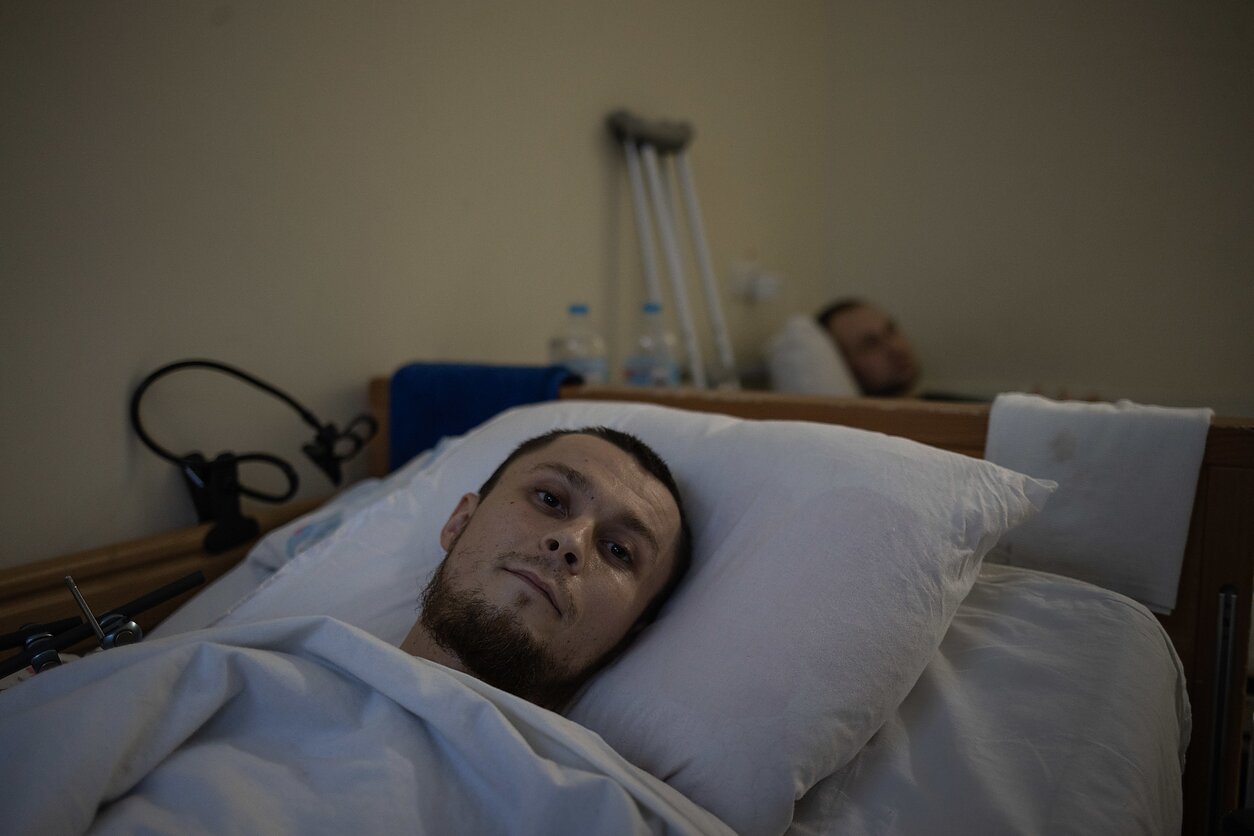
“My brother is still there. I think about all of the guys, they have become like family,” says Raman. “I want to go back to the defence lines as quickly as possible.”
But it is unlikely Raman will ever fight again.
“Frankly speaking, I’m not sure,” says Volodymyr, orthopaedic surgeon and Raman’s doctor. “But he will still be very useful for the army with his experience.”
Volodymyr sits with a surgical mask on, resting on a nearby chair. He has been at his post for three days. The medics here are short-staffed.
“We really appreciate help from Lithuania,” Volodymyr says, adding that a volunteer medic came to help them during the early days of the invasion.
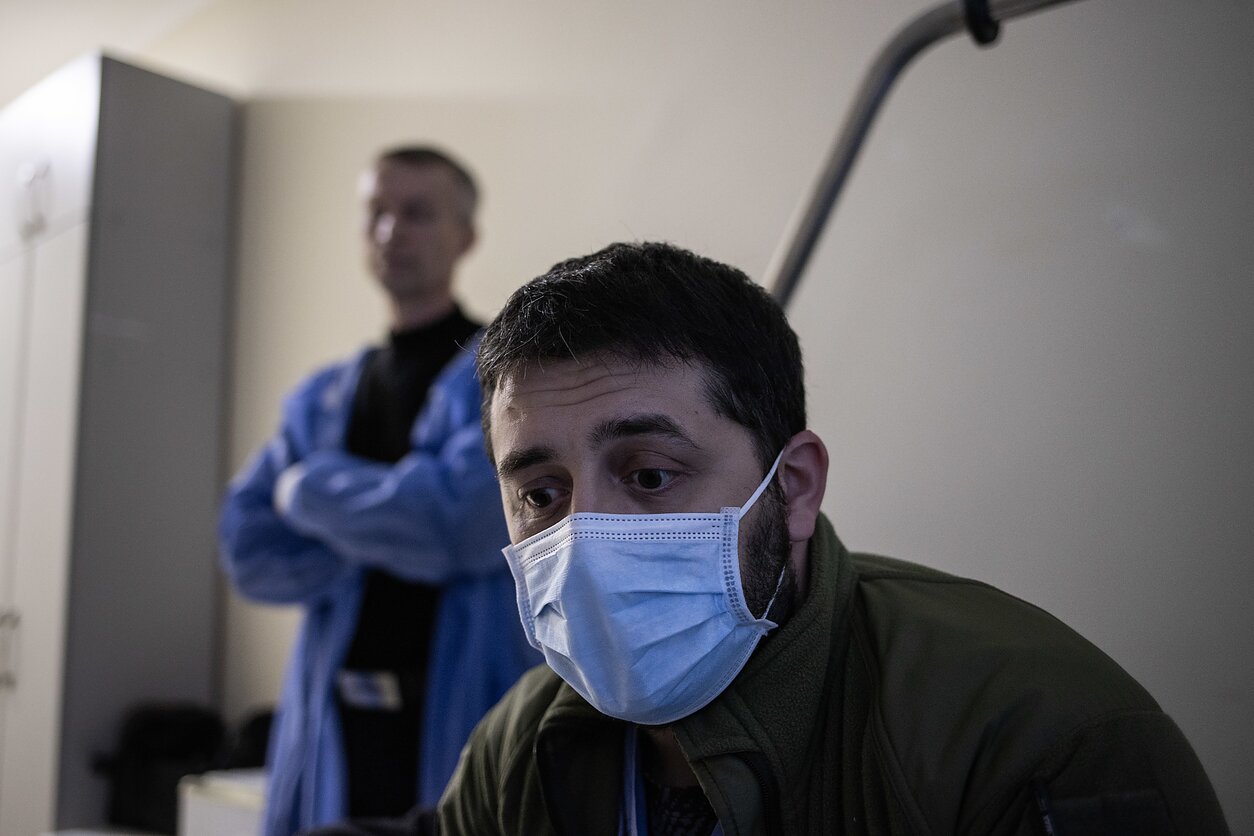
Here, they are also running out of antibiotics. The injured troops transfer through multiple field aid points and hospitals. By the time they go through several of them, they have picked up a “cocktail” of infections, says Volodymyr. Sometimes they are then resistant to common antibiotics.
“Soldiers from Bakhmut and Soledar directions have very heavy injuries,” says Volodymyr. “But mostly shrapnel injuries and almost all of our patients have bone defects.”
Raman eyes our conversation with curiosity, his gaze moving between his father and Volodymyr. Upon hearing he is recovering well, Raman smiles; when Volodymyr says he’s unsure Raman would fight again, his look goes blank.
What’s left for Raman is to wait.
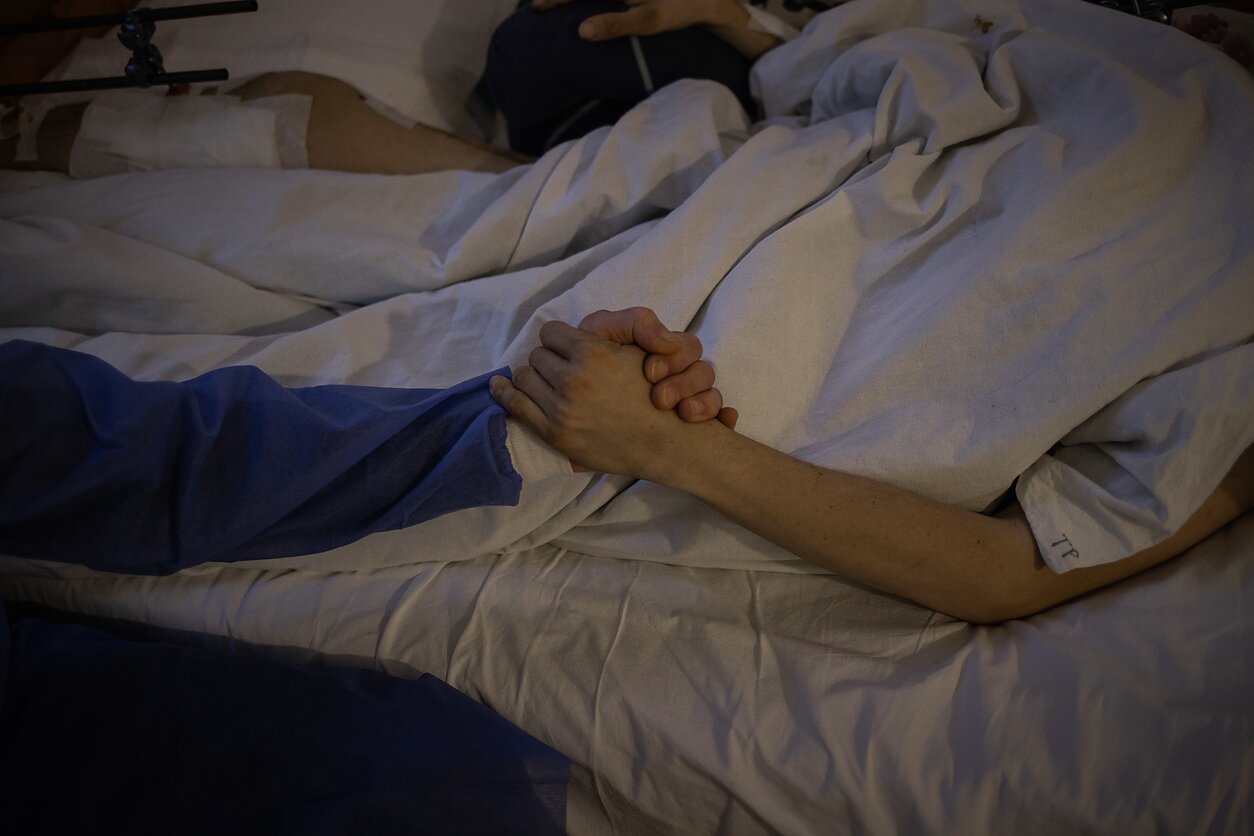
During this time, his father will always be next to him. “What else can we do, my son can only move one arm,” the father says.
Every few moments, he picks up Raman’s arm, whispering that everything will be okay. They look at each other; Raman smiles.

Newsletter
Every Friday morning.
