

In summer, people in Ukraine sparred over whether it was normal that some were dying in the trenches while others could sip coffee in Kyiv restaurants. But after the first missile strikes on the capital and as winter sets in, the gap between war and peace in Ukraine has almost disappeared.
Take a walk through the dark streets of Kyiv.
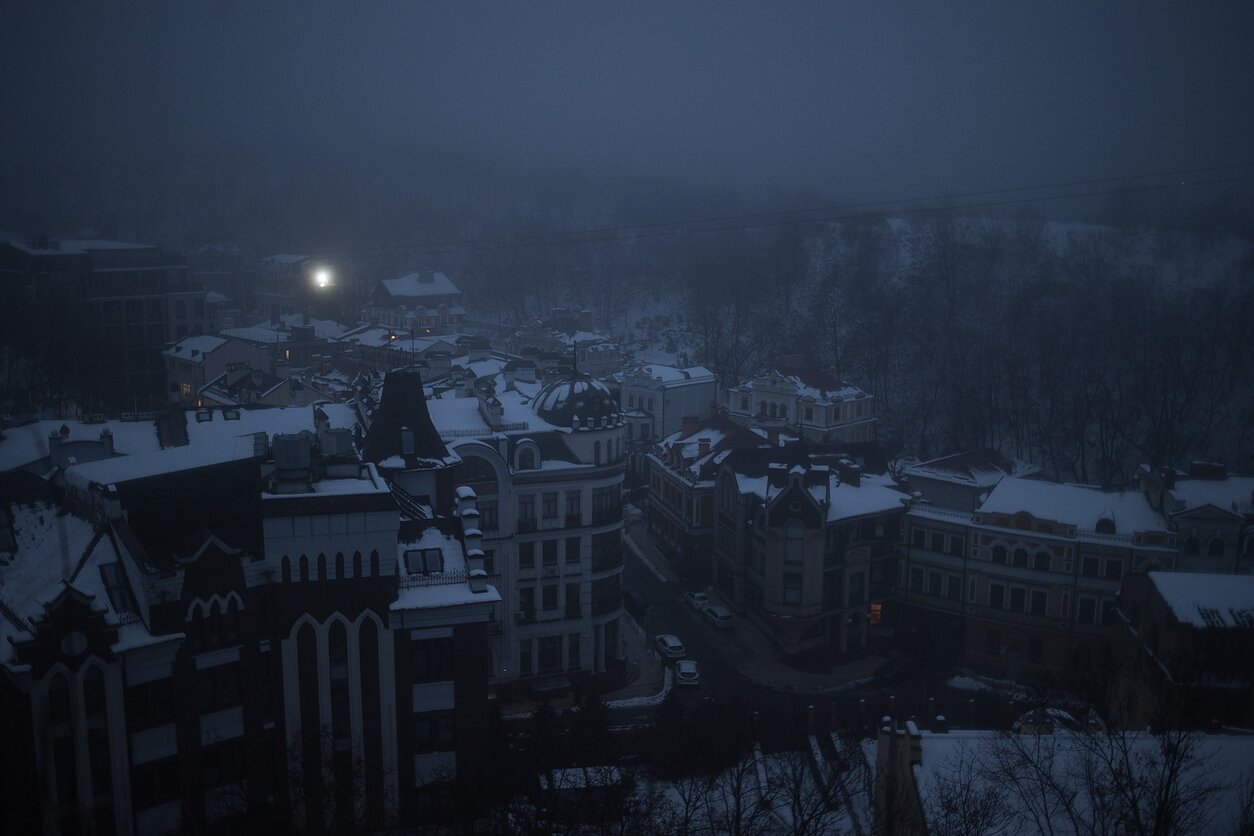
Podil area of Kyiv. Through the windows of darkened apartment blocks, candles flicker in the darkness. | B. Gerdžiūnas/LRT
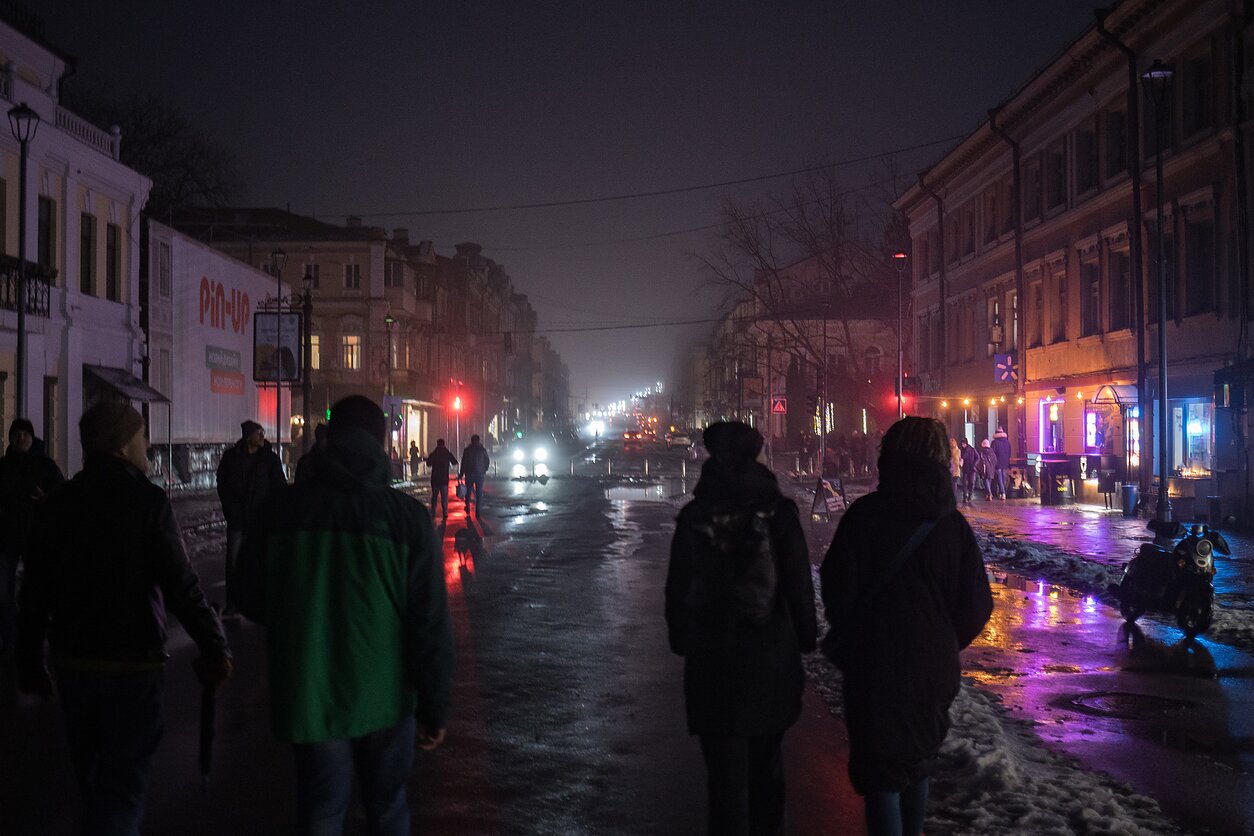
Podil, a trendy area of Kyiv. Shops and restaurants remain open with the help of generators. Just like before the war, people spend their weekends going for walks, visiting shops and sitting in cafes. | B. Gerdžiūnas/LRT
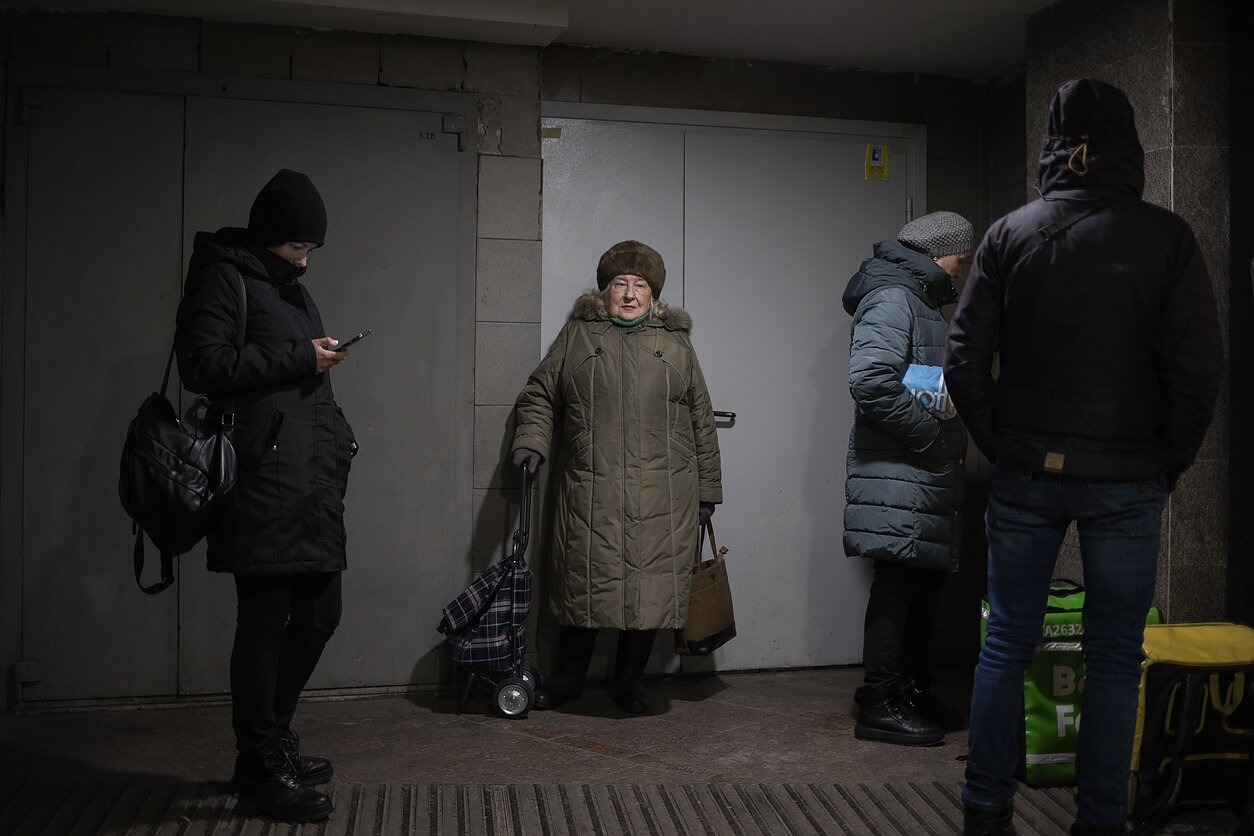
An elderly woman hides in an underground passage during a massive missile attack against Ukraine in early December. Air raid alerts rang out nationwide, as Russia unleashed an aerial barrage against Ukraine’s civilian infrastructure. | B. Gerdžiūnas/LRT
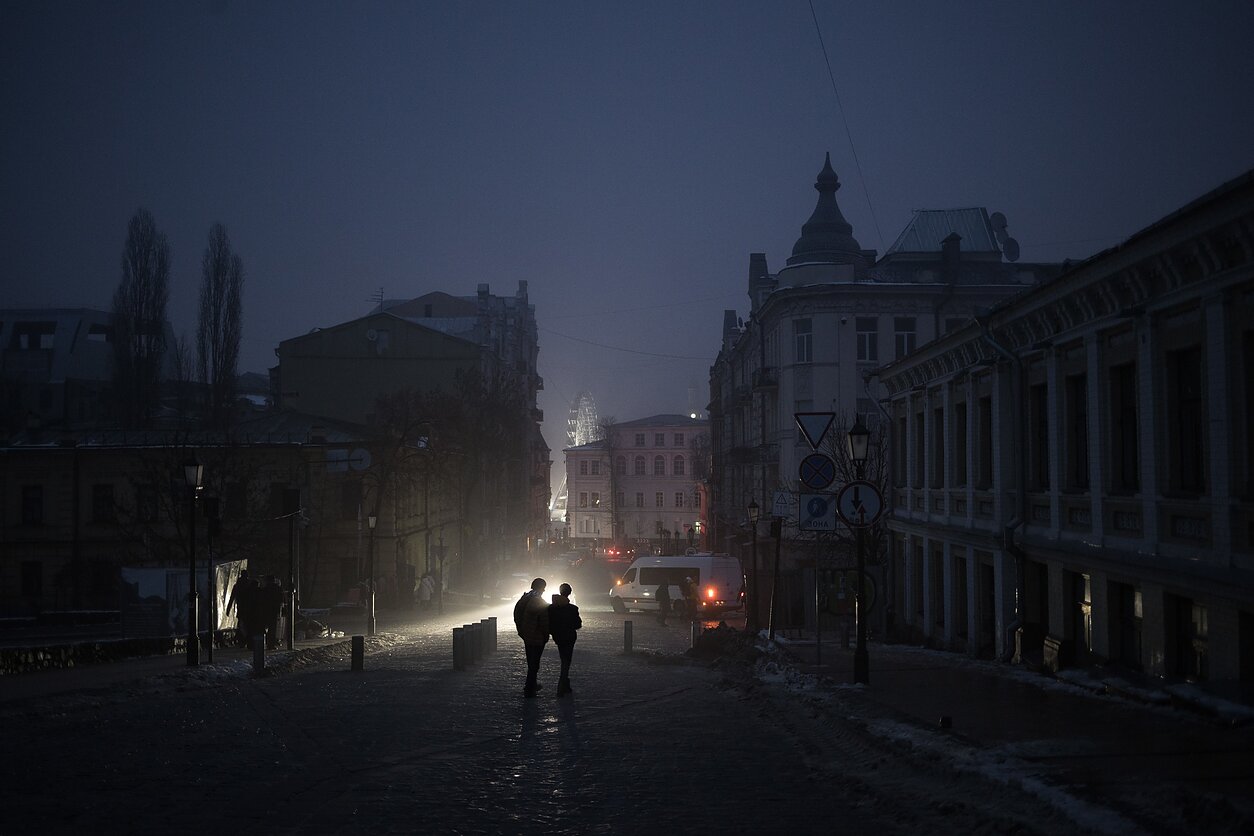
Podil, Kyiv. People rely on the Trivoga (air alarm) app installed on their phones to keep track of alerts. Once the “all-clear” alert is sent out, the smartphones echo in unison with the same, male voice announcing the end of an air raid. “All’s well that ends well,” says one woman as she leaves the shelter. | B. Gerdžiūnas/LRT
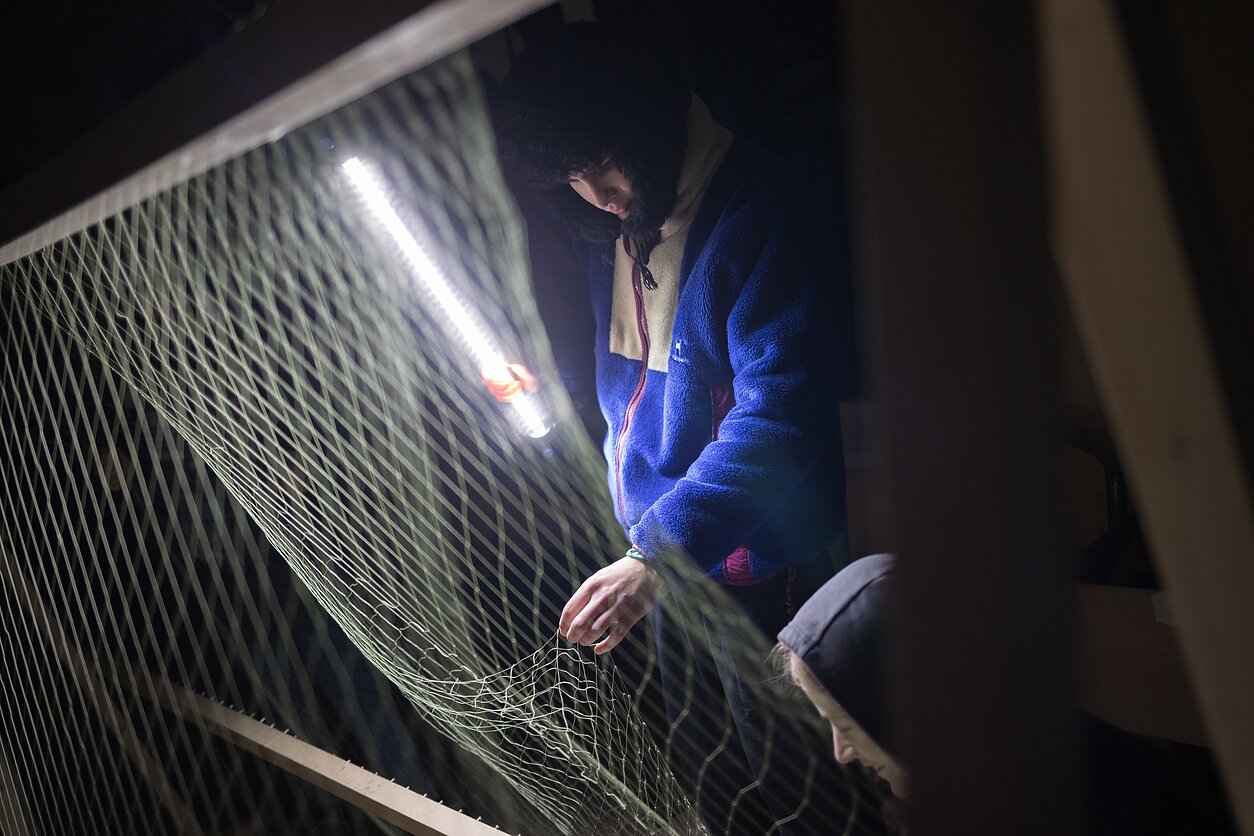
Volunteers prepare camouflage nets for Ukrainian troops on the frontlines. | B. Gerdžiūnas/LRT
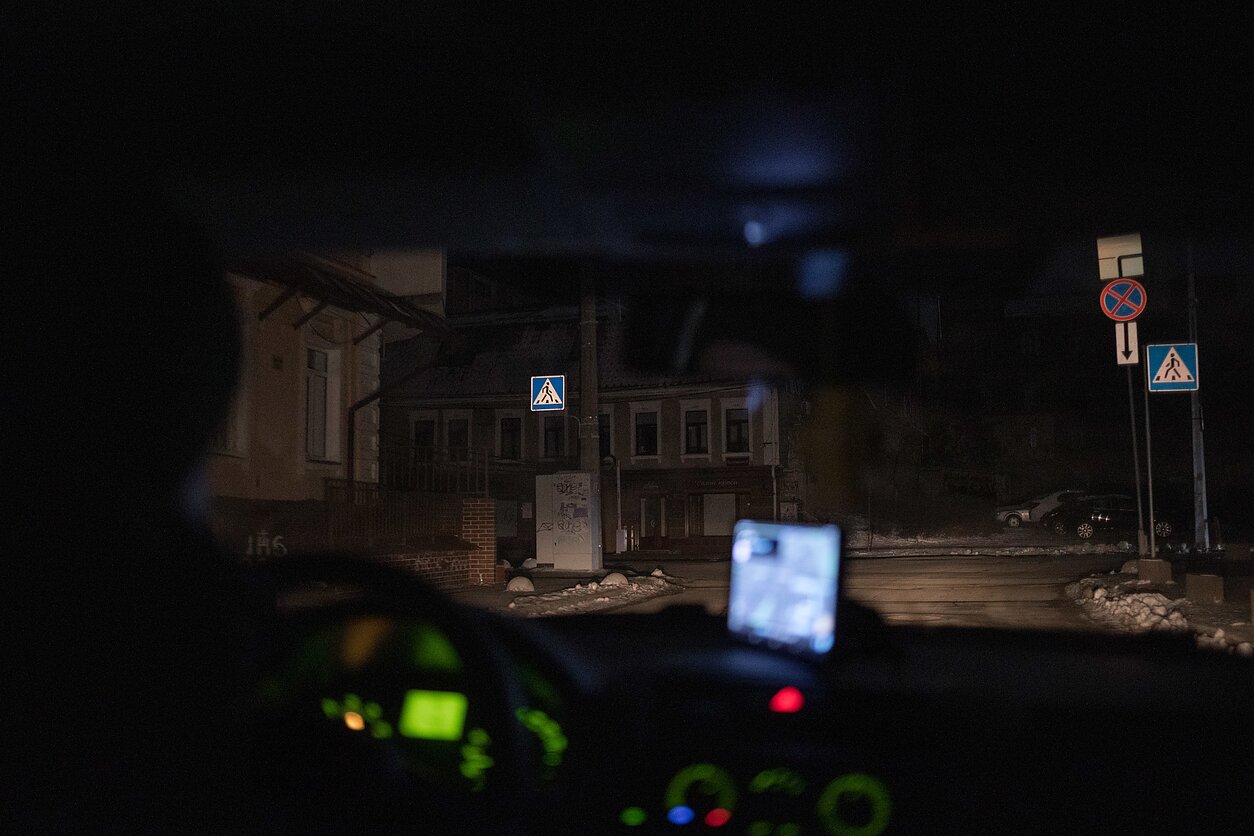
From inside a car driving through the dark streets of Kyiv. | B. Gerdžiūnas/LRT
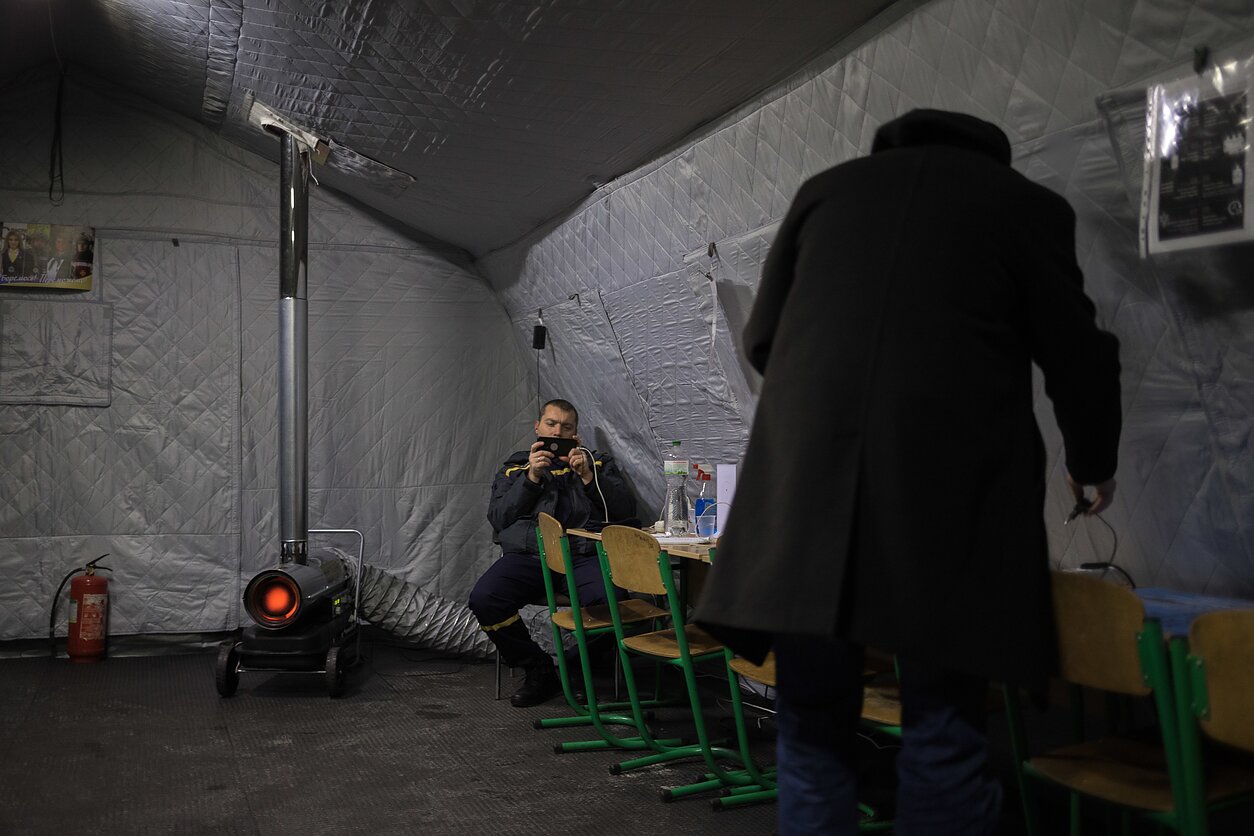
Inside the so-called point of invincibility, set up by the Kyiv authorities to provide warmth, electricity and internet during blackouts. In Podil, where electricity appears only sporadically throughout the day, some 270 people visit one tent on a single day alone. | B. Gerdžiūnas/LRT
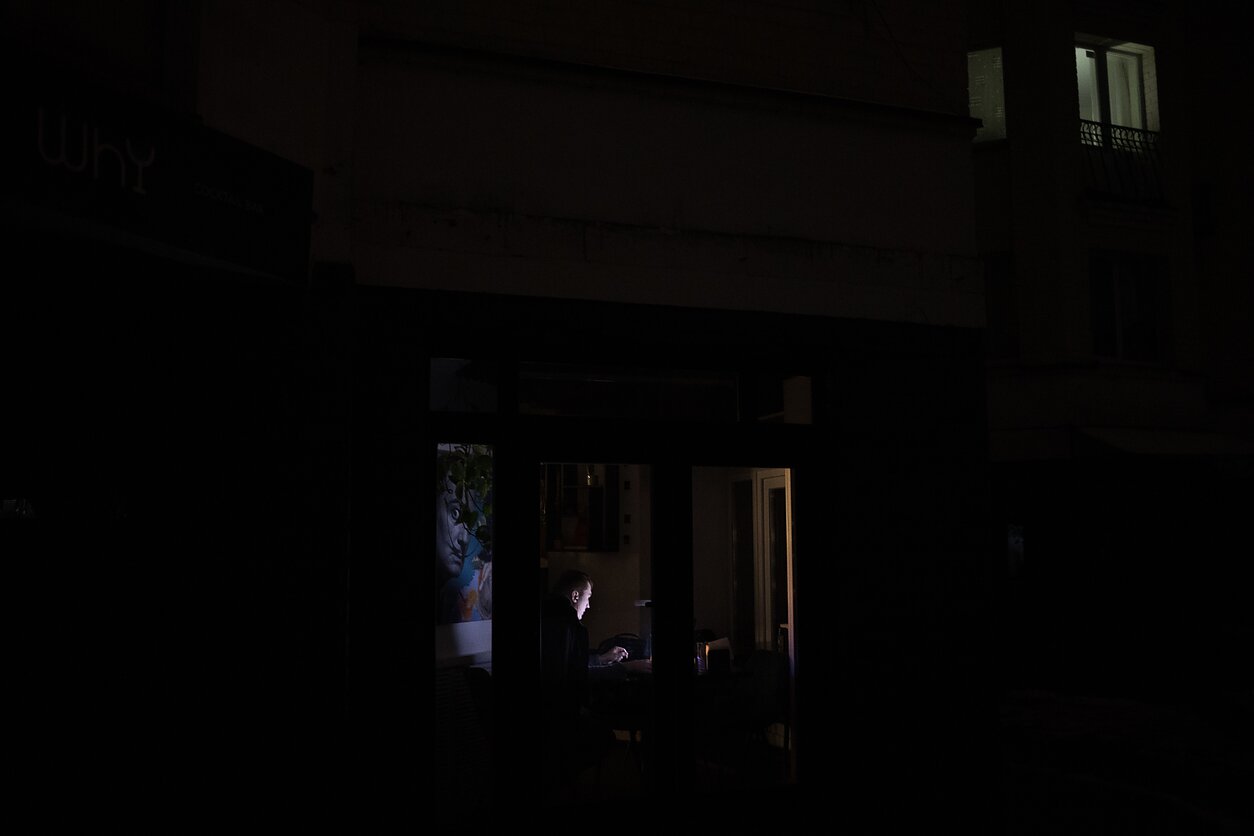
A man works on his laptop amid a blackout. A cocktail bar has rebranded itself as a coworking space, bringing workers from the area together. The blackouts now are just “another sign” of what Ukraine can expect amid Russia’s attacks against civilians, says Dasha, who established a coworking space in this cocktail bar. “I have no illusions it will become easier, but nothing is scary anymore,” she adds. | B. Gerdžiūnas/LRT
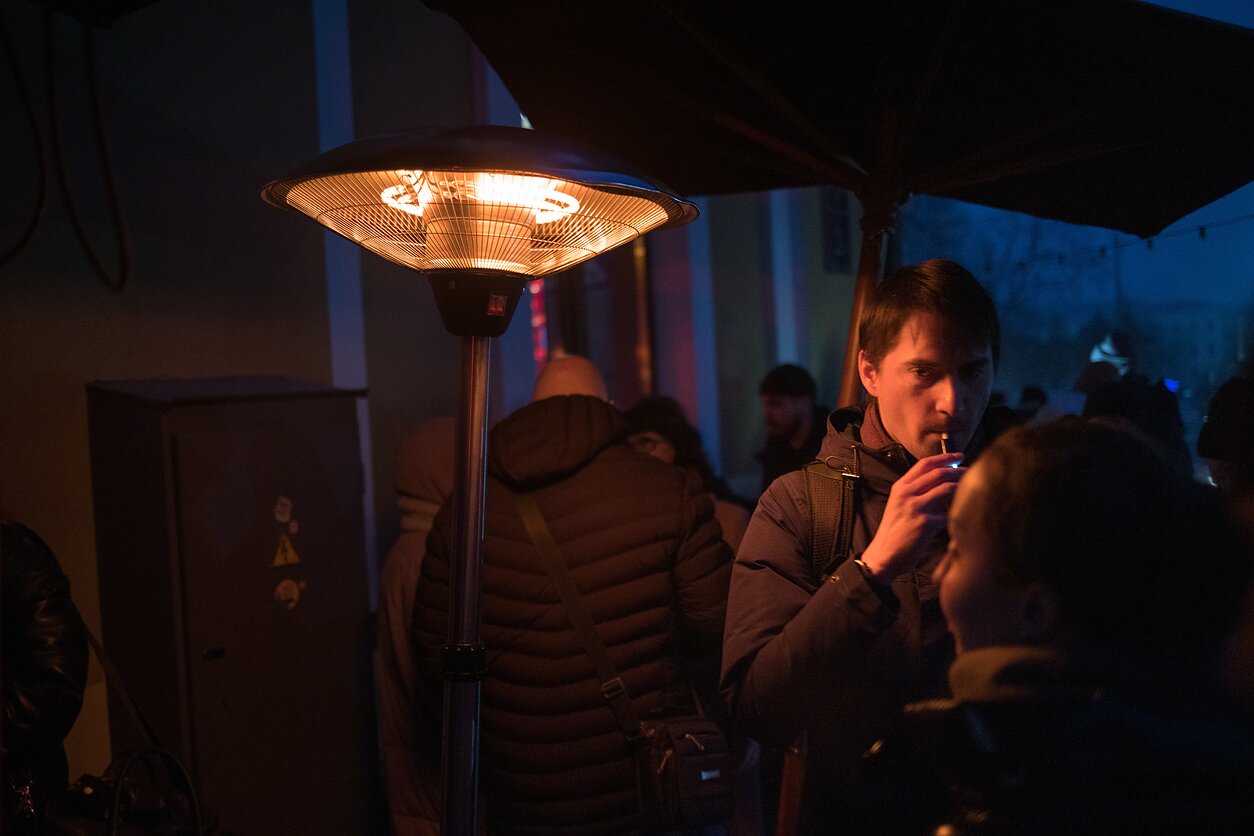
In the evening, life in this European metropolis halts. What’s left are candle-lit bars, half-empty restaurants, and the buzz of people rushing home before the 23:00 curfew. Nightlife, therefore, also had to adapt. | B. Gerdžiūnas/LRT
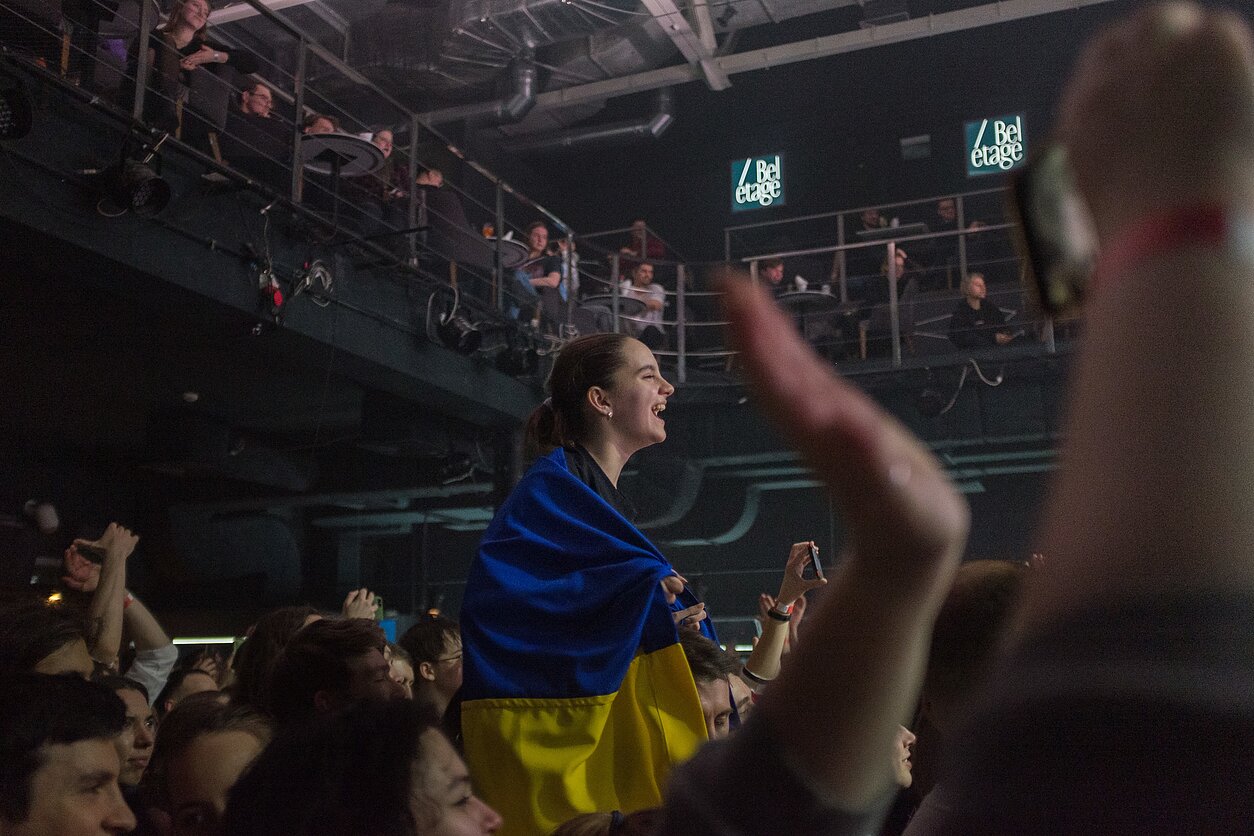
In one venue in central Kyiv, a band - хейтспіч (Hate speech) - gathers a crowd of several thousand people despite the threat of air raids and blackouts. But music is not the only thing the band is there for. | B. Gerdžiūnas/LRT
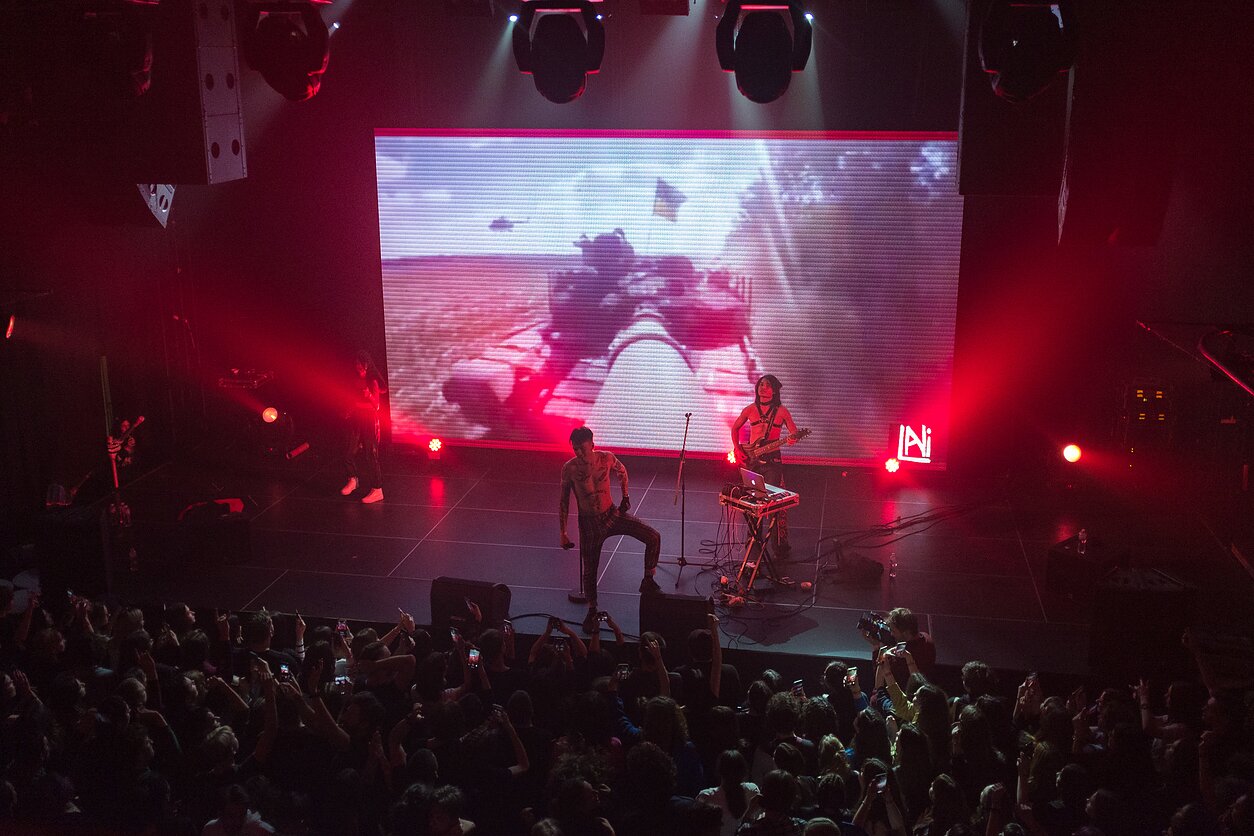
The lead singer raises a radio, captured from the Russians. He kicks off an auction starting at 8,000 UAH, or around 200 euros. The price quickly rises to 22,000, or some 560 euros. Sold. “Russian oppression brought something new to the Ukraine stage,” says Roman Rochniak, a man in his early 20s at the concert. Hate speech is one of the many bands spewing uncensored lyrics and channelling anger against the Russian occupiers. But some musicians have been capitalising on this sentiment, according to Rochniak. | B. Gerdžiūnas/LRT
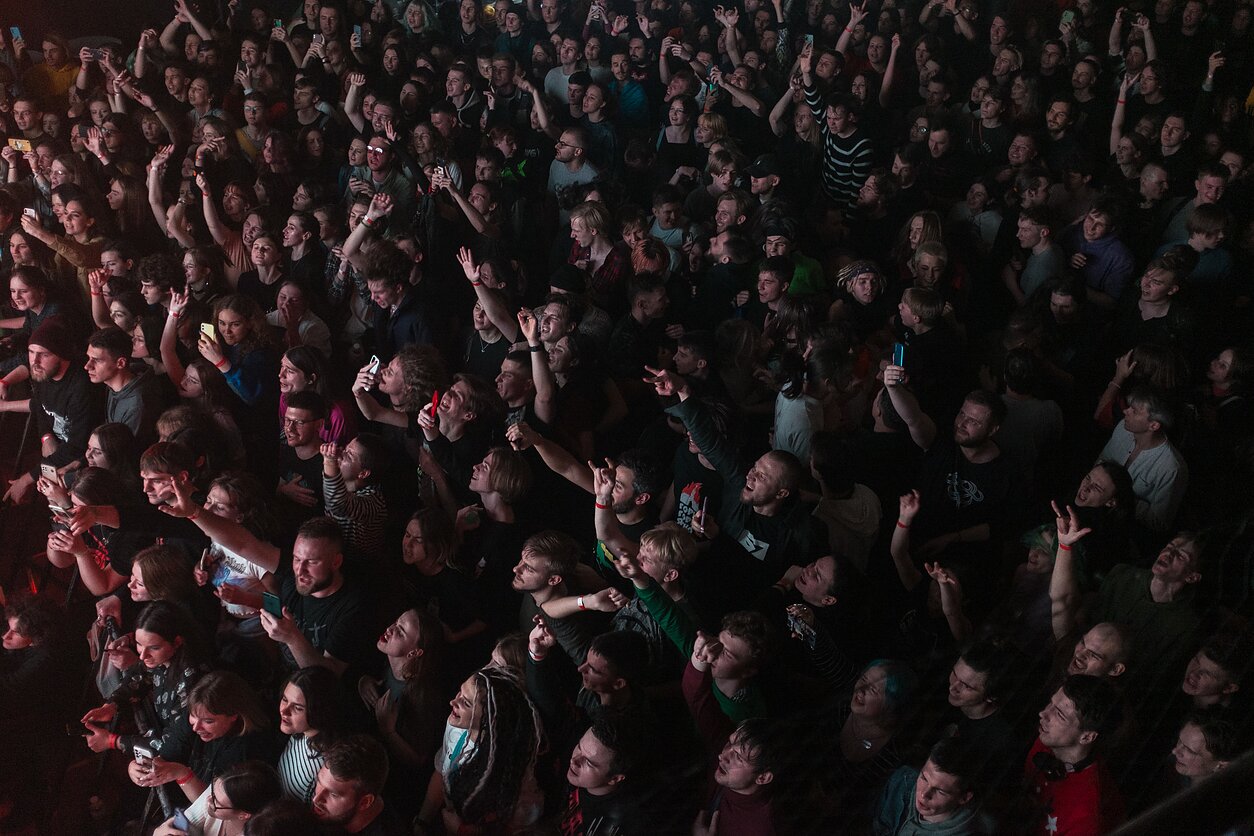
“They write songs to be parasites and earn money from the war, saying ‘let’s beat the Russians’ because people listen to that,” he says. But others, including Hate speech, have used the stage to gather donations and aid for the army. “It’s good if they are gathering money, singing in Ukrainian and encouraging people to do something,” says Rochniak. He concedes, however, that “it is a question if hosting concerts during a war is a good idea”. | B. Gerdžiūnas/LRT
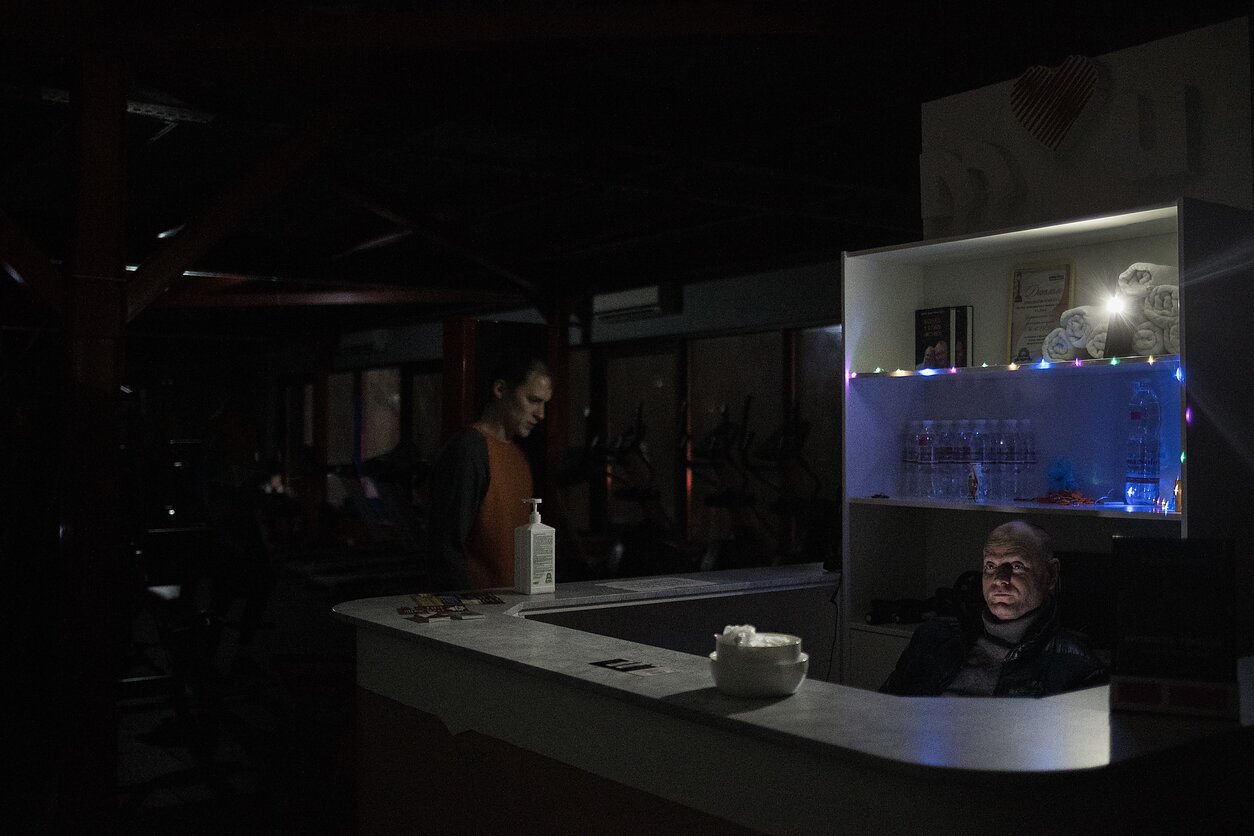
“But Kyiv has been bombed for two months and people have earned the right to relax”, Rochniak adds. The short evenings enable just one activity like getting necessities, going out, or exercising - everything has to be completed before the curfew. According to Anatoly, who manages the gym, more people come to work out when there is no electricity. “There is nothing else to do at home,” he shrugs. | B. Gerdžiūnas/LRT
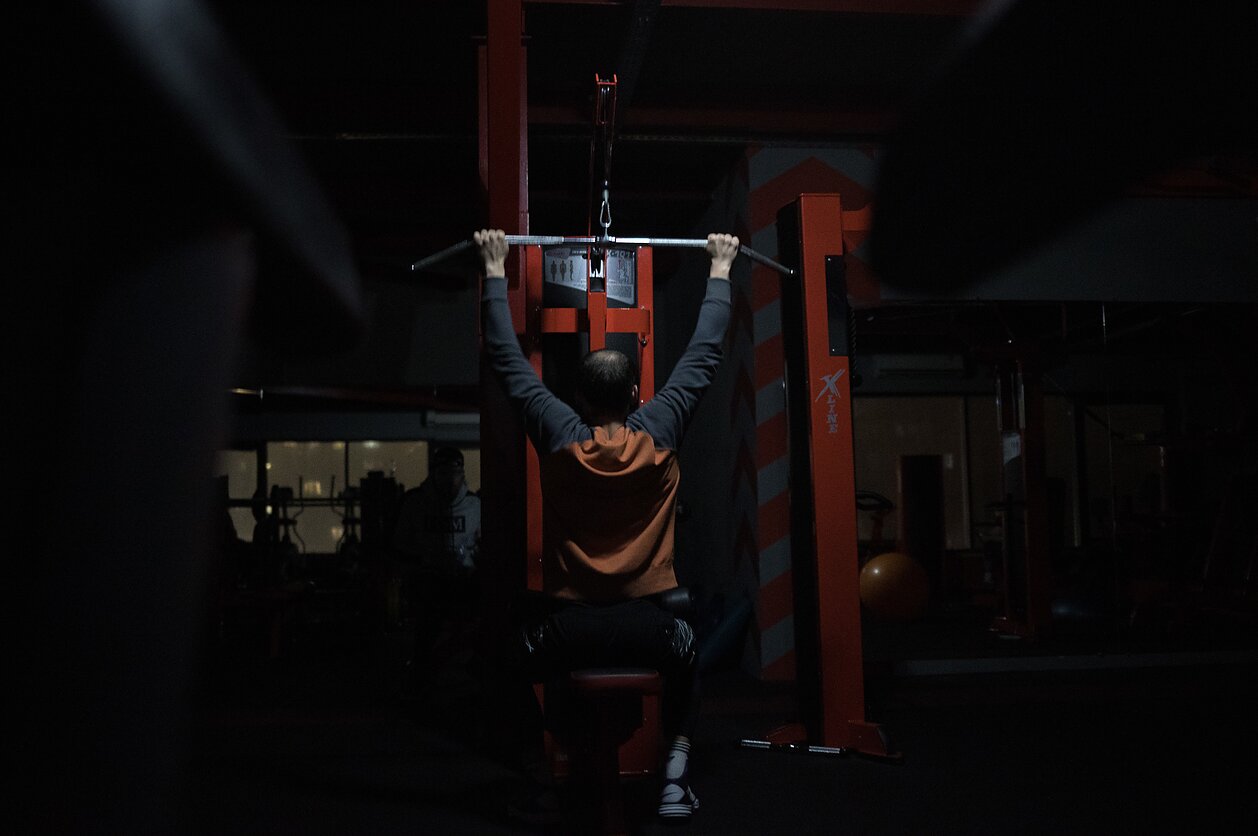
Dyma, originally from Slovyansk in the Donetsk region, works out at the gym in Kyiv. | B. Gerdžiūnas/LRT
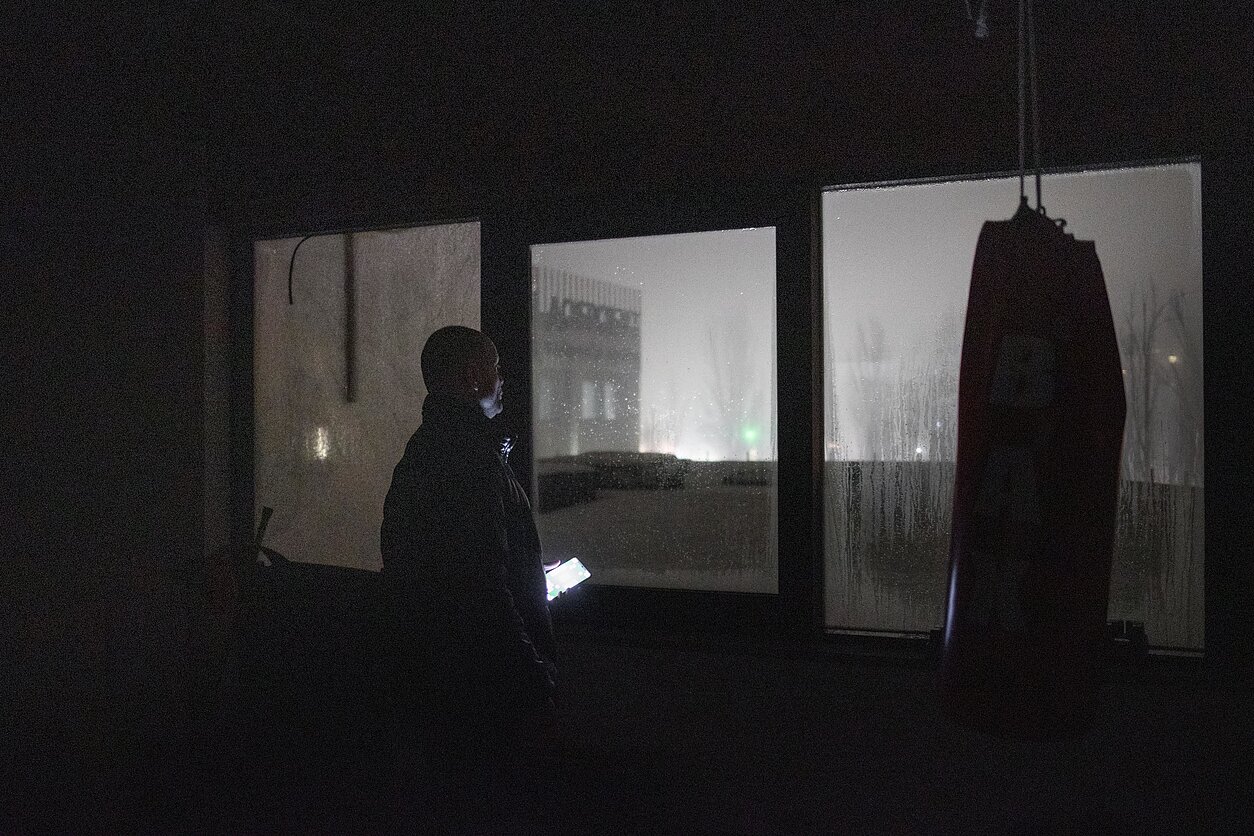
Anatoly shows around the gym where they also host classes for children. | B. Gerdžiūnas/LRT
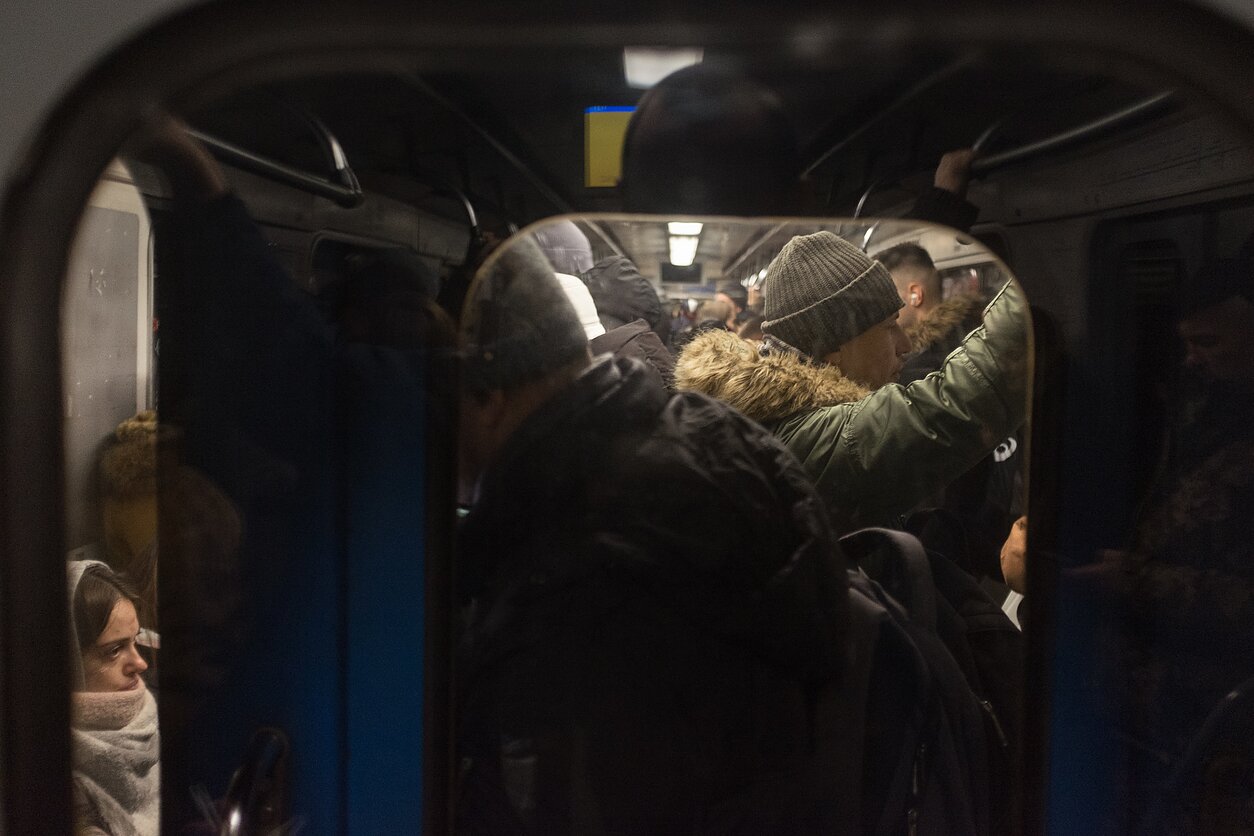
People in a crowded Kyiv metro train. During Russian missile attacks, the stations dug hundreds of metres below ground provide some of the safest shelters. They were originally built during the Cold War to withstand a nuclear attack. | B. Gerdžiūnas/LRT
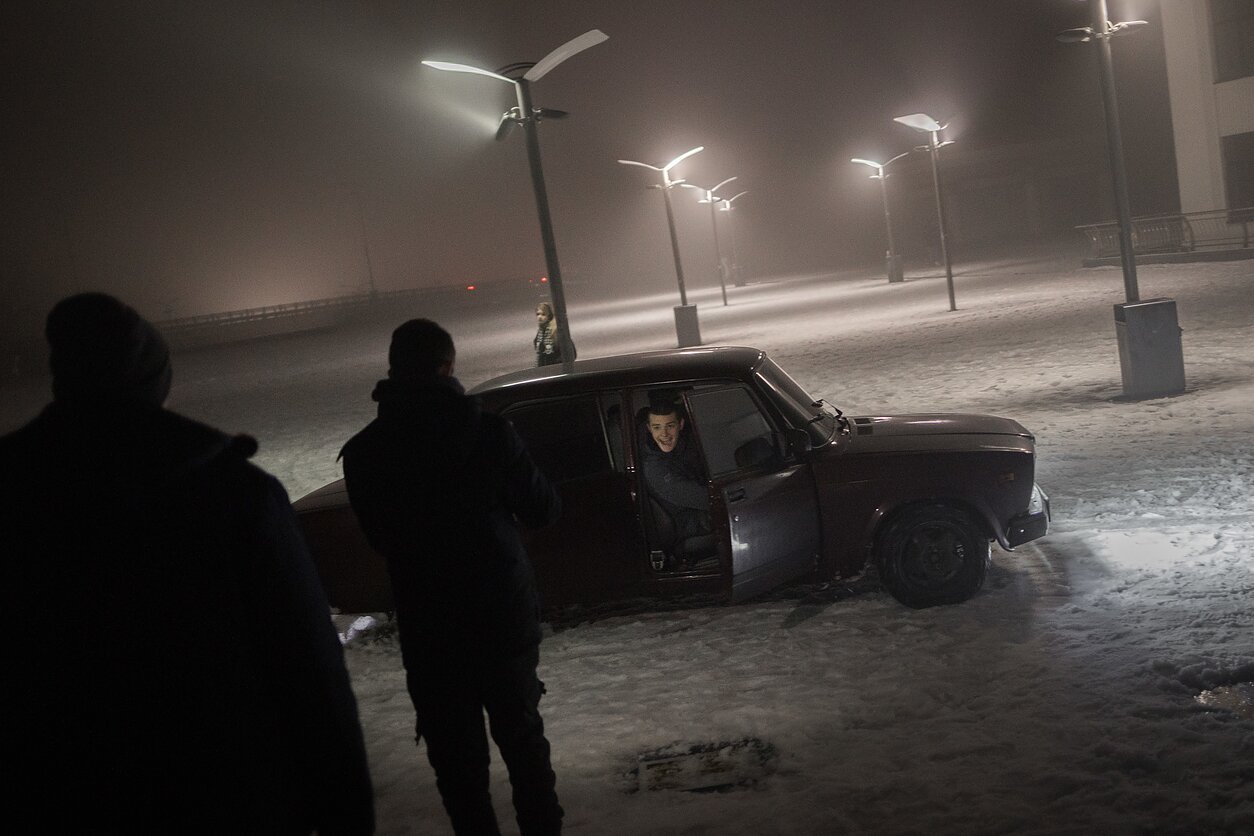
Youths drive around in a Lada through the snow in central Kyiv. The area is a popular hangout spot for young people looking for fun in a quiet city. | B. Gerdžiūnas/LRT
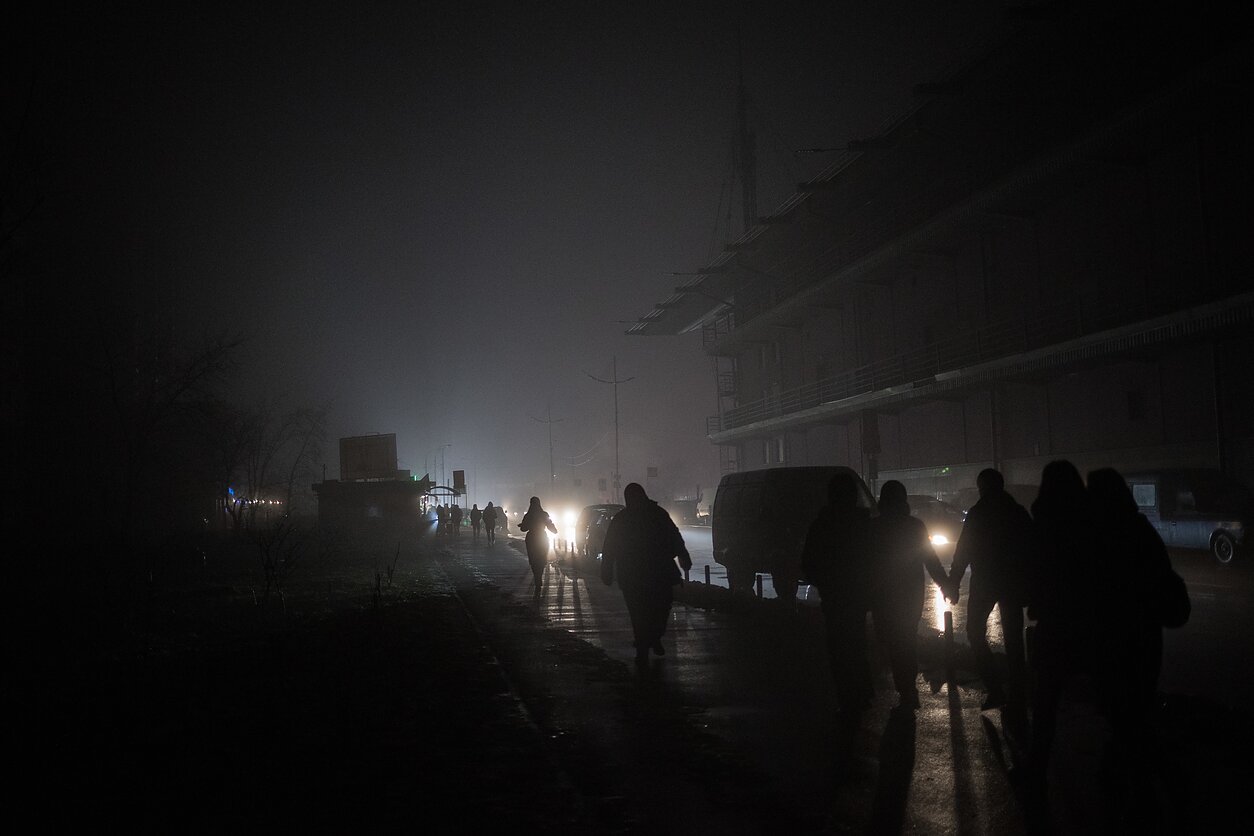
Obolon District in northern Kyiv was among the first to witness gunshots on February 24. Now, barricades are largely abandoned. Beer cans and vodka bottles litter the concrete shelters. The biggest worry for many is now how to survive the winter. | B. Gerdžiūnas/LRT

LRT English
Newsletter
Every Friday morning.
Newsletter
Every Friday morning.
