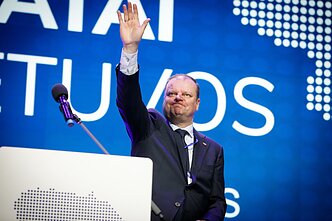













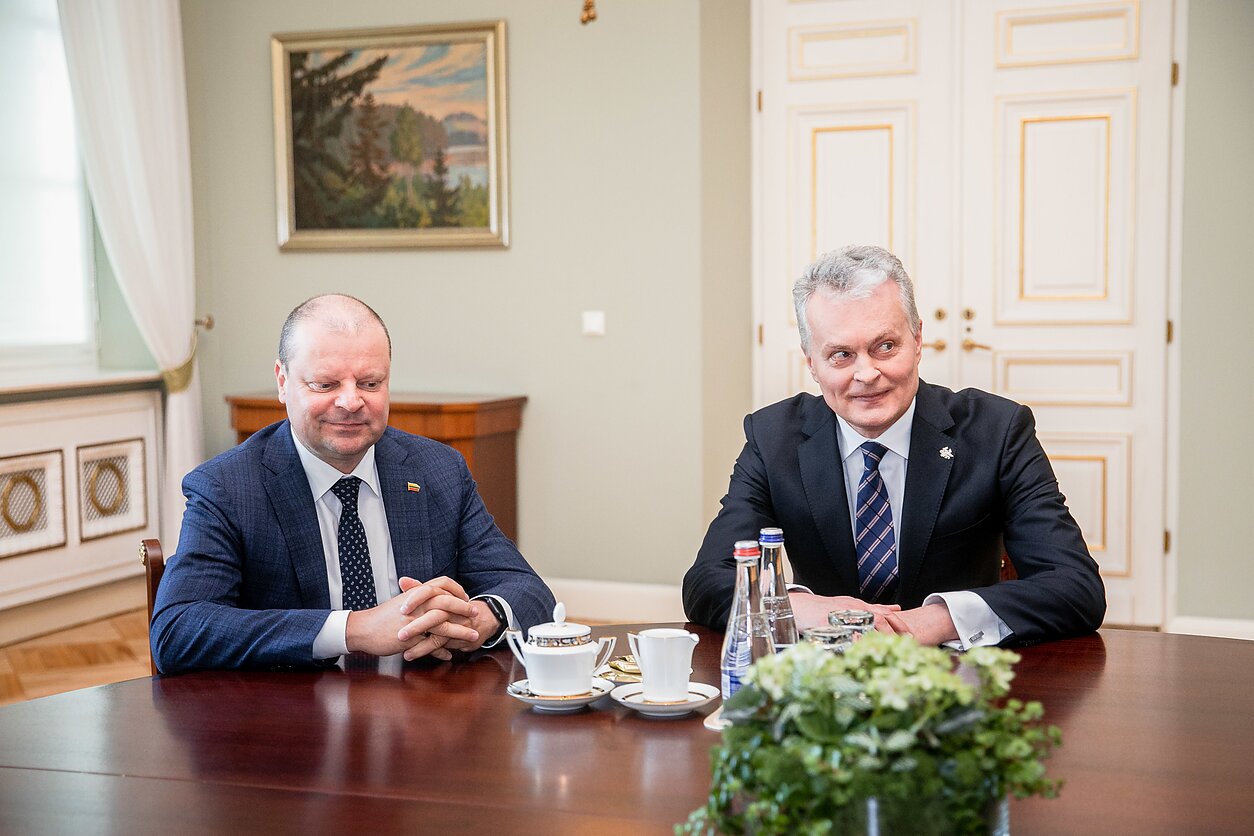
President Gitanas Nausėda remains the most popular politician in Lithuania, with the former Prime Minister Saulius Skvernelis jumping into the top five, a survey by Vilmorus for the daily Lietuvos Rytas has found.
Almost 51 percent of the people surveyed had a positive opinion about Nausėda in February, compared to 52.5 percent in December, with 26.5 expressing a negative opinion, a decrease from 27.2 percent in the previous month.
Out of the 25 ranked politicians, only four had a positive balance, meaning more people have a favourable opinion about them than unfavourable. They included the president, Vilija Blinkevičiūtė, leader of the opposition Social Democratic Party, Kaunas Mayor Visvaldas Matijošaitis, as well as Skvernelis.
“All the rest have minuses. That’s a rare case. Also, all ministers have minuses, and the prime minister came in sixth in terms of minuses,” Vladas Gaidys, head of the Vilmorus pollster, told BNS.

Almost 42.5 percent of those surveyed had a positive opinion about Blinkevičiūtė, 39.8 percent about Matijošaitis, and 36.8 percent about Skvernelis.
Speaker of the Seimas Viktorija Čmilytė-Nielsen came in fifth with 30 percent of positive and 44.6 percent of negative opinions.
In February, 24.3 percent of those surveyed had a positive opinion about Prime Minister Ingrida Šimonyte, with 55.7 percent expressing a negative one.
Foreign Minister Gabrielius Landsbergis had the highest percentage of negative opinions – 71.5 percent, with only 12.8 percent of positive opinions.
Landsbergis took over as the most unpopular politician in Lithuania from MEP Valdemar Tomaševski, leader of the Electoral Action of Poles in Lithuania – Christian Families Alliance, who had 59 percent of negative opinions in February.

In addition, Skvernelis’ Democratic Union “For Lithuania”, founded in January, came in second in the popularity rating. If a general election was held today, it would receive 10.3 percent of the votes.
The opposition Social Democratic Party would receive 15.6 percent of votes, down from 18.5 percent in December.
Almost 9 percent (down from 10.1 percent) would vote for the ruling conservative Homeland Union, 7 percent (down from 7.9 percent) would back the opposition Lithuanian Farmers and Greens Union, and 5 percent would vote for the Labour Party.
Vilmorus carried out the survey on February 3-8.

Newsletter
Every Friday morning.