
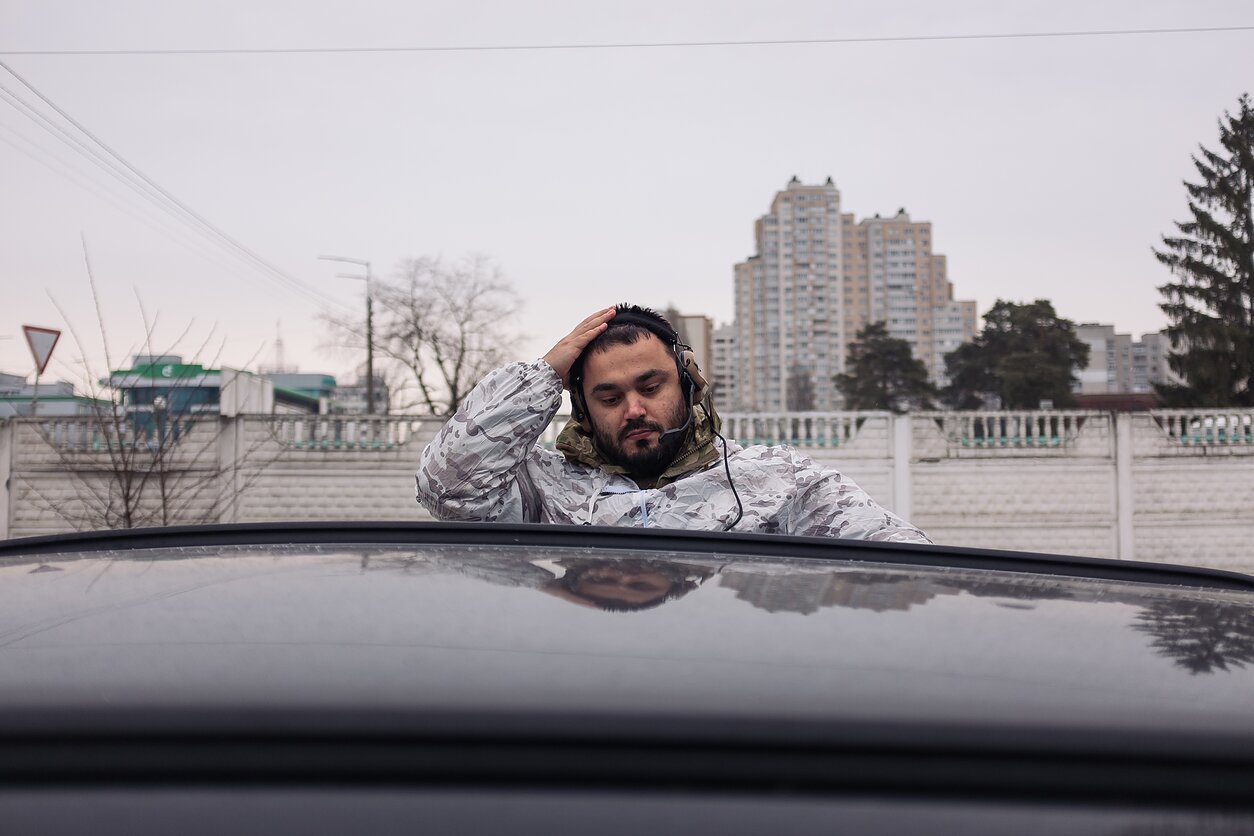


With Western officials claiming a Russian invasion is imminent, many in Ukraine have opted to cope with the anxiety by joining the Territorial Defence Force. Now, pictures of elderly recruits holding wooden rifles have gone viral across the world.
“Two months ago, I had no answer for the question of what I will do when the Russians come to Kyiv,” says Iiuri Gudymenko, a father of two and head of a small opposition party. Standing in his office donning a sharp suit, he shows a picture of him holding a rifle during training. “Now I have an answer.”
He joined the force late last year, saying it was a “psychological tool” to help diffuse his brewing panic as Russia began pulling troops to the border.
“You just sit at home and read news that tell you [Russian President Vladimir] Putin has a lot of tanks and soldiers on the border and they will come to kill you – right now.”
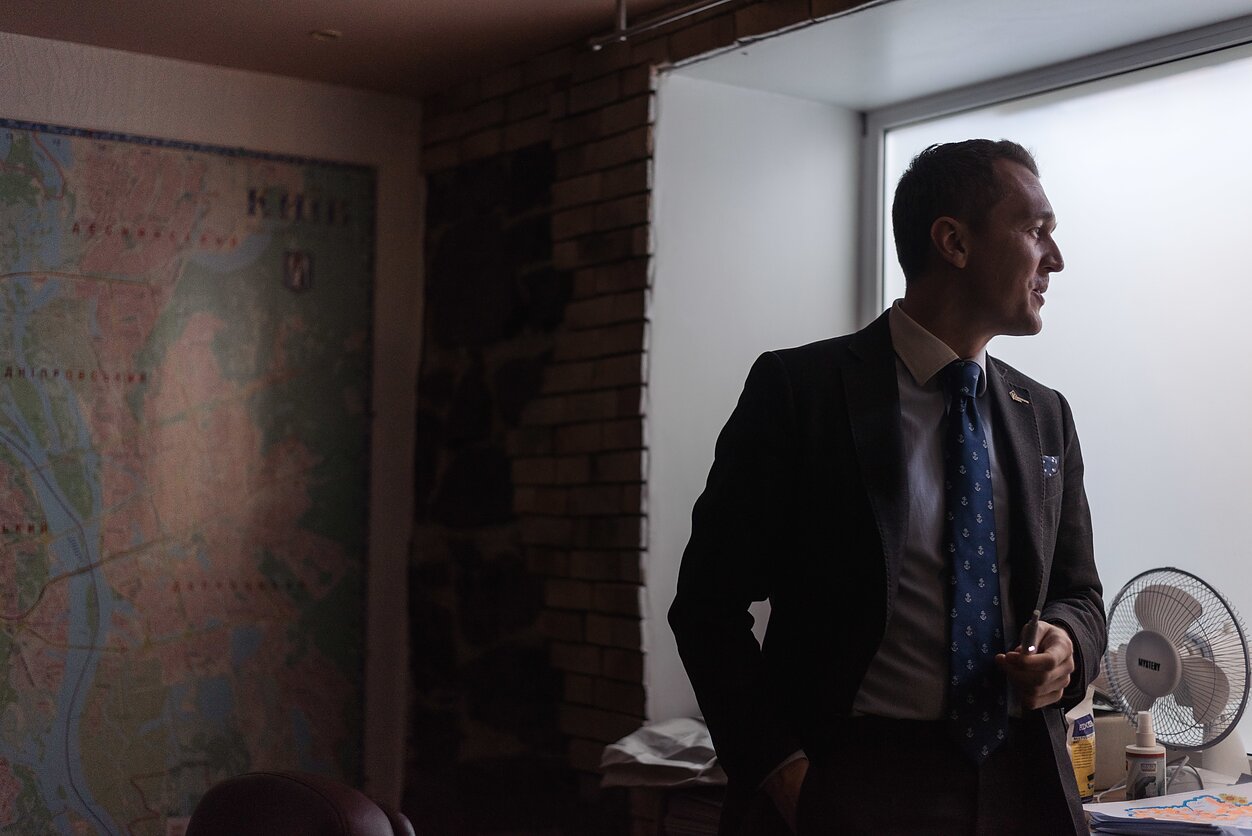
“When you are in the Territorial Defence Force, you can understand what you need to do,” says Gudymenko. “I understand – I have a weapon and I will start shooting all the Russian [troops].”
Formed in 2014, the territorial defence battalions served as regular military units and were restructured last year to incorporate civilians, or part-time recruits. Their structure is somewhat similar to Lithuania’s National Defence Volunteer Forces (KASP), as well as the Riflemen’s Union, in that it blends civilian lives with part-time military service.
“Many people lie to themselves, say that if enemy troops come to my city and I have a weapon, I will go to the forest and shoot them all,” says Gudymenko. “This is absurd. […] One-man army is a story for Hollywood.”
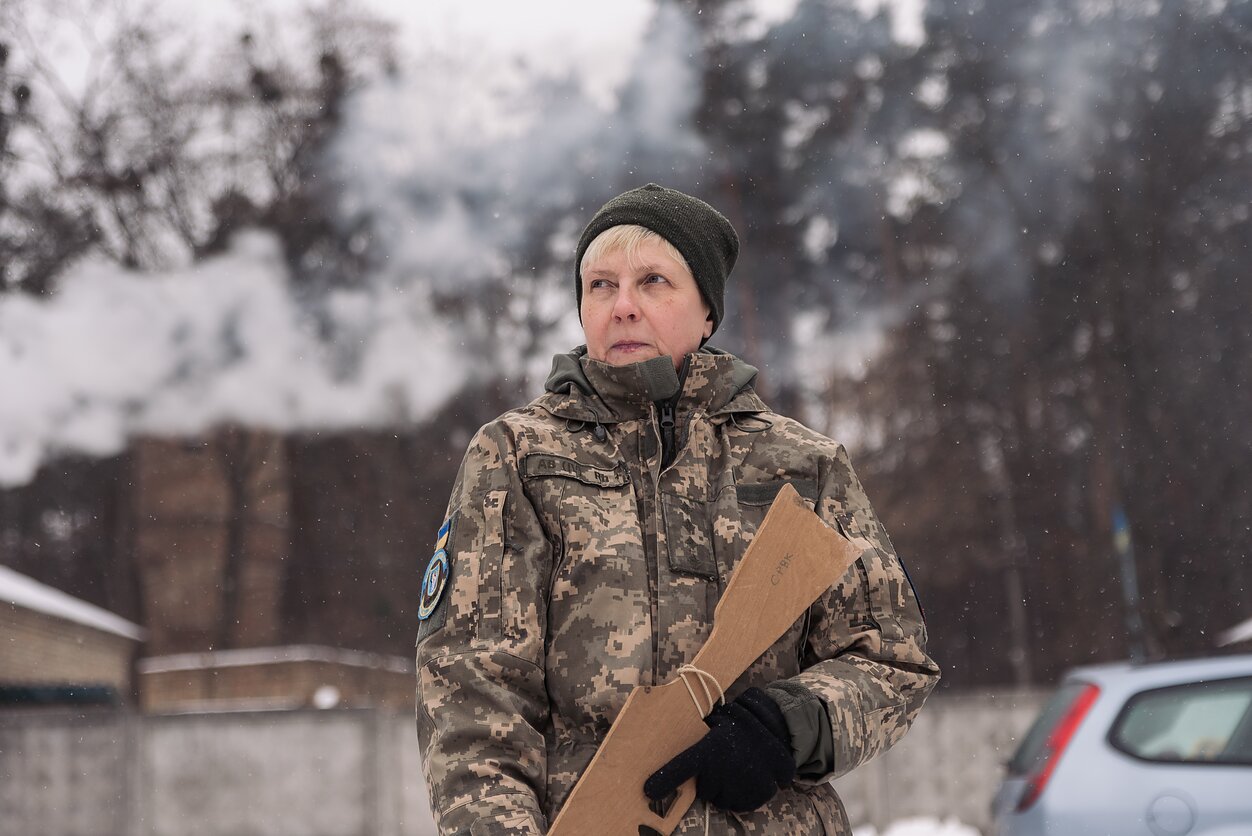
Meanwhile, the flurry of media coverage centred on their activities have made their trainings into movie sets.
“There were like 60 recruits and 60 journalists,” he recalls one of his drills. “It was like a Hollywood movie, there were cameras everywhere.”
Scenes of them holding wooden cutouts have become associated with the force, although the battalions include Donbass war veterans and recruits kitted out with state-of-the-art military gear.
The attention from journalists has also left some of the recruits bitter – they say the continuing war against Russian-led troops had largely been ignored until now.
“For eight years we have screamed that we have a war, […] but the world said we are not interested,” says Gudymenko. “Now, all the journalists are here, but we understand it is temporary.”
“My biggest fear is that if war doesn’t come in a week or a month, all the journalists will go away, all [international] politicians will forget about Ukraine,” Gudymenko adds. “The whole world will think that Ukraine is okay, but we are not – Russian bases are around our country from the east, south, north, and west.”
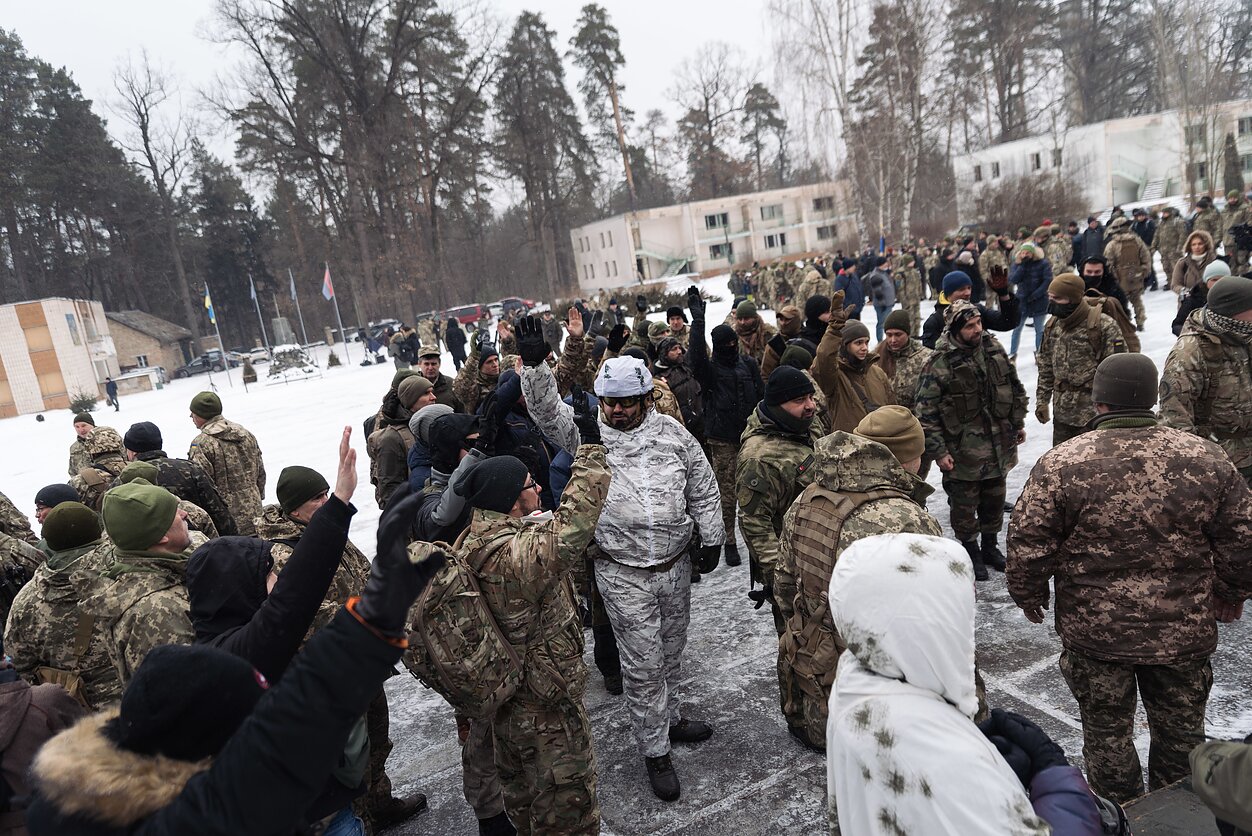
Mass resistance
“When you are not part of anything you don’t know what to do,” says Valentina Okhlopkova, a film director, volunteer, and also a recent recruit.
“I have a weapon, it will be harder to kill me,” she adds with a smile. “Psychologically, it makes it easier.”
“I heard you have something similar in Lithuania – Šauliai,” says Okhlopkova, referring to the Riflemen’s Union.
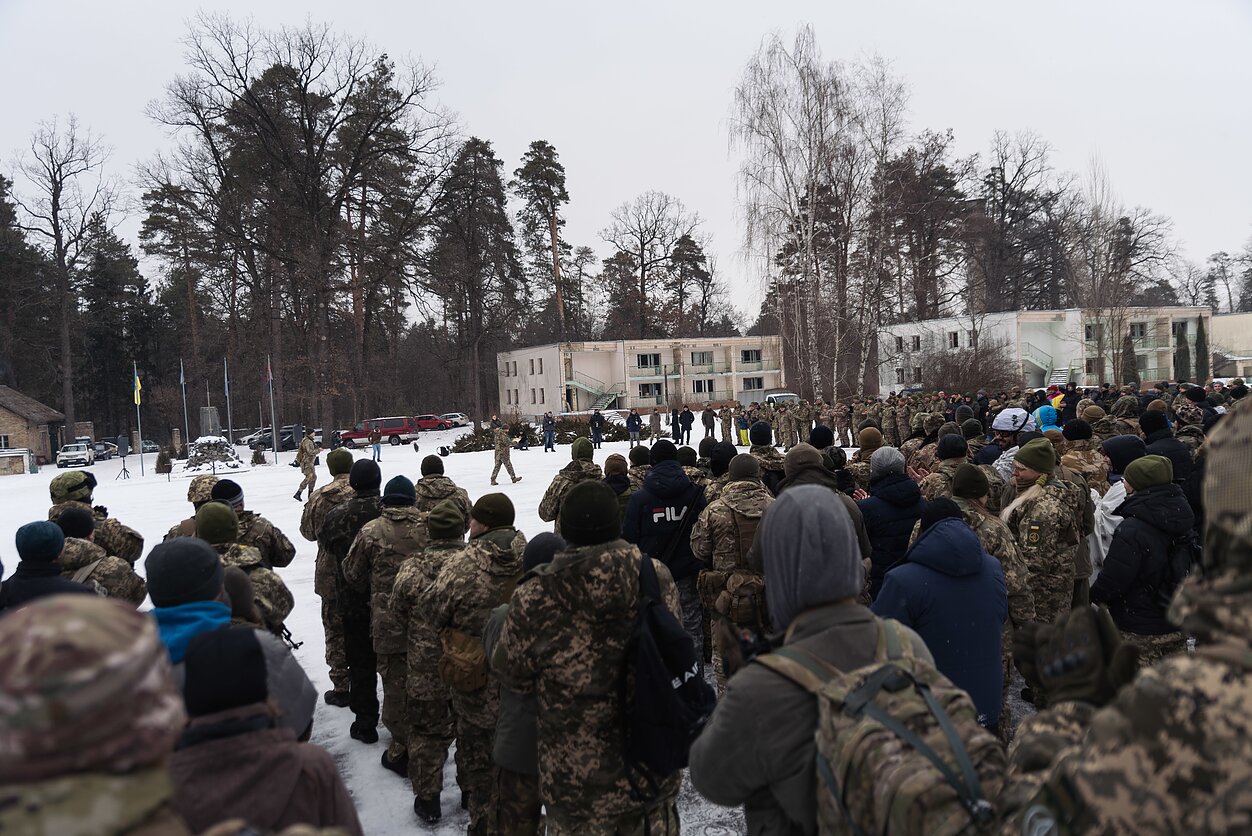
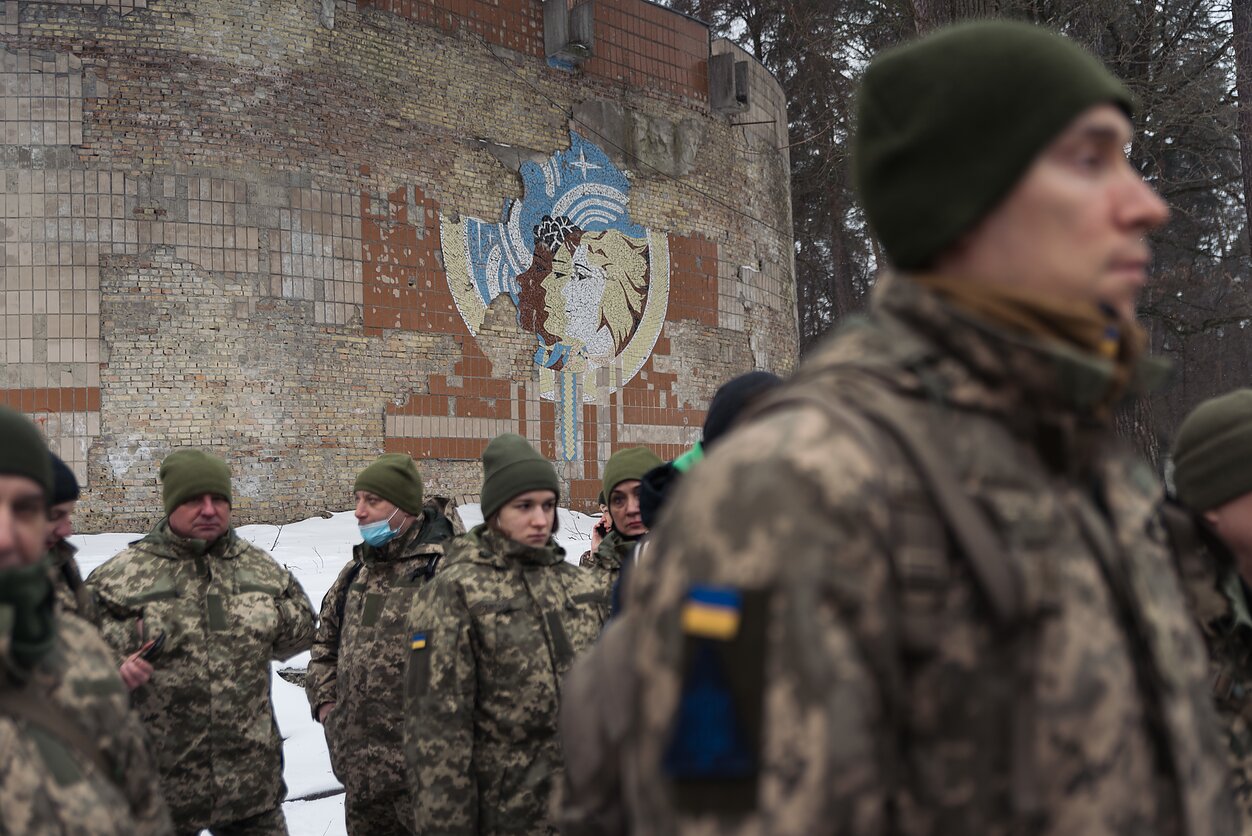
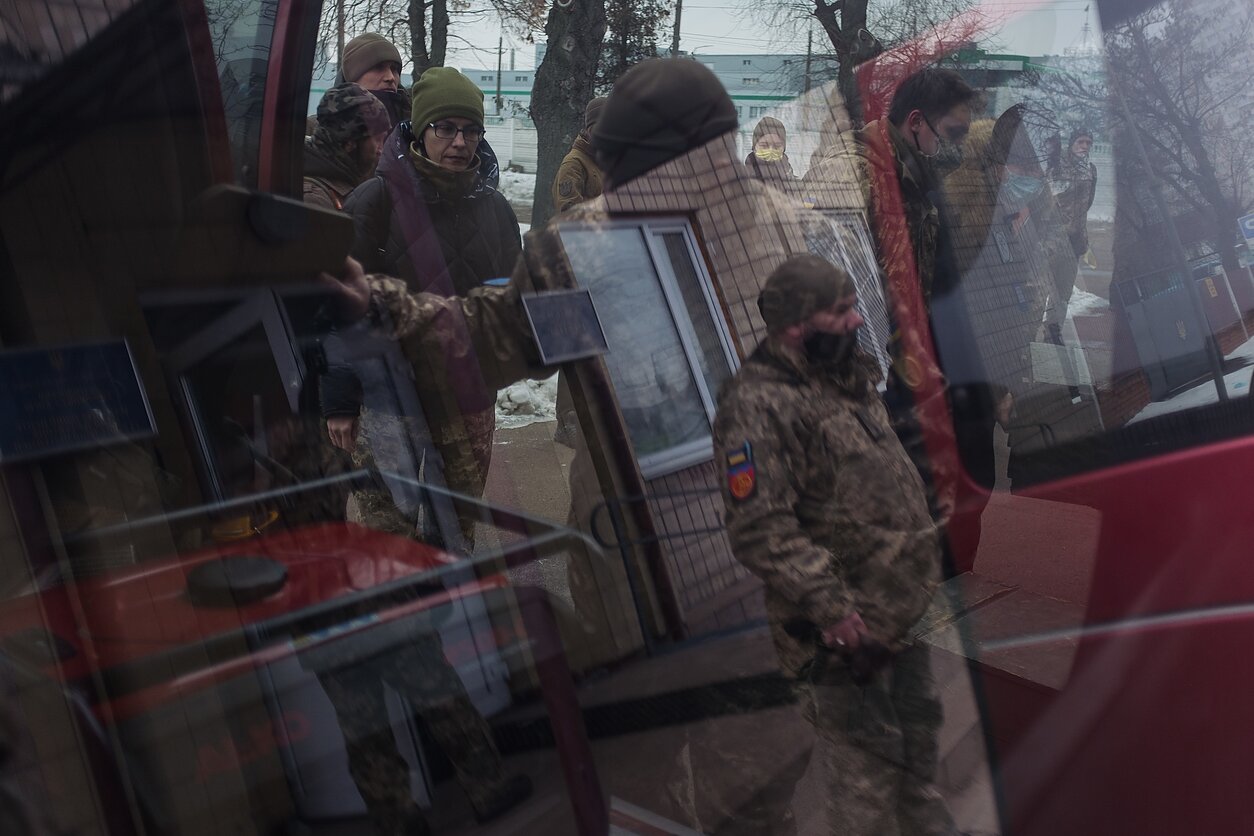
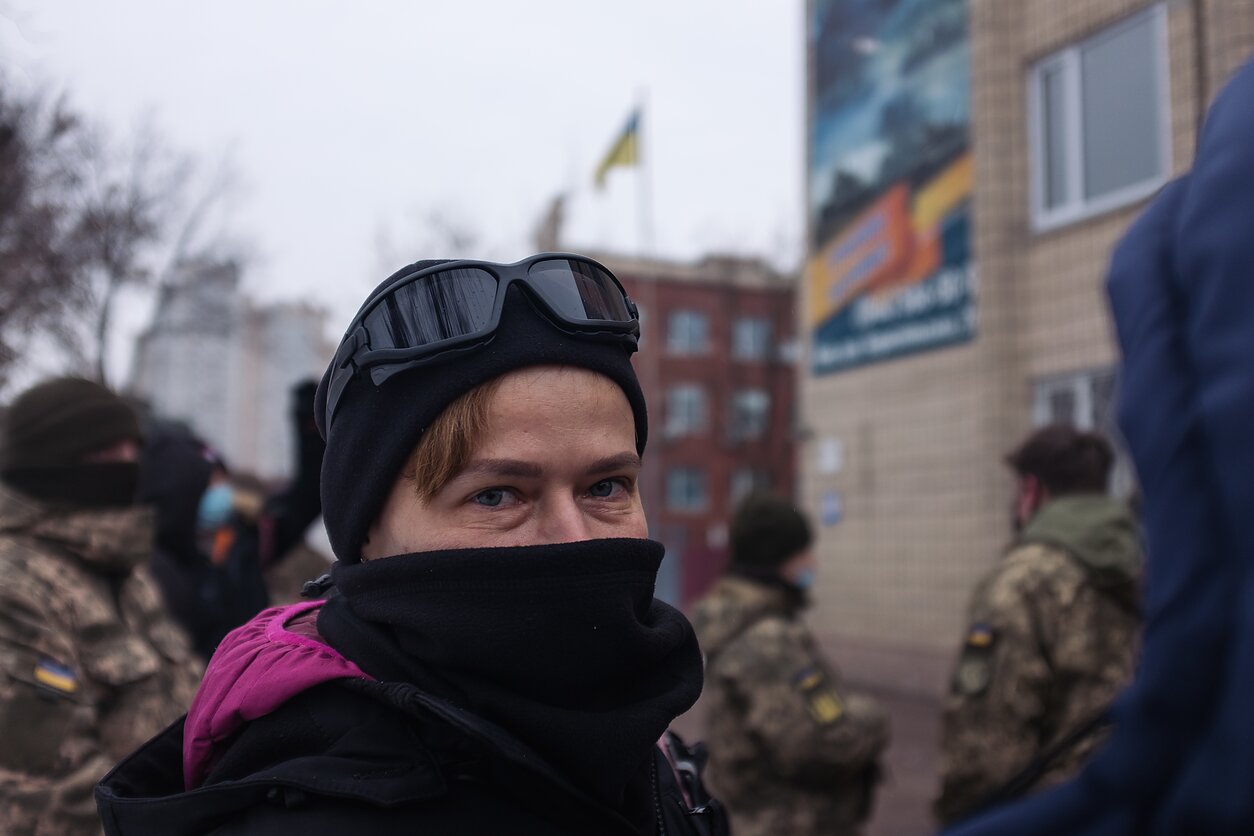
On an early Saturday morning, we arrive at an abandoned children’s camp on the outskirts of Kyiv where she is due to take part in one of her first training sessions. She is among the dozens of others in civilian clothes who are yet to sign the paperwork needed to receive military fatigues and other basic gear.
The camp is now the drilling site for dozens of recruits from across the Ukrainian capital, who get to know basic weapon-handling and infantry skills. Many of their instructors have seen combat in Donbass; some of the recruits have also fought against the Russian-led separatists.
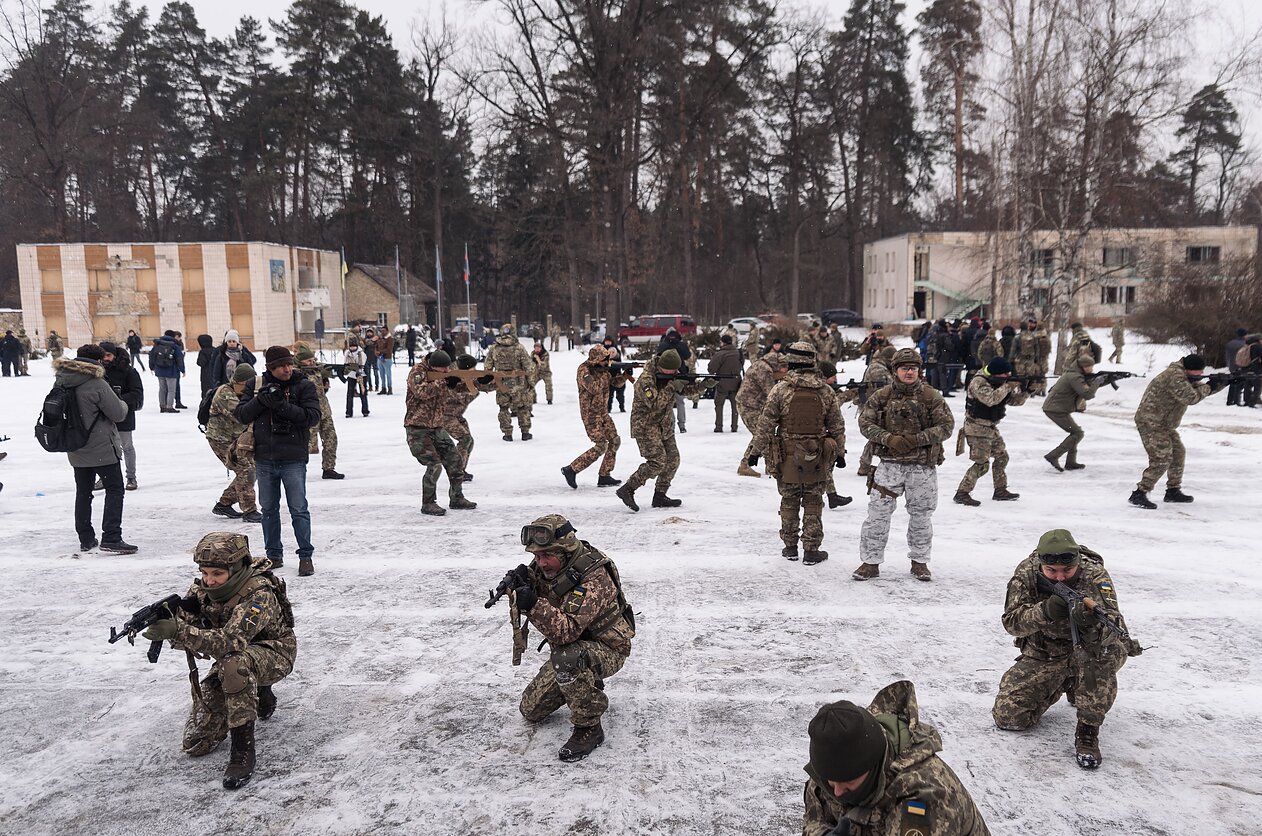
With only a few crates of Kalashnikov rifles ready to be handed out, only the people who are there for the first time can get their hands on one. Okhlopkova is among the lucky few, as others who do not have their own personal weapons have to make do with wooden AK cutouts.
What follows are hours of theory about radio communications and booby traps, the latter being one of the most lethal threats faced by the Ukrainian troops in Donbass. All around, dozens of recruits move in unison, getting to know the weapon at hand.
“I want Russians [to know] that if they come to my city, people will shoot them from every window,” says Okhlopkova.
‘It’s like 2014 again’
Lithuanian NGO Blue/Yellow that has been supplying targetted, yet non-lethal, aid to Ukrainian troops since Russia’s aggression began, has also worked with the territorial units since their inception.
“We are civilians, understanding civilian thinking, but [also have] serious war experience when it comes to supporting [different] units,” says Jonas Ohman, head of the NGO.
Now, however, the scale of the force has ballooned. According to a recent poll, 32 percent of Ukrainians would be ready to join their local units.
“We are working with them, through us they are cooperating with KASP [National Defence Volunteer Forces] and Šauliai [the Riflemen’s Union],” says Ohman. The goal is to better train and share the know-how of involving the society in defence.
“The Latvian National Guard is already considering to help,” says Ohman.
With hundreds of new recruits signing up to fill the dozens of new battalions, which are set to include thousands of people, the other Ukrainian foe bares its teeth – the crippling bureaucracy and scarce resources.
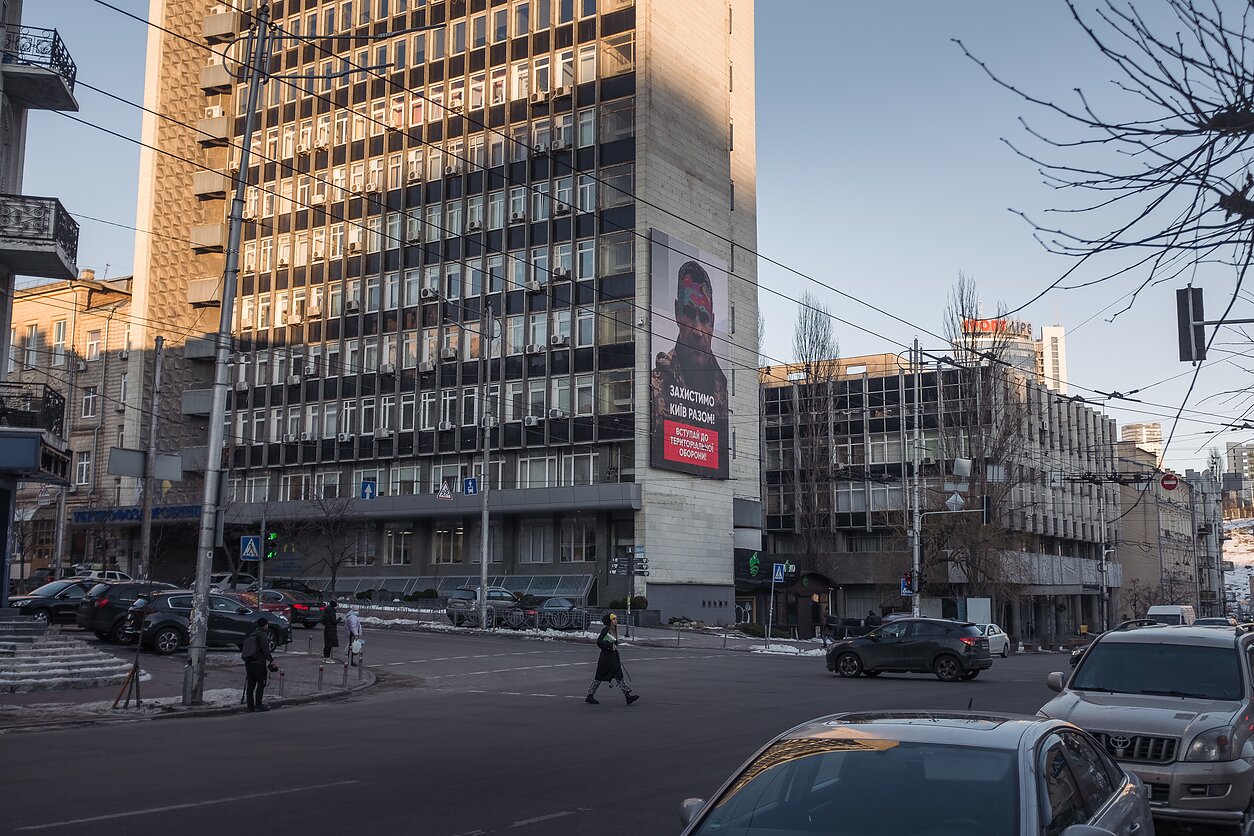
To sign up for the force, recruits need to complete a meandering list of paperwork, which some say has a demoralising effect. The organisation of the units themselves, including public procurement and logistical planning and resources, is also way behind, according to Ohman.
“It’s like 2014 again,” he adds.
In a written comment, the Lithuanian Riflemen’s Union told LRT.lt the civilian paramilitary organisation is trying to build cooperation with their Ukrainian counterparts, “but nothing concrete is taking place yet”.
Colonel Albertas Dapkus, head of the organisation, visited Ukraine last December, where they discussed sending Lithuanian instructors, including Riflemen’s paramedics.
“Contacts have been made, now we are awaiting Ukraine’s representatives in Lithuania, where we would sign agreements and detail future cooperation,” the Riflemen’s Union said.

Newsletter
Every Friday morning.
