














The Lithuanian government's national security commission has decided that the country will take part in the procurement of all seven coronavirus vaccines that are being developed.
“Commission members unanimously backed the procurement of potential vaccines through the European Commission's joint procurement mechanism by diversifying acquisitions from different producers selected by the EC it has signed preliminary purchase and sale contracts with,” the Government Chancellery said on Wednesday.
Read more: Buying Covid-19 vaccines may cost over €100m for Lithuania – officials
“The decision has been made to choose the most cautious option when the government will have its say on every contract under which potential vaccines will be purchased,” the statement reads.
The decision was approved by the government later on Wednesday.
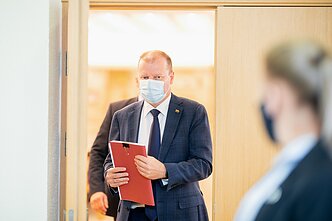
The meeting of the government's national security commission was attended by the prime minister, the speaker of parliament, chairs of the parliamentary Committee on Foreign Affairs, Health and Legal Affairs, as well as Cabinet members and representatives of law enforcement institutions and the president's office.
The prime minister had proposed to call a meeting of the State Defence Council to discuss the vaccine acquisition, but President Gitanas Nausėda, who chairs the council, refused to call a meeting, saying that vaccine procurement is a responsibility of the government and the health minister.
No taking risks
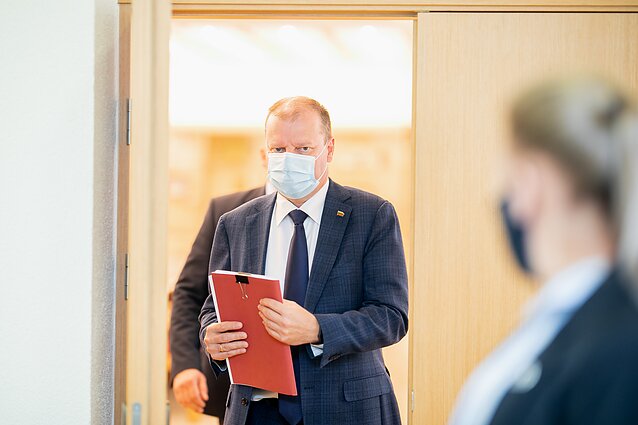
“We won’t take risks and guess which of the companies currently leading in clinical trials will be the first ones to create a vaccine [...]. If we do so, we can end up without any vaccine, and that would be a true disaster for Lithuania,” Prime Minister Saulius Skvernelis said in the statement.
He noted that procurement conditions were agreed on by the EC and possibilities to change them are limited, therefore, every procuring country risks either buying too many vaccines or lose part of the money. On the other hand, Skvernelis said, the EC, as a procuring entity, guarantees transparency and reliability.
“Today, nobody can say which of the seven companies the EC has preliminary contracts with will be the first to succeed. Therefore, we will sign contracts on orders with all of them, contracts that would satisfy at least the majority of our needs. As soon as a vaccine is trialed and tested, we will seek to get it as soon as possible. We will definitely not be ‘guinea pigs’ and we will allow only those vaccines that are safe, have been tested by scientists and evaluated by the European Medicines Agency,” the Lithuanian prime minister said.
Both the prime minister and the health minister said on Tuesday that Lithuania might need to pay over 100 million euros if it committed to buying vaccines from all the seven developers and all were confirmed as effective and safe.

Newsletter
Every Friday morning.