













Three military facilities in Lithuania’s northern town of Šiauliai, as well as Vilnius and Šilalė Districts, are being built faster than planned, the country’s Defence Minister Arvydas Anušauskas says.
“The three military sites for 2,500 troops and civilians are coming up faster than we planned. The pace is very similar in Vilnius and at the seaside, and they will be handed over by the end of this year. And Šiauliai will come in early next year,” he told reporters on Thursday.
For the time being, the plan is to use the facilities to accommodate Lithuanian troops.
Overall, the volume of new military infrastructure being built in the country is constantly growing, Anušauskas pointed out, adding that it reflected “the realities that have emerged both geopolitically and politically that we need to strengthen our own capabilities and, of course, to create conditions to receive allies”.
“In 2021, we had the first major attempt with the establishment of Camp Herkus in Pabradė for 600 troops. But since the US has increased the number of troops, the expansion of this camp was completed in February,” the minister said.
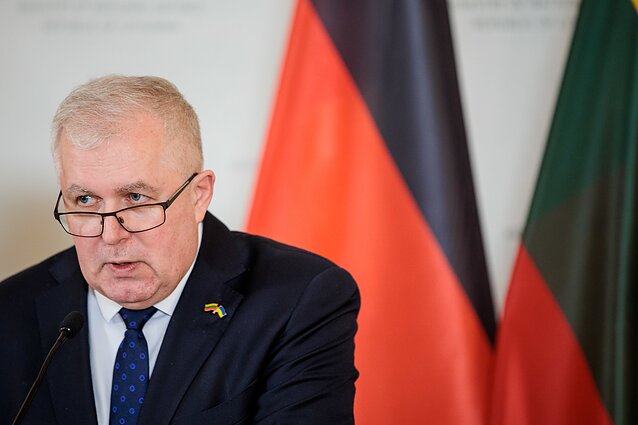
Two field camps in Marijampolė and Kazlų Rūda, with a capacity of 800 troops each, will be set up within a year, Anušauskas added.
Discussions are also underway with Germany on “additional infrastructure” across Lithuania for the storage of ammunition, according to him.
“We expect the future NATO plans to include conditions for increased storage of additional ammunition on the eastern flank to avoid it having to be transported all over Europe,” Anušauskas said.
Spending on ammunition “has risen to 17 percent of total defence budget” over the last two years, the defence minister pointed out.
“But ammunition needs proper storage conditions. If you buy ammunition and store it outdoors, it will have a significantly shorter shelf life. Therefore, the number of depots will be increased significantly,” he said, adding that “dozens more storage facilities” are being built.
“Next year, we will have around 30 built,” Anušauskas said. “At the same time, depots will be built to meet the needs of our allies, both Germany and other countries.”
This infrastructure is planned to be in place by 2025.

Newsletter
Every Friday morning.